

February 9, 2026
Finding the Right Fit: Estimating Live-In Companion Costs for SeniorsDiscover live in companion for elderly cost, services, and payment options. Find expert tips for choosing the best care for your loved one.
Read Article
.svg)
Aging in place Pittsburgh means helping your elderly parent stay safely and comfortably in their own home — instead of moving to a nursing facility or assisted living — with the right support in place.
Here's what makes it work for Pittsburgh families:
Pittsburgh is home to one of the largest concentrations of older adults in the entire country. Nearly 1 in 5 Allegheny County residents is 65 or older — a higher share than the national average. And 39% of Pittsburgh seniors live alone.
That's a lot of families quietly asking the same question: "How do we keep Mom or Dad safe at home without uprooting their entire life?"
It's a deeply human concern. Your parent has decades of memories tied to their home, their street, their neighbors. The research backs up what most families already feel — 88% of adults want to stay in their own homes as they age. But wanting to stay home and being able to do it safely are two different things.
Pittsburgh's charm — its hilly terrain, its century-old row houses, its tight-knit neighborhoods — is also what makes aging in place here uniquely challenging. Steep staircases, narrow bathrooms, and uneven sidewalks don't mix well with mobility changes or cognitive decline.
The good news? With the right plan, the right home adjustments, and the right professional support, aging in place in Pittsburgh is not only possible — it's often the smartest choice a family can make.
This guide walks you through everything: local resources, home modifications, financial help, and how professional caregivers can give your family real peace of mind.
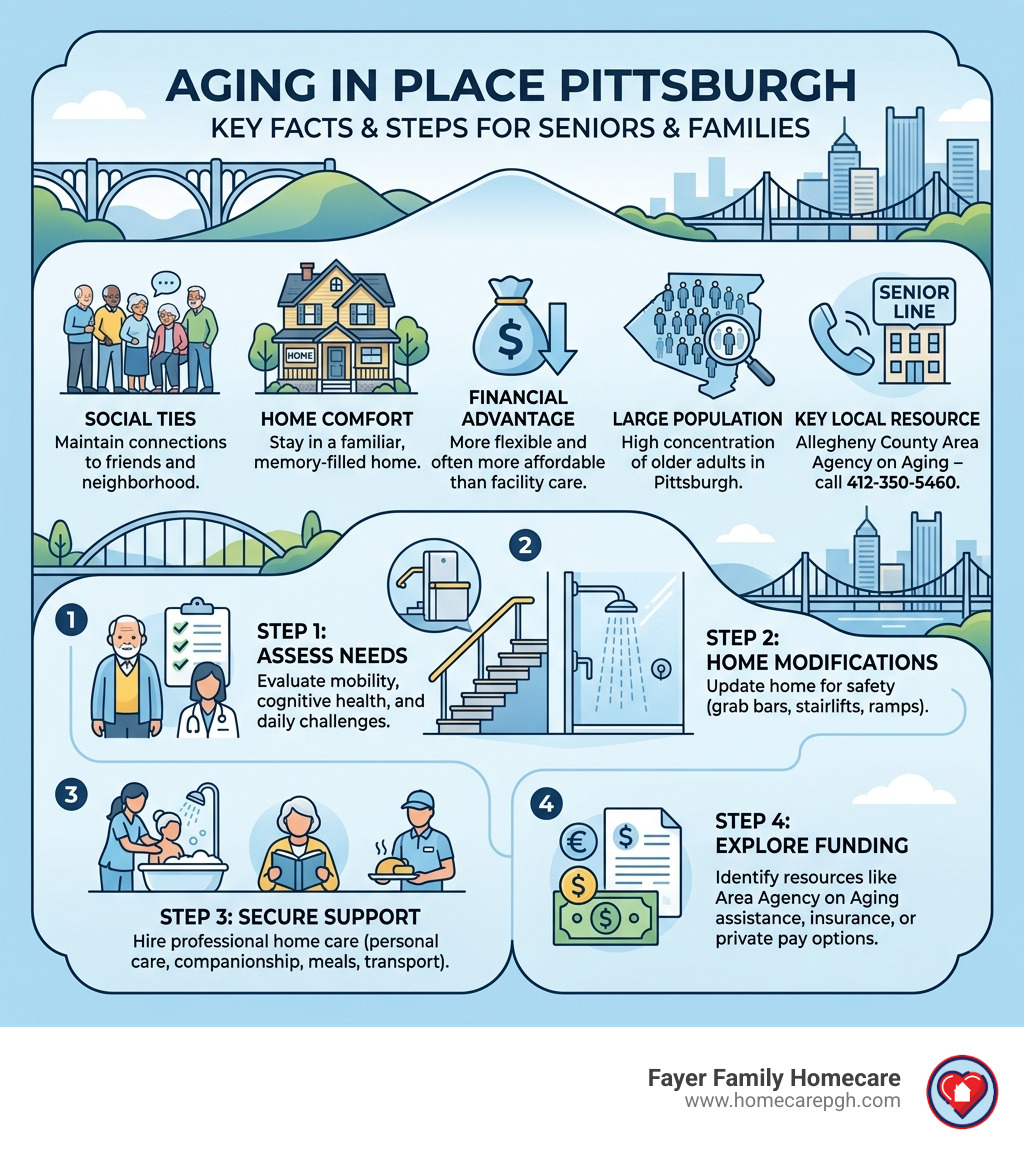

When we talk to families across the Steel City, we hear a recurring theme: "Mom doesn't want to leave her neighbors." In Pittsburgh, your neighborhood isn't just an address; it’s an identity. Whether it’s the Polish Hill community or the quiet streets of Mt. Lebanon, these social roots are vital for emotional health. Aging in place Pittsburgh allows seniors to maintain these deep-seated ties while receiving the care they need.
Beyond the emotional benefits, Pittsburgh is a goldmine for senior support. We are incredibly lucky to have proximity to world-class healthcare systems like UPMC and AHN. Being near top-tier geriatric specialists and research hospitals means your loved one has access to the best medical care in the world without leaving their zip code. Furthermore, Pittsburgh’s public transit, including the ACCESS paratransit service, provides a lifeline for those who can no longer drive, ensuring they can still attend appointments and social events.
Financially, the case for staying home is compelling. When you look at the Aging in Place Pittsburgh model, it often saves families tens of thousands of dollars. Local skilled nursing facilities are a significant financial burden, often requiring a total "spend down" of assets. By contrast, strategic home modifications and part-time care allow families to pay only for the support they actually use.
| Care Option | Estimated Annual Cost in Pittsburgh | Frequency |
|---|---|---|
| Skilled Nursing Facility | $91,000+ | Recurring Yearly |
| Assisted Living Facility | $43,000 | Recurring Yearly |
| Home Modifications (Ramps/Lifts) | $3,500 - $16,000 | One-time Investment |
| Professional Home Care | Variable | Based on hourly need |
As much as we want to do it all, family caregivers often reach a point where they need a helping hand. Professional caregivers bridge the gap between "getting by" and "thriving." We provide essential personal care and hygiene assistance, ensuring your loved one is safe in the shower and dressed comfortably for the day.
But it’s not just about the physical tasks. Companionship is perhaps the most underrated aspect of care. Statistics show that social isolation can be as harmful to health as smoking 15 cigarettes a day. A friendly face to share a meal with or talk about the Pirates game can change a senior's entire outlook. There are 5 Ways Home Care Services Can Help Seniors Stay Independent, including medication reminders and light housekeeping that keep a home running smoothly.
For families dealing with cognitive challenges, specialized dementia and Alzheimer's support is a game-changer. Navigating Home Care Agencies in Pittsburgh PA allows you to find experts who understand the nuances of memory loss, providing a safe environment that minimizes agitation. Perhaps most importantly, professional care provides respite for you. You can’t pour from an empty cup, and knowing Mom is safe allows you to return to your role as a daughter or son rather than just a "care manager."
Let’s be honest: Pittsburgh wasn't exactly built with walkers and wheelchairs in mind. Our beautiful 19th-century architecture often features narrow doorways, steep "Pittsburgh stairs," and multi-story layouts that can become "no-go zones" for seniors with limited mobility.
Navigating these challenges requires a mix of creativity and local expertise. Fall prevention is our number one priority. Because our city is so hilly, even getting from the car to the front door can be a feat. We often suggest focusing on the "main floor living" concept—moving a bedroom to the first floor to avoid those treacherous steps.
Fortunately, we live in a hub of innovation. The University of Pittsburgh’s Designs on Aging Ready - Health Sciences | University of Pittsburgh initiative and their "Healthy Home Lab" are doing incredible work. They use a 100-year-old house in Oakland to test how modern technology can make historic homes safer. Whether it’s ergonomic handles or smart monitoring systems, the goal is to make Elder Care Pittsburgh more effective by adapting to the environment we already have.
Making a home safe doesn’t always require a total renovation. Often, small, high-impact changes make the biggest difference. Here is a checklist of common Home Care Services in Pittsburgh PA related modifications:
One of the most overwhelming parts of this journey is figuring out who to call. In Allegheny County, the "front door" for senior help is the SeniorLine (412-350-5460). This service, run by the Area Agency on Aging, connects you with care managers who can help you apply for various Pittsburgh Senior Services.
If your loved one has limited income but requires a "nursing home level of care," they may qualify for the Pennsylvania Medicaid Aging Waiver. This program is designed specifically to keep seniors out of institutions by redirecting funds toward In-Home Care in Pittsburgh PA. It can cover personal care, supplies, and even some home modifications.
We also can't forget our veterans. With 21% of Pittsburgh seniors being veterans, programs like the VA’s "Aid and Attendance" benefit can provide significant monthly stipends to help pay for home-based care. It is a well-deserved benefit that many families unfortunately overlook.
Staying independent doesn't mean staying alone. Pittsburgh has a vibrant network of community programs:
The best way to start is with a room-by-room audit. Walk through the home and look for "trip hazards" like loose rugs or cluttered walkways. Check the lighting—is it bright enough for someone with fading vision? We often suggest consulting with a professional care manager or a CAPS specialist who can provide a fresh set of eyes. They can help you prioritize modifications based on your loved one’s specific health needs, ensuring you spend your budget where it matters most.
In Pittsburgh, the math usually favors home care. A nursing home can easily cost over $91,000 per year, and those costs are fixed. With home care, you have total flexibility. You might only need someone for four hours a day to help with a bath and lunch, which is a fraction of the cost of a facility. Even if you spend $10,000 on a one-time ramp or stair lift installation, you are still saving tens of thousands of dollars compared to just one year in a nursing home.
It’s time to talk about more support if you notice "near misses" or frequent falls. Other red flags include medication errors (skipping doses or double-dosing), uncharacteristic social withdrawal, or a fridge full of expired food. Also, listen to the family caregivers. If you are feeling burnt out, exhausted, or constantly worried, it’s a sign that the current plan isn't sustainable and it’s time to bring in professional help.
As we look toward May 2026 and beyond, the goal for Pittsburgh families remains the same: dignity, safety, and independence for our elders. Creating a sustainable long-term plan isn't something you have to do alone.
At Fayer Family Homecare, we understand the unique heartbeat of this city. We know the challenges of a steep driveway in the winter and the importance of a Sunday morning routine. Our team provides specialized care for those with Dementia or Alzheimer’s, focusing on meaningful companionship and activities that keep the mind engaged. We pride ourselves on ensuring the cleanliness and comfort of our clients, giving them the "home sweet home" experience they deserve.
Whether you need a few hours of supervision or more intensive support, we are here to be your guide. For more information on navigating these choices, check out our Best Elderly Care Pittsburgh Guide.
Ready to take the next step? Contact our team for professional home care services today, and let’s build a plan that keeps your family right where they belong—together, at home, in Pittsburgh.

February 9, 2026
Finding the Right Fit: Estimating Live-In Companion Costs for SeniorsDiscover live in companion for elderly cost, services, and payment options. Find expert tips for choosing the best care for your loved one.
Read Article
January 8, 2024
Starting the New Year with a Healthy Lifestyle for SeniorsAs the New Year unfolds, it's a time of reflection and resolution, not just for the young but equally for our elders. At Fayer Family Home Care, we understand the impact of a healthy lifestyle on seniors' overall well-being.
Read Article
October 1, 2024
Enhancing Life with Local Homemaker ServicesDiscover the best companions and homemakers near me to support elderly independence and non-medical care with Fayer Family Homecare.
Read Article