Why Engaging Activities Matter for Your Loved One
Alzheimer's activities at home aren't just about keeping someone busy—they're about maintaining dignity, sparking joy, and fostering meaningful connection during a challenging time.
Quick Answer: Best Home Activities for Alzheimer's Patients
- Sensory Activities: Folding laundry, sensory boxes, hand massages with lotion
- Creative Outlets: Listening to favorite music, painting, simple collages
- Memory & Cognition: Looking at photo albums, building memory boxes, reading aloud
- Gentle Movement: Short walks, seated exercises, dancing to music
- Daily Life Tasks: Simple kitchen help, tending plants, sorting items
Focus on the process and engagement, not perfect execution
When your parent or loved one has Alzheimer's or dementia, you might worry that their days lack purpose or joy. The truth is simpler than you think: meaningful activities can dramatically improve quality of life for individuals with dementia.
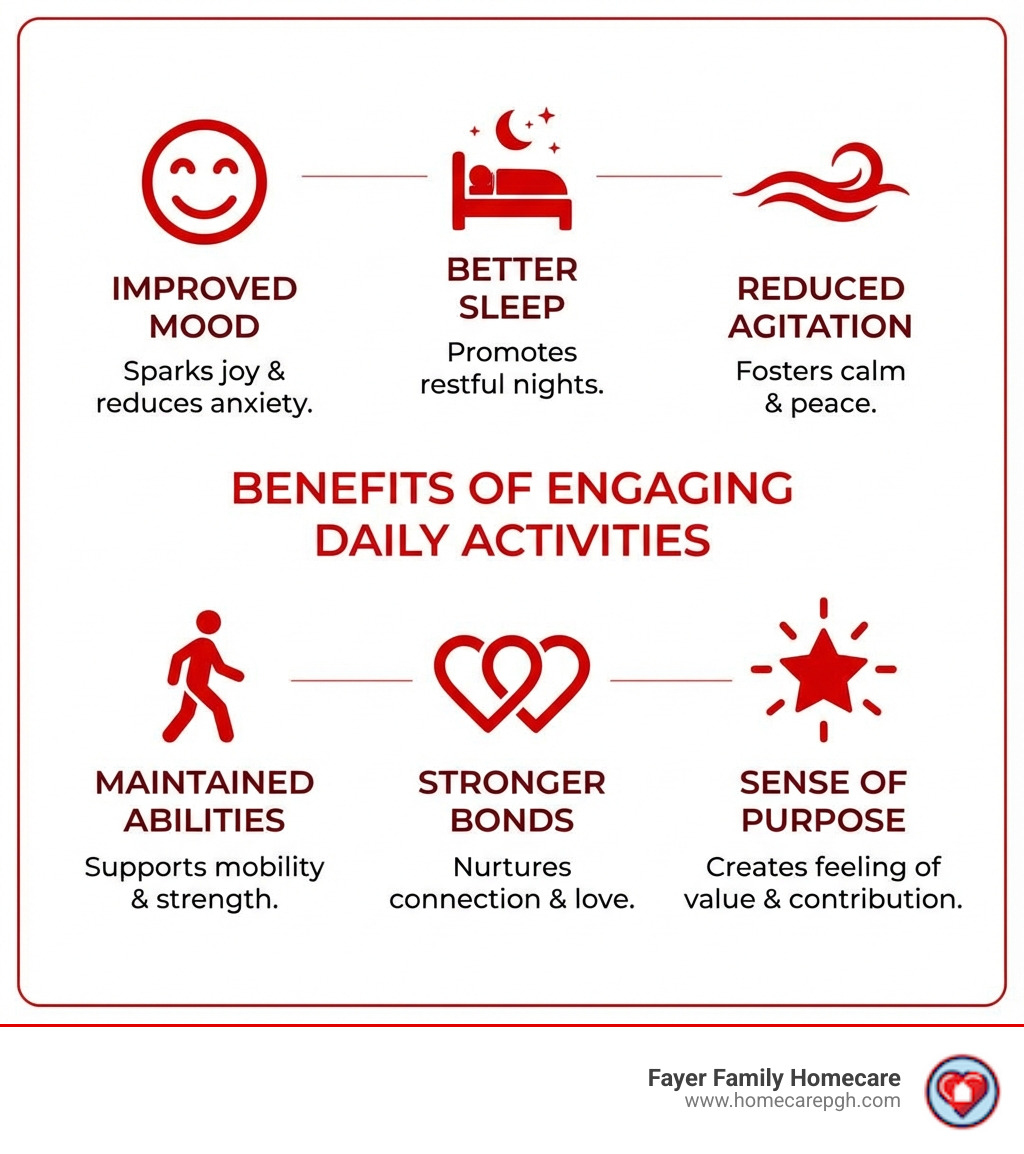
Research shows that therapeutic activities increase cognitive function, reduce agitation, and contribute to healthier aging. Studies demonstrate that structured, pleasant activities often reduce challenging behaviors and improve mood. Music reduces anxiety and depression. Art therapy improves cognitive function and promotes better communication between patients and caregivers.
But here's what matters most: the type of activity and how well it's completed isn't as important as the joy and sense of accomplishment the person gets from doing it.
Whether you're caring for your parent at home or working alongside professional caregivers, the activities you'll find below can transform difficult days into moments of connection. They require no special equipment, adapt to different stages of the disease, and most importantly—they work.
Simple & Sensory: Everyday Engagement Activities
We understand that finding suitable activities for someone with Alzheimer's can feel daunting. However, many simple, everyday tasks can be adapted into therapeutic Alzheimer's activities at home, providing comfort, a sense of purpose, and valuable sensory stimulation. These activities often tap into familiar routines, which can be incredibly soothing for individuals with dementia. Ensuring a safe environment is paramount when engaging in these activities, as detailed in our guide on Dementia Safety at Home.

1. Folding Laundry or Sorting Socks
For many, tasks like folding laundry or sorting socks are mundane chores. For someone with Alzheimer's, these can be meaningful activities that offer a sense of accomplishment and mental stimulation. The familiar motions involved in folding clothes or matching socks tap into long-held motor skills, making the individual feel competent and useful. It's a low-stress activity that we can do together, fostering connection without pressure. The focus isn't on perfect creases, but on the engagement and the feeling of contributing to the household.
2. Simple Kitchen Help
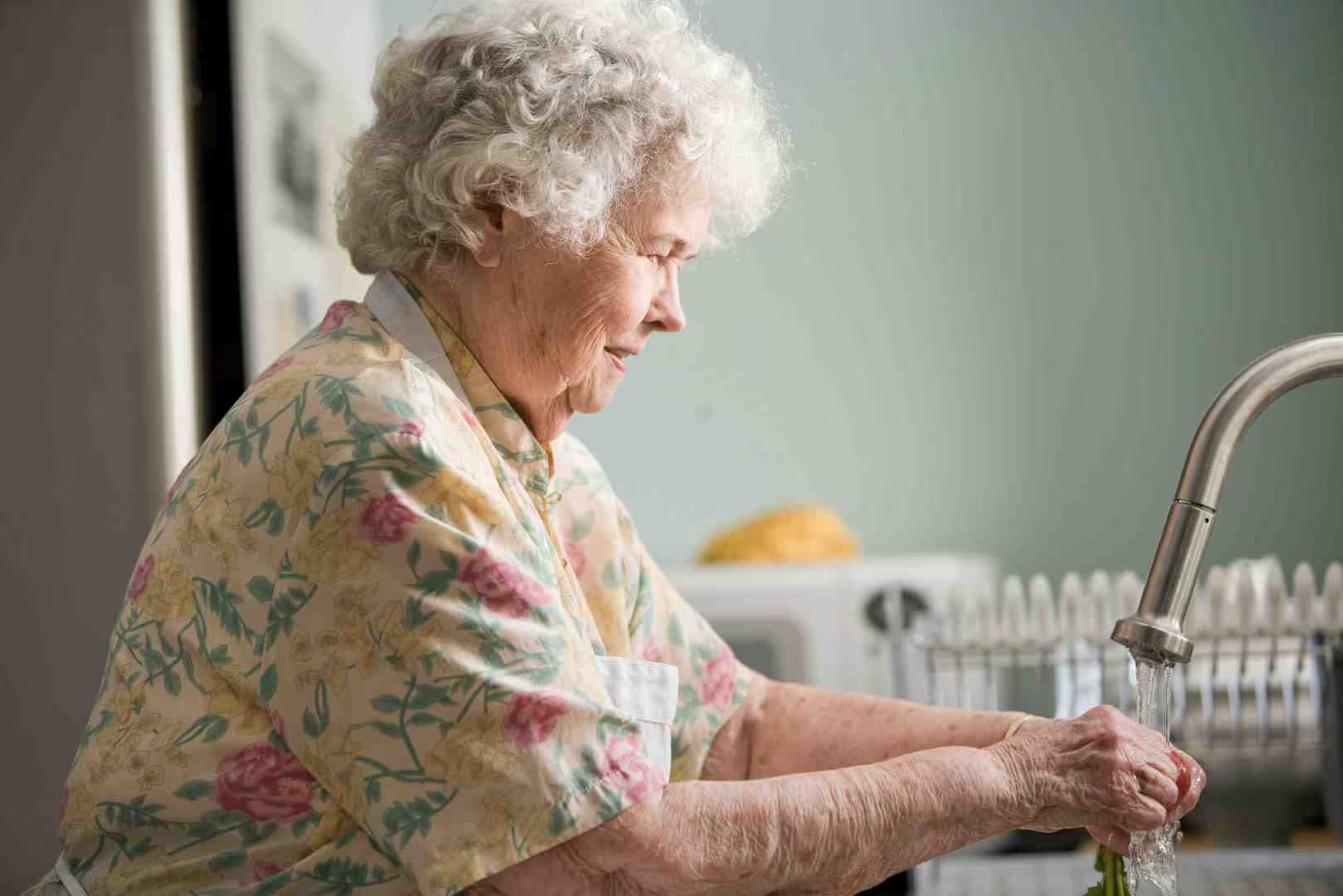
The kitchen is often a place of warm memories and familiar routines. Involving your loved one in simple kitchen tasks provides a wonderful sensory experience, engaging sight, smell, touch, and even taste. Depending on their abilities, this could include washing vegetables, setting the table, stirring ingredients, or measuring dry goods. Even if they only watch, being involved in cooking a meal for the family can help them reminisce and recall stories. The different smells, textures, and flavors can awaken the senses and provide comfort. The goal is participation and enjoyment, not necessarily a perfectly prepared dish.
3. Creating a Sensory Box or Bin
Sensory activities are incredibly beneficial for individuals with Alzheimer's, especially as the disease progresses. A sensory box or bin is a collection of items with varying textures, shapes, and scents that can be explored by touch. This tactile engagement can be calming and stimulating. We can make up these boxes together, choosing items like soft fabrics, smooth stones, fidget spinners, or even scented items. Sensory engagement helps cognitive skills and offers a unique way for individuals to interact with their environment, providing comfort and reducing agitation.
4. Tending to Indoor Plants
Connecting with nature, even indoors, has a profoundly calming effect. Tending to indoor plants, such as watering them or gently wiping their leaves, offers a quiet, peaceful activity. It provides a sense of responsibility and connection to the living world. The benefits of gardening include stimulating the mind, awakening senses, and evoking memories. If your loved one enjoyed gardening in the past, this can be a gentle way to revisit a cherished hobby.
5. Giving a Hand Massage
Human touch is a powerful tool for connection and comfort. A gentle hand massage with scented lotion can be incredibly relaxing and therapeutic. It provides sensory input, promotes circulation, and offers a moment of quiet intimacy. This simple act can reduce anxiety, improve mood, and foster a sense of being cared for and loved.
Creative & Expressive: Arts, Crafts, and Music
Creative and expressive activities are vital for individuals with Alzheimer's, offering avenues for self-expression, particularly when verbal communication becomes challenging. These activities can reduce stress, alleviate depression, and create beautiful moments of connection. Art therapy is one of the most valuable types of therapy, improving cognitive function, reducing disruptive behaviors, and promoting better communication.

6. Listening to Favorite Music
Music holds a unique power to evoke memories and emotions, often remaining accessible even in the later stages of Alzheimer's. Playing your loved one's favorite music from their youth can be incredibly impactful. It can reduce feelings of anxiety and depression, improve behavior, and encourage singing along or even dancing. We can create personalized playlists for different moods or occasions—calming music for bedtime, upbeat tunes for gentle exercise, or familiar songs to spark conversation and reminiscence.
7. Painting or Drawing
Painting and drawing offer a non-verbal outlet for self-expression, allowing individuals to communicate feelings and thoughts they might struggle to articulate. Whether it’s using watercolors, finger paints, or adult coloring books with large, simple patterns, the focus is on the process and the joy of creating. There’s no right or wrong way to do it. This activity can provide a sense of accomplishment, improve focus, and reduce stress. We can encourage them to use bold and bright colors to express themselves freely.
8. Modeling with Clay or Play-Dough
Working with clay or Play-Dough is a wonderful tactile activity that engages fine motor skills and provides a creative outlet without pressure. The malleable nature of the material allows for freeform expression, and there's no expectation of a perfect outcome. This can be a calming and satisfying activity, helping to strengthen hand muscles and encourage imaginative play.
9. Creating a Simple Collage
Collage making is a versatile and engaging activity. We can provide old magazines, photographs, or colorful paper and encourage your loved one to cut out images that appeal to them. Themed collages (e.g., favorite animals, seasons, hobbies) can spark conversation and reminiscence. This activity also helps with fine motor skills and visual recognition, allowing for creative expression and a sense of accomplishment.
Cognitive & Reminiscence: Mind-Stimulating Fun
Cognitive and reminiscence activities are crucial for stimulating the mind, strengthening memory, and fostering social interaction. These activities connect individuals with their past, affirming their identity and creating shared moments of joy. For more on how companionship can support individuals with cognitive decline, explore our page on Dementia Companionship Care. To understand the broader context of the disease, you may also find our article on Understanding the Difference Between Alzheimer's and Dementia helpful.
10. Looking Through Photo Albums
Reminiscence therapy, such as looking through old photo albums, is one of the most powerful Alzheimer's activities at home. These albums are filled with photos from their younger years and can help reignite precious memories. It helps improve quality of life, cognition, communication skills, and mood. We can use these moments to spark conversations about childhood, school, pets, or first cars, strengthening family connections and affirming their life story.
11. Building a Memory Box
Similar to photo albums, a memory box is a collection of meaningful items that hold special significance to your loved one. This could include old letters, special mementos, items related to a past profession or hobby, or small tokens from family trips. Building a memory box together is a beautiful opportunity for meaningful engagement and storytelling. Each item can trigger a conversation about why it's included and the happy memories it brings.
12. Reading Aloud Together
Whether it's a favorite book, short stories, poems, or even the daily newspaper, reading aloud can be a calming and engaging activity. For those in early stages, reading themselves can help improve communication skills. For those in later stages who may struggle to read, we can read to them. This provides auditory stimulation, encourages listening comprehension, and can spark conversation about the content, or simply offer a comforting shared experience.
13. Simple Puzzles or Card Games
Cognitive activities like puzzles and card games can help stimulate the brain and protect against cognitive decline. Large-piece jigsaw puzzles, simple card games like Go Fish, or matching games can be adapted to suit varying abilities. These activities encourage problem-solving, strategic thinking, and can be a great way to spend time together. The key is to choose games that are challenging but not frustrating, focusing on engagement rather than winning.
Gentle Physical Activities for Health and Mood
Regular physical activity is crucial for maximizing independence and overall well-being. It offers numerous benefits, including improved mood, better sleep, improved motor skills, and a reduced risk of falls. Even gentle movements can make a significant difference in maintaining physical function and enhancing quality of life.
14. Taking a Short Walk
Walking is one of the best exercises, and it’s free! Taking a short, supervised walk outdoors provides fresh air, sunlight, and a change of scenery. It can improve mood, help with sleep, and reduce restlessness. Walking can also help control some disruptive behaviors and make individuals less likely to wander off if they are already engaged. We always ensure safety by staying close and choosing familiar, accessible paths.
15. Seated Exercises
For individuals with limited mobility, seated exercises are an excellent way to maintain strength and flexibility. This can involve gentle stretching, lifting light weights (like soup cans), or tossing a soft ball or balloon back and forth. There are many exercise videos for seniors available that we can follow together, making it an engaging and structured activity. We adapt the intensity and duration to ensure safety and comfort.
16. Dancing to Music
Dancing is a fantastic activity that combines physical movement with the emotional benefits of music. Whether it's freeform dancing to favorite tunes or following simple structured moves, it improves balance, coordination, and overall physical well-being. Studies show that this activity can boost physical, mental, and emotional health. It's a joyful way to engage and can spark wonderful memories associated with particular songs or dance styles.
How to Adapt Alzheimer's Activities at Home for Success
A person-centered approach is key when planning Alzheimer's activities at home. This means focusing on your loved one's individual preferences, abilities, and current mood. Flexibility and patience are paramount. As the disease progresses, activities will need to be adapted, as outlined in Adapting Activities for People With Alzheimer's Disease. Our comprehensive guide, Navigating Alzheimer's: A Comprehensive Guide to Senior Home Care, also offers valuable insights into creating a supportive environment.
Adapting Activities for Different Alzheimer's Stages
- Early Stage (Mild): Individuals in this stage may still enjoy activities that require more planning and complex thought, like board games, reading entire books, or even learning a new, simple skill. We can encourage them to initiate tasks and offer choices that foster independence.
- Middle Stage (Moderate): As the disease progresses, activities should be simplified. Focus on routine-based tasks, familiar hobbies broken into smaller steps, and activities that provide a sense of purpose. For example, a former artist might enjoy coloring or simple painting, while a former baker might help with measuring ingredients. Tactile activities and reminiscence become increasingly important.
- Late Stage (Severe): In the later stages, engagement often shifts to sensory experiences, music, and gentle touch. Activities should be very simple, focusing on comfort and connection. Listening to music, gentle hand massages, soft textures, and looking at familiar objects are often beneficial. The goal is to provide moments of calm and connection rather than cognitive challenge.
Ensuring Safe and Enjoyable Alzheimer's activities at home
Safety is always our top priority. We ensure the environment is free of clutter and potential hazards. For crafts, we use non-toxic materials. All tasks are supervised, especially those involving the kitchen or outdoors. The most important rule is to focus on enjoyment, not achievement. If your loved one seems frustrated, we simplify the activity or switch to something else. Breaking tasks into very small, manageable steps and offering plenty of encouragement helps foster success and enjoyment. We remember that the goal is participation and positive feeling, not a perfect outcome.
The Role of Routine, Flexibility, and Choice
Establishing a predictable daily routine can provide comfort and security for individuals with Alzheimer's. Knowing what to expect can reduce anxiety and make transitions smoother. However, flexibility within this routine is equally important. If your loved one is not in the mood for a planned activity, we don't force it; we try something else or simply allow for rest. Offering simple choices, such as "Would you like to listen to music or look at photos?" can empower them and foster a sense of autonomy, even in small ways.
More Engaging Ideas for Home Activities
Beyond the structured activities, there are many opportunities to integrate meaningful engagement into daily life, especially by leveraging family connections and simple household tasks.
17. Engaging with Family Traditions
Family traditions hold deep emotional significance. Adapting these traditions can be incredibly comforting and joyful. This could involve baking familiar holiday recipes, listening to holiday music, decorating for special occasions, or looking at old home videos. These activities foster a sense of belonging and continuity, evoking cherished memories and strengthening family bonds.
18. Connecting with Family via Video Calls
In our increasingly connected world, video calls offer a wonderful way to reduce isolation and keep your loved one connected with family members who may live far away. Seeing familiar faces and hearing voices can be incredibly comforting. We can help them use tablets or computers for simple video calls, making sure the process is easy and stress-free.
19. Sorting Items
Simple sorting tasks can be surprisingly engaging and therapeutic. This could involve sorting coins by denomination, buttons by color or size, poker chips, or even nuts and bolts. These activities engage fine motor skills, provide a sense of order, and can be adapted to different cognitive levels. The repetitive nature can be calming, and the completion of the task provides a quiet sense of accomplishment.
Frequently Asked Questions about Alzheimer's Activities at Home
We understand that caregivers often have many questions about providing the best support. Our commitment to Alzheimer Patient Care means we're here to address common concerns and offer practical solutions.
How can activities reduce challenging behaviors like agitation?
Structured and pleasant activities can significantly reduce challenging behaviors like wandering or agitation. By redirecting energy, providing a calming focus, and reducing boredom, activities can act as a positive substitute for these behaviors. For example, if someone is restless and pacing, we might offer a short walk or a simple sorting task to redirect that energy constructively. Engaging in familiar routines also provides a sense of security, which can lessen anxiety and agitation.
What if my loved one shows no interest or gets frustrated?
It's common for individuals with Alzheimer's to show disinterest or frustration. The most important thing is not to force an activity. If they seem bored, distracted, or irritable, it's a cue to try something else or take a break. We can simplify the activity, check for any physical discomfort, or simply focus on just being together quietly. It's crucial to respond to their feelings and emotions, rather than trying to reason with them or argue. Flexibility is key.
How can I adapt a favorite hobby for someone with Alzheimer's?
Adapting a favorite hobby involves breaking it down into its simplest components and focusing on the familiar motions or sensory aspects. For example:
- A keen gardener can water plants, wipe leaves, or arrange flowers rather than tending a whole garden.
- A knitter can roll balls of yarn or sort different colors of yarn.
- A carpenter might enjoy sanding a piece of wood or sorting small tools.
- A former office worker might enjoy organizing paperwork or putting coins in a holder.
The goal is to connect with the familiar enjoyment of the hobby, even if the outcome is different or the activity is much simpler than before.
Conclusion: Finding Joy and Connection Through Activity
Engaging in thoughtful and adapted Alzheimer's activities at home is not just about filling time; it's about enriching lives, fostering connection, and maintaining dignity. We've seen how simple household tasks, creative outlets, cognitive exercises, reminiscence, and gentle physical activities can bring moments of joy, reduce challenging behaviors, and improve overall well-being for your loved ones.
At Fayer Family Homecare, we believe in a person-centered approach, tailoring our care to the unique needs and preferences of each individual in the Greater Pittsburgh Area. Our experienced home caregivers are here to provide specialized support, companionship, and supervision, ensuring that your loved one enjoys a life filled with comfort, engagement, and meaningful activities.
We are dedicated to helping families steer the complexities of Alzheimer's care, offering both practical assistance and emotional support. If you're seeking compassionate and professional care for your loved one, we invite you to Learn more about our Alzheimer's & Dementia Services. Let us help you create more moments of connection and joy.

.svg)