Understanding Your Options for In-Home Senior Support
Caregivers and companions are two distinct types of in-home support professionals who help seniors age safely at home. While their roles can overlap, understanding their key differences is crucial for finding the right care for your loved one.
Quick Answer: Caregiver vs. Companion
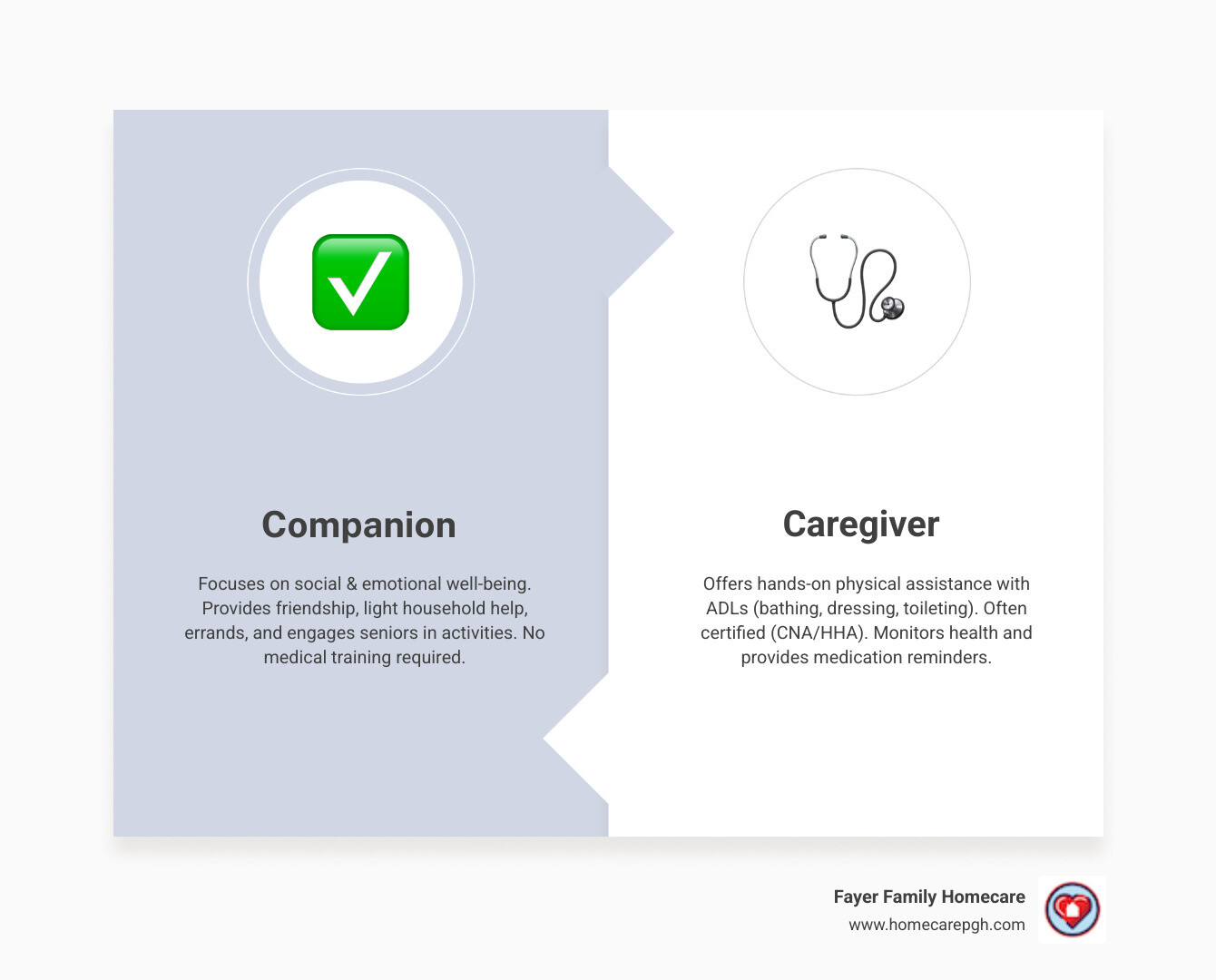
- Companion: Provides social interaction, light household help, and emotional support. No medical training required. Best for independent seniors who need friendship and light assistance.
- Caregiver: Offers hands-on personal care like bathing, dressing, and medication reminders. Often certified (CNA/HHA). Best for seniors with physical limitations or chronic conditions.
Deciding to bring care into your parent's home is a significant step. The key is recognizing that not every senior needs the same level of support. A senior who is physically capable but lonely has very different needs from one who struggles with daily hygiene or mobility. That's where understanding the difference between caregivers and companions becomes essential.
Companions focus on the social and emotional well-being of your loved one. They provide friendship, help with errands, and keep seniors engaged in activities. Think of them as a reliable friend who shows up consistently.
Caregivers, on the other hand, provide hands-on physical assistance. They help with bathing, dressing, toileting, and other activities of daily living (ADLs). Many are trained and certified professionals who can also monitor health and provide medication reminders.
This guide will help you assess your loved one's needs and make an informed decision. Whether your parent needs a caring companion to ease loneliness or a skilled caregiver for daily personal care, we'll walk you through what you need to know.
Defining the Roles: The Core Differences Between Caregivers and Companions
While the terms "caregiver" and "companion" are often used interchangeably, they represent two different types of in-home help. Understanding what sets caregivers and companions apart is the key to finding the right match for your parent's needs.
Think of companions as a reliable, caring friend. They focus on social connection, emotional well-being, and light assistance to combat loneliness and keep seniors engaged. Caregivers provide hands-on physical care, helping with personal tasks like bathing, dressing, and using the bathroom. Many are trained professionals who can also monitor health and provide medication reminders.
The primary difference lies in the scope of care and level of training. Companions don't typically need formal certifications, while caregivers often hold certifications like Certified Nurse Assistant (CNA) or Home Health Aide (HHA), qualifying them for personal care.
Here's how the two roles compare:
| Area | Companion | Caregiver |
|---|
| Primary Focus | Social interaction, emotional support, mental stimulation | Physical assistance, personal care, health monitoring, safety |
| Typical Tasks | Conversation, errands, meal prep, light housekeeping, activities, transportation | Bathing, dressing, toileting, mobility support, medication reminders, health observation |
| Training/Certification | Generally no formal certification required | Often requires HHA or CNA certification with ongoing training |
| When They Are Needed | Independent seniors needing social engagement or light help; respite for family | Seniors with physical limitations, chronic illness, cognitive decline, post-surgery recovery |
What is a Senior Companion?
A senior companion's focus is on the social and emotional side of aging, ensuring your loved one feels connected and purposeful. Social interaction and emotional support are at the heart of what they do, from engaging in conversation to playing games or simply sharing the day together. At Fayer Family Homecare, we believe this connection is vital, a topic we explore in our article on Being a Companion to the Elderly.
Companions also help with daily life by providing light housekeeping (dusting, vacuuming), meal preparation, and transportation to appointments or social outings. They can run errands like picking up prescriptions, helping seniors maintain their independence. Most importantly, companions encourage engagement in hobbies and activities, ensuring life remains rich and enjoyable. Our Companionship program is designed to keep seniors active and emotionally fulfilled.
What is a Senior Caregiver?
A senior caregiver—also known as a personal care assistant or home health aide—provides a more comprehensive level of support. These professionals are trained to offer hands-on physical assistance with sensitivity and skill.
Personal care is their core function, including direct help with bathing, grooming, and oral hygiene. They provide assistance with ADLs (Activities of Daily Living) like dressing, feeding, and toileting, which is vital support you can learn more about in our guide on Assistance with ADLs.
Caregivers also offer mobility support to reduce fall risk, provide medication reminders, and perform health monitoring by observing and reporting changes in condition. This is especially critical for seniors with conditions like dementia. Our caregivers at Fayer Family Homecare are certified HHAs or CNAs, reflecting our commitment to qualified staff as detailed in The Essential Role of Caregivers in Home Health Care.
Crucially, caregivers also provide all the services of a companion. The key difference is their training and ability to provide hands-on physical care when needed.
Making the Right Choice for Your Loved One
Deciding on the right in-home support requires an honest look at your loved one's current needs and what they might require in the future. You're making a decision that affects their dignity, safety, and happiness.
Start by assessing their situation. Can they manage personal care like bathing and dressing? Are they eating well? Do they have health conditions that need monitoring or mobility issues that pose a fall risk? Are they lonely? The answers will point you toward either a companion or a caregiver. As needs evolve, the type of care may need to change, which is why understanding What is Companion Care and How Does It Differ From Caregiving? is so important for planning.
A professional in-home assessment can clarify the appropriate level of support, and you don't have to make this decision alone.
When is Companion Care the Best Fit?
Companion care is the perfect solution when your loved one is mostly independent but would benefit from social interaction and light assistance. It's about enriching their life and keeping them connected.
Consider companion care if your parent is dealing with:
- Loneliness or social isolation: Research links isolation to serious health risks like depression and cognitive decline. A companion provides the meaningful human connection that keeps minds sharp and spirits lifted, a benefit we explore in Companionship in Old Age.
- Need for light assistance: A companion can help with meal preparation, grocery shopping, or getting to appointments, filling in small gaps while respecting their autonomy.
- Living alone: If you're not nearby in the Greater Pittsburgh Area, a companion provides regular updates and peace of mind, knowing someone is checking in.
- Early-stage dementia: Companionship can offer structure, gentle reminders, and engaging activities to help maintain routine and cognitive function, as discussed in Dementia Companionship Care.
- Need for family respite: If you're a family caregiver, a companion provides a much-needed break, allowing you to rest and recharge without worry.
When to Hire Professional Caregivers and Companions
When companionship isn't enough and your loved one requires hands-on physical help, it's time to hire a professional caregiver. This is necessary when safety or health conditions require more than just a friendly presence.
You'll know it's time for a caregiver when your parent needs help with:
- Personal Care: If they struggle with bathing, dressing, or using the bathroom, a caregiver can provide this Assistance with ADLs while preserving dignity. These are Personal Care Services that require specific training.
- Chronic Illness or Post-Surgery Recovery: Conditions like diabetes or COPD, or recovery from surgery, often require health monitoring, medication reminders, and skilled assistance.
- Mobility Challenges: If there's a history of falls or difficulty moving around, a caregiver provides physical support to keep them safe.
- Progressive Dementia or Alzheimer's: As the disease advances, professional caregiving becomes essential for safety and specialized support. Our Alzheimer's & Dementia Care services are designed for these unique needs.
- General Safety Concerns: For seniors prone to wandering or confusion, a trained caregiver provides a secure environment.
Caregivers also offer companionship and emotional support. The deciding factor is the need for hands-on, physical assistance.
The Practical Guide to Hiring In-Home Support
Once you've determined the level of care needed, the next step is finding the right person or agency. With a thoughtful approach, you can find compassionate, reliable support that makes a true difference.

At Fayer Family Homecare, our mission is to help seniors thrive at home by providing genuine companionship and meaningful assistance. A well-thought-out care plan is the foundation of this support, and it should be custom to your loved one's specific needs and preferences. For guidance, resources like The Caregiver's Handbook can be invaluable.
When vetting potential caregivers and companions, most families in the Greater Pittsburgh Area find that working with a reputable agency provides the most peace of mind, as it removes the administrative burden of private hires.
Understanding the Costs of Caregivers and Companions
Understanding the financial side of in-home care is essential for sustainable planning. Costs vary based on the level of care, hours needed, and your location within the Pittsburgh area. Companion care is generally less expensive than caregiver services due to the difference in training.
- Companion Care: Costs can range from minimum wage to $20+ per hour. For more details, see our guides on Companion Care Services Cost and Senior Companion Care Costs.
- Caregiver Services: Hands-on personal care typically ranges from $20 to $50 per hour in the Pittsburgh area. 24-hour care can be comparable to or even less than assisted living facilities.
Factors like specialized Alzheimer's care, hours per week, and advanced certifications will affect the final price. Be sure to check if your long-term care insurance policy covers in-home services, as this can significantly offset costs.
What to Look for in a Home Care Agency
Choosing the right agency is critical. Here are key factors to consider to ensure you're selecting one of the best Home Care Agencies in Pittsburgh, PA.
- Licensed and Insured: Ensure the agency is licensed by the Commonwealth of Pennsylvania and carries comprehensive insurance, including worker's compensation and liability. Fayer Family Homecare is fully licensed and insured.
- Employee Screening: The agency must conduct thorough background checks, drug testing, and reference checks. Our caregivers are employees, not contractors, which provides an extra layer of accountability. This model is explained further on Wikipedia's page for Companion (caregiving)).
- Caregiver Training: Ask about certifications (HHA/CNA) and ongoing education, especially for conditions like dementia. We outline our requirements in our Direct Care Worker / Caregiver Position description.
- Consistency of Care: A good agency avoids a "revolving door" of staff. We prioritize assigning a single, dedicated caregiver whenever possible to build a trusted relationship.
- Client Satisfaction Guarantee: An agency should stand behind its services. We offer a satisfaction guarantee and will work to find a better match if you're not completely happy.
- Experience and Reputation: An agency with a long-standing presence in the community, like ours, has a proven track record. Learn more about our commitment on our About Us page.
Beyond Tasks: The Impact on a Senior's Quality of Life
While families often focus on practical tasks, the true impact of caregivers and companions goes much deeper. They preserve dignity, foster independence, and provide an emotional connection that allows seniors to thrive at home.

One of the greatest gifts of in-home support is enabling seniors to maintain their independence. Staying in a familiar environment, surrounded by memories, significantly boosts mental and emotional well-being. Our article on 5 Ways Home Care Services Can Help Seniors Stay Independent explores this benefit in detail.
With the right support, seniors don't have to choose between safety and independence. Our 'Joy Approach' at Fayer Family Homecare focuses on personalized care that honors each person's abilities. Safety is also dramatically improved, as a professional can prevent falls, ensure medications are taken, and provide quick assistance, which is especially crucial for those with dementia.
Combating Social Isolation and Its Risks
Social isolation is a genuine health crisis for many seniors, linked to higher risks of depression, cognitive decline, and heart disease. Companions directly combat this by providing meaningful human connection.
A companion brings friendship, conversation, and laughter into a senior's life. Shared activities like playing board games, working on puzzles, or going for walks keep seniors mentally sharp and emotionally engaged. This active engagement is vital for overall health, as highlighted in our post, Stay Active, Stay Healthy: How Senior Home Care Supports Active Aging.
This consistent, reliable friendship provides profound emotional support, combating the loneliness that can arise when family lives far away or mobility is limited. It's not just about preventing loneliness; it's about fostering joy and purpose.
Providing Respite and Support for Family Caregivers
If you're caring for an aging parent, you know how demanding it can be. Caregiver burnout is a real risk that affects both your health and the quality of care you can provide.
Professional caregivers and companions are invaluable for the entire family. Respite care—even for just a few hours a week—gives you a necessary break. Knowing your loved one is in capable hands allows you to step away without guilt to attend to your own health, spend time with family, or simply rest. This peace of mind is priceless, and our guide on Caring for the Caregiver: Tips for Self-Care in Senior Home Care offers practical strategies.
Sharing the responsibility makes the journey more sustainable. It allows your relationship with your parent to remain a loving one, rather than one defined solely by caregiving tasks. We offer dedicated Support for Caregivers to help you steer this journey.
Frequently Asked Questions about Senior Home Care
As you consider in-home support, it's natural to have questions. Here are answers to some of the most common concerns we hear from families in the Pittsburgh area.
Can one person be both a caregiver and a companion?
Yes, the roles of caregivers and companions often overlap. A skilled caregiver naturally provides companionship, conversation, and friendship as part of their duties. The human connection is always central.
However, the distinction lies in training. A companion is not qualified for hands-on personal care like bathing. A caregiver holds certifications (HHA or CNA) that qualify them for these physical tasks. So, while a caregiver can serve as a companion, a companion cannot perform the duties of a caregiver. The key is matching the professional's qualifications to your loved one's needs.
How do I know when my parent's needs have changed from companionship to personal care?
This transition is often gradual. Watch for key signs that more hands-on support is needed:
- Difficulty with personal care: Skipping showers or struggling with dressing.
- Increased falls or mobility issues: Suggests a safety risk that requires assistance.
- Changes in eating habits or weight loss: May indicate trouble with meal preparation.
- Forgetting medication: A critical sign that medication reminders are essential.
- Increased confusion or memory loss: Especially important for seniors with dementia.
A professional in-home assessment from Fayer Family Homecare can provide clarity and help you determine the right level of care.
Can I get companion care for just a few hours a week?
Absolutely. We understand that not every senior needs around-the-clock support. Most agencies, including Fayer Family Homecare, offer flexible scheduling that can be customized to your situation.
Whether your loved one needs a friendly visitor a few afternoons a week, a weekly escort for errands, or you need respite for a few hours, we can accommodate it. Our services range from a few hours a week to 24/7 live-in care, and we can adjust the schedule as needs change over time. The goal is to provide the right amount of support for your loved one to thrive at home in the Greater Pittsburgh Area.
Conclusion: Taking the Next Step for Senior Care in Pittsburgh
Understanding the difference between caregivers and companions is the first step to finding the right support for your loved one in the Greater Pittsburgh Area. Companions offer friendship to combat loneliness, while caregivers provide the hands-on personal care needed for safety and dignity.
At Fayer Family Homecare, we believe in personalized care that honors each senior's individuality. Our experienced caregivers specialize in supporting aging adults, including those with Dementia or Alzheimer's, by providing supervision, assistance, and meaningful engagement. As a trusted name in Elder Care Pittsburgh, we create custom care plans—from a few hours of companionship to 24/7 personal care—that bring peace of mind to your family.
The journey to finding the right support starts with a simple conversation. We'd love to hear about your loved one's unique situation and help you explore how our services can make home the best place for them to thrive.
Contact us to learn more about our customized companionship services.

.svg)