Why Caregivers for Alzheimer's Need Specialized Support

Caregivers for Alzheimer's face unique challenges that set them apart from other types of caregiving. If you're caring for someone with Alzheimer's disease or a related dementia, you're part of a community of over 11 million Americans providing unpaid care—a contribution valued at more than $271 billion annually.
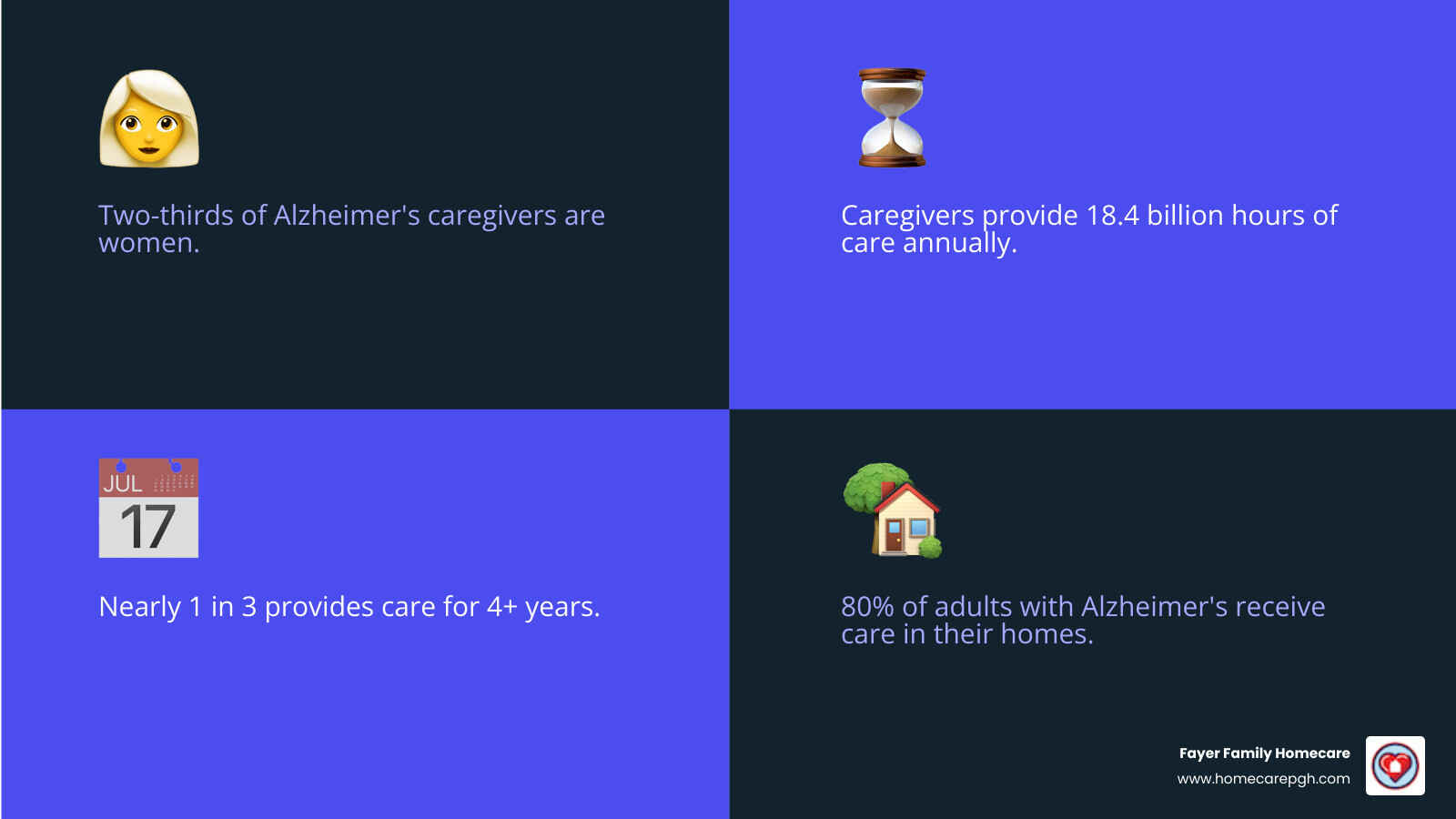
Quick Facts About Alzheimer's Caregivers:
- Who: Approximately two-thirds are women; about 1 in 3 are age 65 or older
- Duration: Nearly 1 in 3 provides care for four years or more (longer than other types of caregiving)
- Hours: In 2023, caregivers provided about 18.4 billion hours of care
- Impact: Higher risk for anxiety, depression, and poorer quality of life compared to other caregivers
- Setting: About 80% of adults with Alzheimer's receive care in their homes
Caring for someone with Alzheimer's is both rewarding and demanding. The disease progresses over time, requiring you to adapt as memory loss, behavioral changes, and communication difficulties evolve. Many caregivers describe feeling like they're on a marathon, not a sprint—and they're right. The median caregiving timeframe is about five years, though it can extend much longer.
This guide provides practical strategies, support resources, and professional options to help you steer the Alzheimer's caregiving journey. You'll learn how to communicate effectively, create a safe environment, manage daily care, and—crucially—take care of yourself while caring for your loved one.
Understanding the Unique Role of an Alzheimer's Caregiver
Being a caregiver for Alzheimer's is a profound experience, often filled with moments of deep connection and love, yet it also presents an array of unique challenges that can take a significant toll. We understand that you're not just providing physical assistance; you're navigating a complex emotional landscape where your loved one is changing before your eyes.
The emotional impact can be immense. Caregivers of people with Alzheimer's and related dementias are at greater risk for anxiety, depression, and a poorer quality of life than other caregivers. This is often due to the progressive nature of the disease, which introduces what is often called "ambiguous loss"—the person you know is physically present but cognitively fading. This can lead to feelings of grief, sadness, and frustration.
The physical demands are also substantial. With 80% of adults with Alzheimer's receiving care in their homes, tasks like assisting with bathing, dressing, and mobility can be physically exhausting. The duration of caregiving for Alzheimer's patients is notably longer than for other conditions; nearly one in three family caregivers provides care for four years or more, with the median caregiving time frame extending about five years. This long haul can lead to chronic fatigue and physical health issues if not managed carefully.
Financial strain is another often-overlooked aspect. While the care you provide is unpaid, its economic value is staggering—an estimated $271.6 billion annually. This informal assistance often means caregivers must reduce work hours, pass up promotions, or even leave their jobs entirely, impacting their own financial stability and future.
For many, the role is compounded by being part of the "sandwich generation"—about one-quarter of dementia caregivers also care for at least one child under 18, juggling responsibilities for both an aging parent and young children. This multi-generational caregiving can amplify stress and reduce available time for self-care. The cumulative effect of these factors underscores why scientific research consistently shows a significant impact on caregiver well-being, as highlighted in studies like this one on caregiver well-being.
The Unique Challenges of Alzheimer's Care
The progressive nature of Alzheimer's disease means that your caregiving responsibilities will continuously evolve. What starts as occasional memory lapses can advance to significant changes in behavior, communication, and daily functioning.
One of the most profound challenges is managing behavioral changes. Individuals with Alzheimer's may experience agitation, aggression, wandering, or "sundowning"—increased confusion and anxiety in the late afternoon or evening. These behaviors are often expressions of unmet needs, pain, or confusion, and they require immense patience and understanding.
Communication difficulties are another hurdle. Your loved one might struggle to find words, forget conversations, or become frustrated when they can't express themselves. This can make everyday interactions challenging and emotionally taxing.
Ensuring safety becomes paramount as the disease progresses. Memory loss can lead to forgotten stoves, wandering outside, or an inability to recognize hazards. We'll dig into creating a safe home environment later, but it's a constant concern for caregivers for Alzheimer's.
Finally, the sheer demands of caregiving often lead to social isolation for the caregiver. Your social life, hobbies, and personal time can dwindle as care responsibilities consume more hours, making it difficult to maintain connections outside the caregiving role.
The Impact on the Caregiver
The relentless nature of Alzheimer's caregiving means that caregivers are at a significantly higher risk for stress-related health issues. We often see signs of caregiver stress manifest as:
- Anger or frustration at the loved one or the situation.
- Depression, a persistent feeling of sadness or loss of interest.
- Exhaustion, both physical and mental, that sleep doesn't alleviate.
- Sleeplessness due to worry or disturbed nights.
- Health problems, as personal health takes a backseat to caregiving duties.
These signs are not weaknesses; they are natural responses to an incredibly demanding role. Recognizing these symptoms is the first step toward seeking help. We believe that caring for others begins with caring for yourself, and we have dedicated resources to offer you Support for Caregivers. You are not alone in feeling this way.
Practical Strategies for Daily Care and Communication
Caring for a loved one with Alzheimer's requires a blend of practical skills, empathy, and adaptability. We've learned that consistency, a person-centered approach, and a deep well of patience can make all the difference in navigating daily life.

Establishing routines is incredibly beneficial for individuals with Alzheimer's. A predictable schedule for meals, bathing, activities, and sleep can provide a sense of security and reduce confusion and agitation. Try to keep daily tasks at the same time each day, as this familiarity can be comforting.
A person-centered approach means focusing on your loved one as an individual, respecting their history, preferences, and remaining abilities, rather than just their diagnosis. What did they enjoy before? What brings them comfort now? What makes them laugh? This approach helps maintain their dignity and can enrich your interactions.
Patience and flexibility are your superpowers. There will be good days and bad days, unexpected challenges, and moments of frustration. Learning to adapt, take a deep breath, and approach situations with a calm demeanor will benefit both you and your loved one. For ideas on engaging activities, explore our guide on Dementia Activities at Home.
How to Communicate Effectively
Effective communication is crucial, yet it can be one of the most challenging aspects of Alzheimer's care. Here are some strategies we've found to be helpful:
- Speak calmly and clearly: Use a gentle tone and simple, direct sentences. Avoid complex instructions or jargon.
- Listen actively: Even if their words are confused, try to understand the emotion or underlying need they are trying to express.
- Use non-verbal cues: Your body language, facial expressions, and touch can convey reassurance and understanding.
- Avoid correcting or arguing: When your loved one says something that isn't true or makes a mistake, it's often more helpful to meet them where they are emotionally rather than pointing out their error. Correcting them can cause agitation and distress.
- Use distraction techniques: If your loved one becomes agitated or fixated on a difficult topic, try gently redirecting their attention to a pleasant activity or a different subject.
For more in-depth guidance, the National Institute on Aging offers excellent resources on Managing changes in behavior and communication.
Creating a Safe Home Environment
As Alzheimer's progresses, the home environment may need adjustments to ensure safety and comfort. Our goal is to minimize risks while maximizing independence.
Here's a list of crucial home safety modifications:
- Fall prevention:
- Remove throw rugs, loose cords, and clutter from walkways.
- Ensure all rooms and outdoor areas have good lighting.
- Install sturdy handrails on all staircases.
- Consider using brightly colored tape to mark the edges of steps for better visibility.
- Secure dangerous items:
- Insert safety plugs into unused electrical outlets.
- Install safety latches on cabinets containing cleaning supplies, medications, or sharp objects.
- Lock up all hazardous products, tools, and weapons.
- General safety:
- Remove curtains and rugs with busy patterns that may cause confusion or visual distortions.
- Consider installing alarms on doors and windows if wandering is a concern.
- Adjust water heater temperature to prevent scalds.
For a more comprehensive approach, refer to our specific guide on Dementia Safety at Home.
Encouraging a Healthy Lifestyle
Maintaining a healthy lifestyle, including diet and physical activity, is important for everyone, especially for individuals with Alzheimer's.
- Adapting activities: Encourage physical activity that matches your loved one's capabilities. This could be simple chores, gardening, or chair exercises. Add music to exercises or activities if it helps motivate them. Several short "mini-workouts" might be more effective than one long session.
- Simple exercises and daily walks: A daily walk together not only provides physical benefits but also offers fresh air and a change of scenery. Even short, gentle movements can improve mood and circulation.
- Nutritious meals and hydration: Offer a variety of healthy, easy-to-prepare foods. Give your loved one choices about what to eat to maintain a sense of control. Serve meals in a consistent, familiar place, and allow plenty of time for eating. Ensure they are drinking enough fluids throughout the day to prevent dehydration.
Our article on Nourishing Seniors: The Importance of Meal Preparation in Home Care provides more valuable insights into healthy eating for seniors.
Caring for Yourself: Support Networks and Respite for Caregivers
It's often said that you can't pour from an empty cup, and this couldn't be truer for caregivers for Alzheimer's. Your well-being is not a luxury; it's a necessity for sustainable, compassionate care.
The importance of self-care cannot be overstated. Caregiving is a marathon, and without taking breaks, you risk burnout, which can negatively impact both your health and the quality of care you provide. As one expert put it, "You can't give what you don't have... You have to take care of yourself." This means prioritizing your own physical, mental, and spiritual health.
Avoiding burnout involves recognizing its signs and proactively seeking ways to recharge. This includes asking for help—something many caregivers find challenging. Asking for assistance is a sign of strength, not weakness.
Maintaining hobbies and social connections is vital for preserving your personal identity outside of your caregiving role. Whether it's reading a book, meeting a friend for coffee, or pursuing a creative outlet, these activities help you stay connected to yourself. We have a dedicated resource on Caring for the Caregiver: Tips for Self-Care in Senior Home Care that can offer more guidance.
Educating Yourself and Finding Resources
Knowledge is power, especially when facing a complex disease like Alzheimer's. Educating yourself about the disease, its progression, and effective care strategies can reduce anxiety and increase your confidence. Jennifer Wolff, PhD, from the Roger C. Lipitz Center for Integrated Health Care, states that "Education is a foundational element in supporting caregivers of persons with dementia by helping them understand the disease, obtain skills and knowledge to effectively respond to symptoms of the disease, and become familiar with resources and supports that are available."
We encourage you to connect with reputable organizations and resources:
- Alzheimer's Association: Offers a 24/7 helpline, local support groups, and a wealth of information.
- National Institute on Aging (NIA): Provides comprehensive guides and resources on Alzheimer's caregiving. You can find their main topic page here: Alzheimer’s Caregiving Health Topic From NIA.
- Local support groups: Connecting with other caregivers for Alzheimer's in the Greater Pittsburgh Area can provide invaluable emotional support and practical advice. Organizations like the Alzheimer's Association and Family Caregiver Alliance help connect caregivers with both in-person and online support groups.
- Online forums and communities: These platforms offer a safe space to share experiences, ask questions, and receive encouragement.
- Administration for Community Living’s Aging and Disability Resource Network and the Eldercare Locator are excellent starting points for finding local resources.
- For veterans, the Veterans Affairs Caregiver Support Program offers specific programs and respite services.
- Programs like Dementia Dialogues, which began with the University of South Carolina’s Prevention Research Center, teach communication skills and strategies for managing behavioral issues.
The Importance of Respite Care
Respite care is a lifeline for many caregivers for Alzheimer's. It provides temporary relief, allowing you to rest, attend to personal needs, or simply refresh, all while your loved one continues to receive the care they need. Research shows that respite care can significantly improve caregiver well-being and, in turn, make you a better caregiver.
There are various types of respite care:
- In-home respite: A professional caregiver comes to your home, allowing you to leave for a few hours.
- Adult day care centers: Your loved one attends a supervised program during the day, offering social engagement and activities.
- Short-term facility stays: Some assisted living facilities or nursing homes offer short-term stays for a few days or weeks.
Planning for respite in advance is key, so you're not scrambling during a crisis. Resources like the ARCH National Respite Network’s Respite Locator, the Alzheimer’s Association, and Dementia Care Central’s Respite Guide can help you find options. You can find more detailed information about respite care here: Respite care information.
Planning for the Future and Finding Professional Caregivers for Alzheimer's
The journey of Alzheimer's caregiving is long and unpredictable. Proactive planning for the future is essential, not only for your loved one's well-being but also for your peace of mind.
Long-term planning involves considering how care needs will change as the disease progresses and making decisions about medical, legal, and financial matters. It's best to start these conversations early, while your loved one can still participate in the decision-making process. Discussing their wishes and goals of care can be difficult, but it ensures their preferences are honored. Our guide, Navigating Alzheimer's: A Comprehensive Guide to Senior Home Care, offers valuable insights into this process.
Legal and Financial Planning
Addressing legal and financial matters early can prevent future stress and ensure your loved one's wishes are respected. Key documents to consider include:
- Healthcare directives: These outline your loved one's preferences for medical treatment.
- Power of attorney: Designates someone to make financial and/or healthcare decisions on their behalf.
- Living wills: Specify end-of-life care wishes.
It's wise to involve a lawyer or legal expert to help steer these discussions and ensure all documents are properly prepared. Financial planning for long-term care is also critical, as Alzheimer's care can be expensive. Explore resources on Legal and financial planning for people with Alzheimer's for more details.
Finding Professional In-Home Caregivers for Alzheimer's
Many families reach a point where the demands of caregiving exceed their capacity, or they simply need additional support. This is where professional in-home caregivers for Alzheimer's can make a profound difference.
There are different types of in-home care services:
- Companion services: Provide supervision, social engagement, and recreational activities. Our Companionship services focus on creating meaningful connections.
- Personal care services: Assist with daily living activities like bathing, dressing, grooming, and toileting. Our professional Personal Care Services ensure dignity and comfort.
- Homemaker services: Help with household tasks like light cleaning, laundry, and meal preparation.
- Skilled care: Provided by licensed health professionals (nurses, therapists) for medical needs like wound care or medication administration.
Choosing a home care agency requires careful consideration. When looking for reliable Alzheimer's care near you in the Greater Pittsburgh Area, we recommend:
- Creating a list of needs: Detail your loved one's specific care requirements and preferences.
- Interviewing potential providers: Meet with agencies or individual caregivers to assess compatibility and expertise.
- Checking references: Speak to other families who have used their services.
- Ensuring specialized training: Ask if caregivers are trained in dementia care, first aid, and CPR. Do they have experience with the unique behaviors and communication challenges associated with Alzheimer's?
- Asking key questions: Are they bonded and insured? What is their backup plan if a caregiver is sick? Can they manage your loved one's specific health and behavioral needs?
For a comprehensive guide on finding the right support, refer to How to Find Reliable Alzheimer's Care Near You. At Fayer Family Homecare, we provide specialized care for individuals with Alzheimer's in the Greater Pittsburgh Area, offering companionship, supervision, and recreational activities, ensuring cleanliness and comfort, all delivered by our experienced home caregivers.
Frequently Asked Questions about Alzheimer's Caregiving
We know you have many questions, and we're here to provide clarity. Here are some of the most common questions we hear from caregivers for Alzheimer's.
What are the most common signs of caregiver stress?
Caregiver stress can manifest in many ways, but some of the most common signs include:
- Anger or frustration towards your loved one or the situation.
- Social withdrawal, leading to isolation from friends and family.
- Anxiety about the future, your loved one's condition, or your ability to cope.
- Depression, characterized by persistent sadness, hopelessness, or loss of interest in activities you once enjoyed.
- Exhaustion that doesn't improve with rest.
- Sleeplessness or difficulty sleeping, often due to worry.
- Health problems, such as increased susceptibility to illness, headaches, or high blood pressure, as your own health takes a backseat.
If you recognize these signs in yourself, please know that it's okay to seek help.
How can I get help paying for Alzheimer's care?
The costs associated with Alzheimer's care can be substantial, but several options may help:
- Medicare coverage limitations: Medicare generally covers skilled nursing care and short-term rehabilitation, but not long-term custodial care (non-medical daily assistance). There are specific eligibility criteria for in-home health care services to be covered.
- State programs: Many states, including Pennsylvania, offer programs for seniors with limited resources and assets. These often include "participant-directed services" or "cash and counseling" programs, which may allow you to pay a person of your choosing (even family members) for in-home services.
- Veterans benefits: If your loved one is a veteran, the VA Caregiver Support Program and other benefits may provide financial assistance or direct care services.
- Long-term care insurance: If your loved one purchased a long-term care insurance policy, it could cover a significant portion of in-home care or facility costs.
- Private pay: Many families use personal savings, pensions, or other assets.For more details on financing care, see our article on Understanding the Costs and Options in Private Home Care.
When is it time to consider professional in-home care?
Deciding to bring in professional help is a significant step, and it's often driven by several factors:
- When caregiver stress is high: If you're experiencing persistent signs of burnout, depression, or physical health issues, it's a clear indicator that you need more support.
- When the person's safety is at risk: If your loved one is prone to wandering, falls, or engaging in unsafe behaviors (like leaving the stove on), professional oversight may be necessary to prevent accidents.
- When specialized care is needed: As the disease progresses, your loved one may require assistance with more complex personal care, medication management, or managing challenging behaviors that require professional expertise.
- When you need respite: Even if you can manage most care, regular respite is crucial for your own well-being. Professional in-home care can provide scheduled breaks, allowing you to recharge.
Considering professional help is not a failure; it's a responsible and loving decision to ensure your loved one receives the best possible care while also protecting your own health. Read more about this decision in Why You Should Consider Hiring a Home Health Care Agency.
Conclusion
The journey of being a caregiver for Alzheimer's is undoubtedly one of the most challenging, yet profoundly loving roles a person can undertake. We've explored the unique emotional, physical, and financial impacts, and discussed practical strategies for daily care, communication, and creating a safe home environment. Crucially, we've emphasized the absolute necessity of self-care, building support networks, and utilizing respite services to sustain yourself through this marathon.
You are not alone in this journey. Support is available, and seeking help is a testament to your strength and commitment. For families in the Greater Pittsburgh Area, Fayer Family Homecare stands ready to offer specialized support, providing compassionate and experienced caregivers for Alzheimer's who can offer companionship, supervision, and recreational activities, ensuring comfort and peace of mind.
To learn more about how we can support you and your loved one, please explore our comprehensive Alzheimer's & Dementia care services. We're here to help you steer this path with dignity, compassion, and expert care.

.svg)