

February 6, 2025
House Cleaning for the Elderly: Tips and Services to ConsiderDiscover essential tips and services for house cleaning for elderly. Improve health, safety, and comfort in seniors’ homes today!
Read Article
.svg)

Companionship care services provide non-medical support focused on emotional well-being, social engagement, and assistance with everyday tasks to help seniors maintain independence and quality of life at home.
What You Need to Know:
As your loved one ages, you may notice they're spending more time alone. Social isolation can lead to serious health consequences, including depression and cognitive decline. You want them to stay in their own home, but you worry: Are they eating properly? Are they safe?
When you can't be there every day, the guilt can be overwhelming. Companionship care offers a solution. It provides your aging parent with a caring presence—someone to talk to, share meals with, and help with the routines that give life structure. This support allows seniors to remain independent while ensuring they're safe, engaged, and connected.
This guide explains what companionship care includes, how it differs from other care types, its costs, and how to find a trustworthy caregiver who will treat your loved one with dignity and respect.
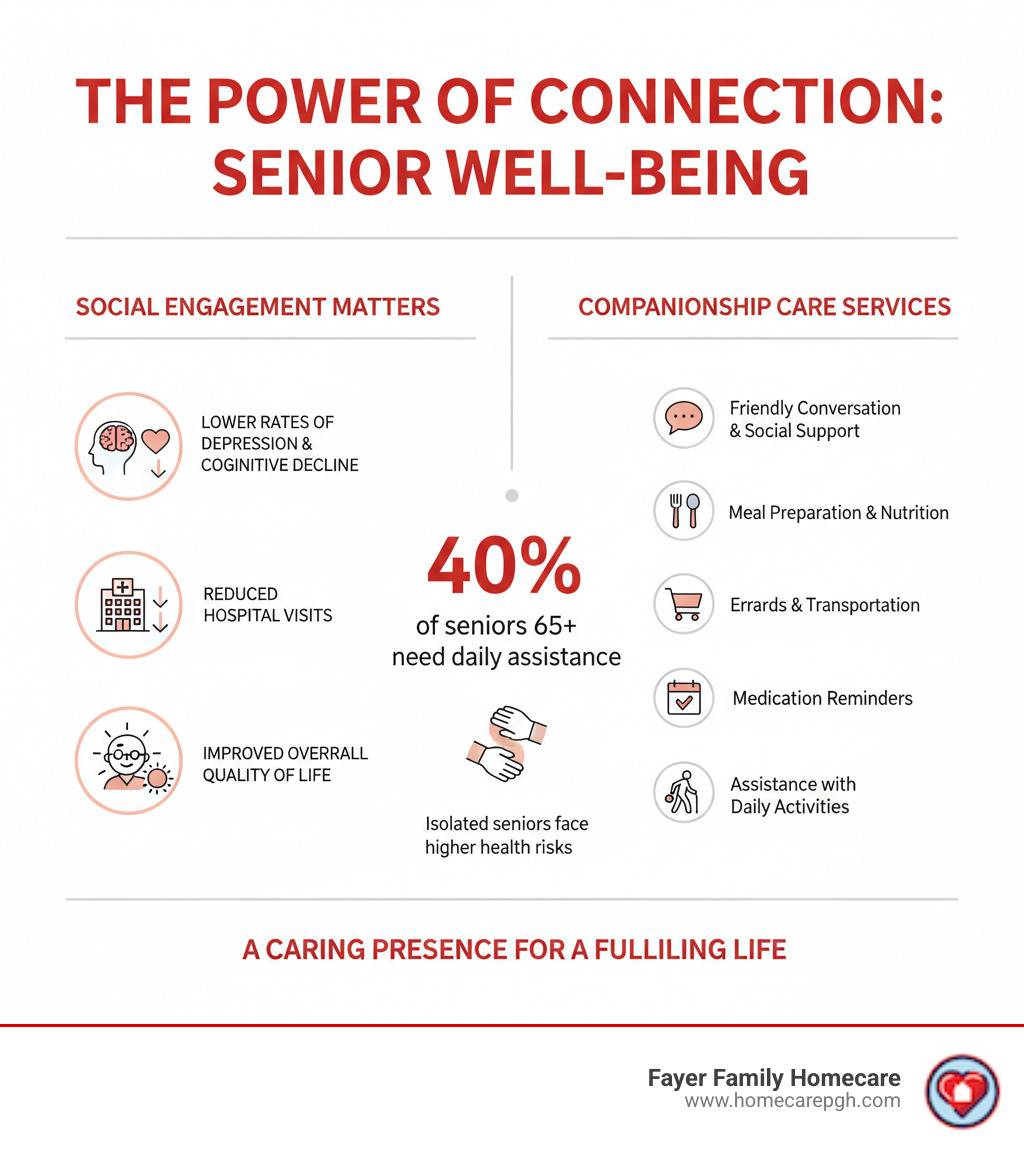
At its heart, companionship care services are about providing non-medical support that focuses on your loved one's emotional well-being and social engagement. It's a friendly presence, a listening ear, and a helpful hand with daily tasks that have become more challenging.
As people age, their world can shrink, leading to isolation. Companionship care is designed to prevent this loneliness and improve quality of life through consistent social connection and practical support.
But how does this differ from other types of home care? The key distinction is the level of hands-on physical assistance required. Companionship care helps with activities around daily living, while personal care helps with the physical acts of daily living.
| Feature | Companionship Care | Personal Care |
|---|---|---|
| Primary Focus | Emotional support, socialization, mental stimulation, light assistance | Hands-on physical assistance with Activities of Daily Living (ADLs) in addition to companionship services |
| Nature of Care | Non-medical, observational, interactive | Non-medical, direct physical assistance |
| Typical Services | Conversation, meal prep, light housekeeping, errands, transportation, medication reminders, recreational activities | All companionship services, plus bathing, dressing, grooming, toileting, mobility assistance, feeding |
| Activities of Daily Living (ADLs) | Limited to supervision or reminders (e.g., reminding to bathe) | Direct assistance with ADLs (e.g., assisting with bathing, dressing) |
| Instrumental Activities of Daily Living (IADLs) | Assistance with most IADLs (e.g., shopping, meal prep, transportation) | Assistance with most IADLs |
A companion caregiver can remind your father to take his medication, prepare a nutritious lunch, or drive your mother to her book club. They provide emotional support and help with Instrumental Activities of Daily Living (IADLs)—tasks like grocery shopping, meal preparation, and transportation.
What they don't do is provide hands-on help with Activities of Daily Living (ADLs) like bathing, dressing, or toileting. If your loved one needs that level of physical assistance, personal care is the right fit. As we explain in our post What is Companion Care and How Does It Differ from Caregiving?, the choice depends on your loved one's current needs. Many families start with companionship care and transition to personal care if physical needs increase over time, preserving dignity and independence along the way.
Companionship care services provide more than just help with chores; they offer the warmth of human connection. A caregiver provides genuine friendship and engagement that keeps your loved one's mind sharp and spirits lifted. For you, this translates to peace of mind, knowing your parent isn't alone.
Care is custom to your loved one's personality and needs, but services typically include:
For more details, see our page on Companions and Homemakers Near Me.

For most seniors, there's no place like home. Aging in place allows your loved one to hold onto precious connections while receiving the support they need. Companionship care services are essential partners in helping your loved one maintain the lifestyle they cherish. As we discuss in Home Companionship Elderly, the right companion makes the difference between struggling alone and thriving at home.
Independence is about having the right support to live on your own terms. Our companions empower seniors by assisting with tasks like meal preparation and light housekeeping, which makes the home safer and helps maintain daily routines. Fall prevention is another critical benefit, as caregivers provide steady assistance and spot potential hazards. They also handle errands and transportation, keeping your loved one connected to their community and healthcare. Most importantly, a caregiver's presence ensures someone is there in an emergency, providing security that goes beyond daily tasks. Our Senior Home Companions understand that true independence comes from having the right help at the right time.
Yes. While most care takes place at home, our caregivers can provide support in other settings. In a retirement community or assisted living facility, a companion can offer personalized, one-on-one attention. During hospital stays or in rehabilitation centers, a familiar companion can ease anxiety, ensure comfort, and coordinate with medical staff, providing continuity of care wherever it's needed.
Companionship is especially valuable for seniors facing unique challenges. For those with cognitive decline or Alzheimer's disease, our caregivers provide a calm, familiar presence and engage them in stimulating activities. They are trained to manage difficult behaviors like sundowning, creating a secure environment. You can read more in our article on Dementia Companionship Care. For seniors in post-surgery recovery, companions manage practical needs like meals and medication reminders, allowing your loved one to focus their energy on healing.

When considering companionship care services, practical questions about cost and finding a trustworthy provider are top of mind. Let's walk through these concerns with the transparency you deserve.
The cost of care varies based on your loved one's needs, hours required, and location in the Greater Pittsburgh Area. Nationally, the median hourly rate for homemaker services is around $20 per hour. According to the 2016 Genworth Cost of Care Study, this can average about $3,813 per month for 44 hours of care per week. Costs for nights, weekends, or holidays may be higher. For a precise quote, it's best to discuss your specific needs with us. Our page on Companion Care Services Cost offers more insight.
Families typically use one of the following options:
Choosing a caregiver is a critical decision. When evaluating agencies in the Greater Pittsburgh Area, ask these key questions:
Your local Area Agency on Aging is an excellent resource for finding reputable providers. For more local guidance, see our guide on Home Care Agencies in Pittsburgh, PA. Taking the time to find the right fit ensures your loved one receives dignified, respectful care.
Here are answers to some of the most common inquiries families have when considering companionship care services.
A successful match is key to a great relationship. Our process begins with a comprehensive needs assessment to understand your loved one's routines, health conditions, and required assistance. We then focus on personality and preference matching, pairing them with a caregiver who shares similar interests and has a compatible personality. We also ensure the caregiver has the necessary skill requirements for the requested services. Our goal is to create a consistent, long-term relationship built on trust and genuine connection, so the caregiver becomes a welcome and trusted presence.
Yes, absolutely. Companionship care services are highly flexible. We offer flexible scheduling options to arrange care for just a few hours a week, several times a week, or daily. While most agencies have a minimum visit duration (often three hours), we work with you to create a custom care plan that fits your needs. Our services can also be used for short-term respite care, giving family caregivers a much-needed break. We tailor the schedule to support your loved one's well-being and your family's peace of mind.
Ensuring your loved one receives safe and compassionate care is our top priority. We look for a combination of professional credentials and personal attributes in our caregivers:
Choosing companionship care services is about recognizing the fundamental human need for connection and purpose. A companion caregiver brings warmth into what might be lonely days, changing quiet afternoons into opportunities for conversation and genuine friendship.
As this guide has shown, companionship care helps seniors maintain their independence while staying safe and engaged at home. The benefits are clear: reduced loneliness, improved cognitive function, increased safety, and the ability to age in place with dignity. For family caregivers, this means profound relief from the constant worry and guilt that comes with not always being able to be there.
At Fayer Family Homecare, we understand these challenges intimately. Our experienced caregivers in the Greater Pittsburgh Area are compassionate professionals committed to making each day brighter. We believe every senior deserves to feel valued, heard, and connected.
If you're ready to see how professional, compassionate support can transform your loved one's life and give your family peace of mind, we invite you to learn more about our Companionship Care Services. We are here to help you on your family's care journey.

February 6, 2025
House Cleaning for the Elderly: Tips and Services to ConsiderDiscover essential tips and services for house cleaning for elderly. Improve health, safety, and comfort in seniors’ homes today!
Read Article
August 1, 2024
Nourishing Seniors: The Importance of Meal Preparation in Home CareDiscover the importance of meal preparation in senior home care. Learn how in-home care services ensure seniors receive nutritious, balanced meals for better health and well-being.
Read Article
August 24, 2026
How to Transition Safely with Post Hospital Home Care in PittsburghLearn how post hospital home care in Pittsburgh ensures a safe recovery with personalized support and reduced readmissions.
Read Article