April 3, 2024
The Benefits of House Cleaning Services for SeniorsMaintaining a clean and well-organized living space is more than just a matter of aesthetics; it's a cornerstone of healthy and safe living for seniors.
Read Article
.svg)
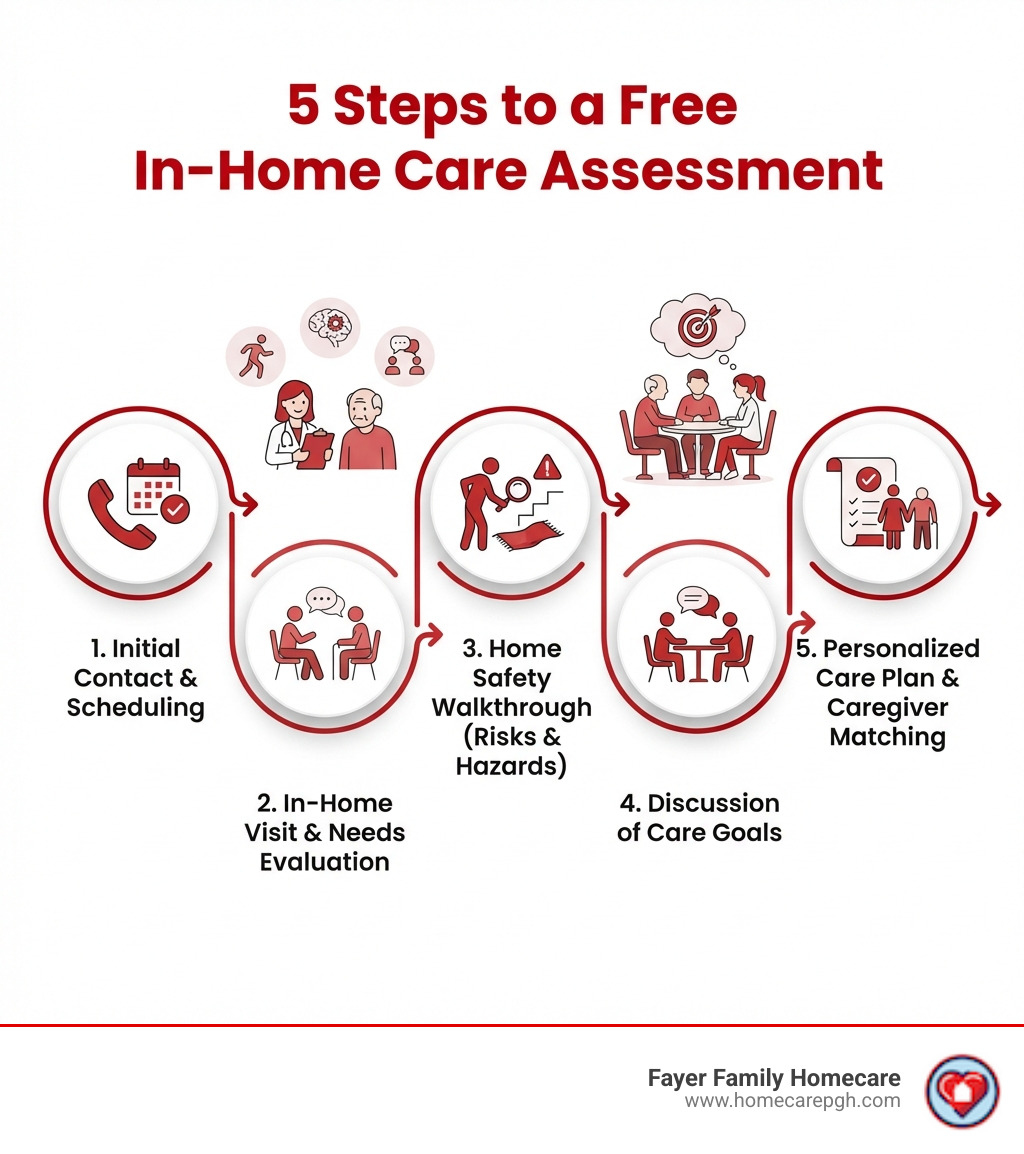
A free in-home care assessment is a no-cost evaluation conducted by a care professional at your loved one's home to identify their needs, flag safety risks, and build a personalized care plan.
Here's what it covers at a glance:
If your parent is aging, showing signs of memory loss, or simply needs more support than you can provide alone, you're probably wondering where to even start. The options feel overwhelming. Assisted living? A nursing home? Staying at home?
For many families in the Greater Pittsburgh Area, the answer begins right at home - with a free assessment.
Most people don't realize this service exists. As one homecare provider puts it, many families don't know that care agencies offer an important evaluation before any care commitment is made. It's free, it's non-obligatory, and it gives you a clear picture of what your loved one actually needs.
At Fayer Family Homecare, this assessment is how we get to know your family - not just your parent's medical history, but their routines, preferences, and what matters most to them. It's the foundation for everything that follows.
Think of a free in-home care assessment as a professional "fresh eyes" look at your loved one’s daily life. It isn't just a sales meeting; it is a clinical and functional evaluation designed to determine if staying at home is the safest and most life-affirming option for a senior.
When we visit a home in the Pittsburgh area, our primary goal is to understand how your loved one is managing their Activities of Daily Living (ADLs). These are the basic tasks we often take for granted—bathing, dressing, toileting, moving from a bed to a chair, and eating. If a senior is struggling with these, it doesn't mean they have to move into a facility. It just means they need a helping hand to maintain their In-Home Care Assessment and functional independence.
The assessment serves several critical goals:
According to resources like the NHS, getting a care needs assessment is the essential first step to accessing any support, whether it's through a public authority or a private agency like ours. It bridges the gap between "we think Mom needs help" and "here is exactly how we are going to help her."
We know that having a "professional" come into the home can feel a bit intrusive for some seniors. Many older adults are experts at "show-timing"—the phenomenon where they suddenly appear perfectly capable and energetic the moment a visitor walks through the door, only to collapse in exhaustion once they leave.
To get the most accurate results from a free in-home care assessment, preparation is key. You aren't just a bystander; you are the historian of your loved one's health.
Before the care manager arrives, try to have the following items organized:
For a week before the visit, keep a mental or written diary. Note the small things: Does Dad struggle to turn the taps in the bathroom? Does Mom seem to skip meals because she finds the stove intimidating? Resources like the Age UK checklist for assessments suggest focusing on these micro-tasks because they are often the best indicators of where support is needed.
In the Greater Pittsburgh Area, you might encounter different types of assessments. Here is a quick comparison:
| Feature | Public/Government Assessment | Private Agency Assessment (Fayer Family) |
|---|---|---|
| Cost | Usually Free | Free |
| Wait Time | Can be weeks or months | Usually scheduled within 24-48 hours |
| Focus | Eligibility for government subsidies | Personalized fit, lifestyle, and safety |
| Outcome | General service recommendation | Immediate, tailored care plan |
| Flexibility | Limited by strict regulations | Highly adaptable to family preferences |
Don't be afraid to interview us! This is your chance to ensure our values align with your family's needs. We recommend asking:
A typical free in-home care assessment usually lasts between 60 and 90 minutes. It shouldn't feel like an interrogation; it should feel like a supportive conversation.
We will ask for a tour of the home. We aren't checking for dust! We are looking for environmental hazards. We look at:
We will observe your loved one’s physical mobility—how they stand up from a chair or navigate a hallway. We also check cognitive health. This isn't a "test," but rather a way to see if there are orientation issues or if memory loss might pose a safety risk (like forgetting to turn off the stove). We also discuss social needs. Isolation is a significant health risk for seniors, so we look for ways to increase engagement through companionship.
By the end of the visit, the care manager will discuss their findings. They might recommend Personal Care Services for hygiene or simply companionship to help with loneliness. You’ll get a professional opinion on whether home care is the right fit or if a different level of care is needed.
Once the evaluation is complete, we move into the "Action Phase." A care plan isn't a static document; it’s a living guide for our caregivers.
A great care plan for Home Care Services in Pittsburgh, PA includes:
Life changes fast. While we recommend a formal review at least every 12 months, you should ask for a reassessment whenever there is a "trigger event." This includes a hospital discharge, a fall, a new medical diagnosis, or a noticeable decline in memory. If you are using government-funded programs, you can often apply for aged care services or reassessments through their portals, but with private care, we can pivot and adjust your plan the same day if necessary.
While the free in-home care assessment itself is 100% no-obligation, the services that follow do have costs. In Pennsylvania, many families use "private pay" (out-of-pocket), long-term care insurance, or VA benefits. Unlike some public health systems where rates are strictly income-based, private care offers more flexibility in choosing exactly how much or how little help you want to pay for. We always provide a clear breakdown of fees before any service begins so there are no surprises.
Taking the step to schedule a free in-home care assessment is an act of love. It shows that you are committed to your loved one’s dignity, safety, and happiness.
At Fayer Family Homecare, we specialize in more than just "checking boxes." We provide heart-centered care for seniors in the Greater Pittsburgh Area, particularly those navigating the complexities of Dementia and Alzheimer’s. Our caregivers are trained to provide compassionate supervision, ensuring your loved one is not just safe, but truly comfortable and engaged.
From providing a friendly companion for a walk in the park to ensuring a clean and organized home environment, we treat our clients like our own family.
Are you ready to stop wondering and start planning? Let us help you find the clarity you need. Request a Free Assessment with us today, and let's work together to keep your loved one thriving at home.

April 3, 2024
The Benefits of House Cleaning Services for SeniorsMaintaining a clean and well-organized living space is more than just a matter of aesthetics; it's a cornerstone of healthy and safe living for seniors.
Read Article
March 16, 2026
How to Care for Alzheimer's and Dementia and Keep Your SanityLearn how to provide care for Alzheimer's and dementia at home, manage behaviors, ensure safety, and avoid burnout. Expert tips inside!
Read Article
September 1, 2025
Your Guide to Personal Care: Supporting Daily Living with DignityUnlock independence with compassionate Personal care services. Support daily living, dignity, and quality of life for your loved ones.
Read Article