
April 3, 2024
The Benefits of House Cleaning Services for SeniorsMaintaining a clean and well-organized living space is more than just a matter of aesthetics; it's a cornerstone of healthy and safe living for seniors.
Read Article
.svg)
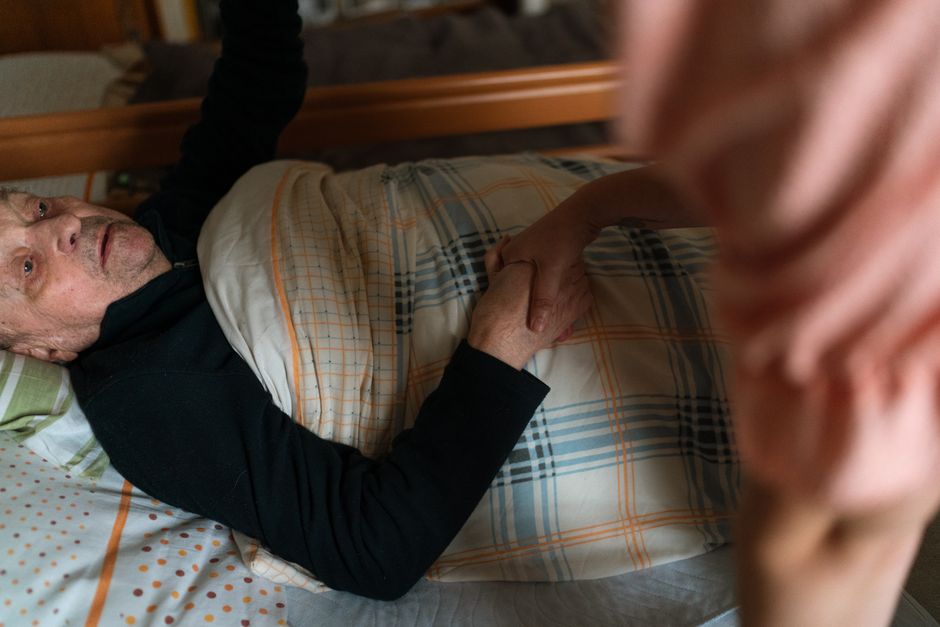
Home care for Parkinson's patients combines hands-on daily support, fall prevention, and precise medication management so your loved one can stay safely at home — often for years or even decades.
Here is a quick overview of what Parkinson's home care typically includes:
More than one million Americans are living with Parkinson's disease right now, and most are cared for at home by family members in the early stages. That is a profound responsibility — and it gets heavier as the disease progresses.
Parkinson's is not just a tremor. It is a progressive neurological condition that affects movement, balance, mood, sleep, and cognition. The care needs at Stage 1 look very different from those at Stage 4. And unlike many illnesses, the timing of a single medication dose — even 30 minutes late — can shift a person from independent to completely dependent for hours.
If you are a family member trying to figure out what kind of help your parent needs, this guide walks you through everything: the stages of the disease, the types of care available, how to manage medications, how to prevent falls, and how to find and vet a caregiver you can trust.
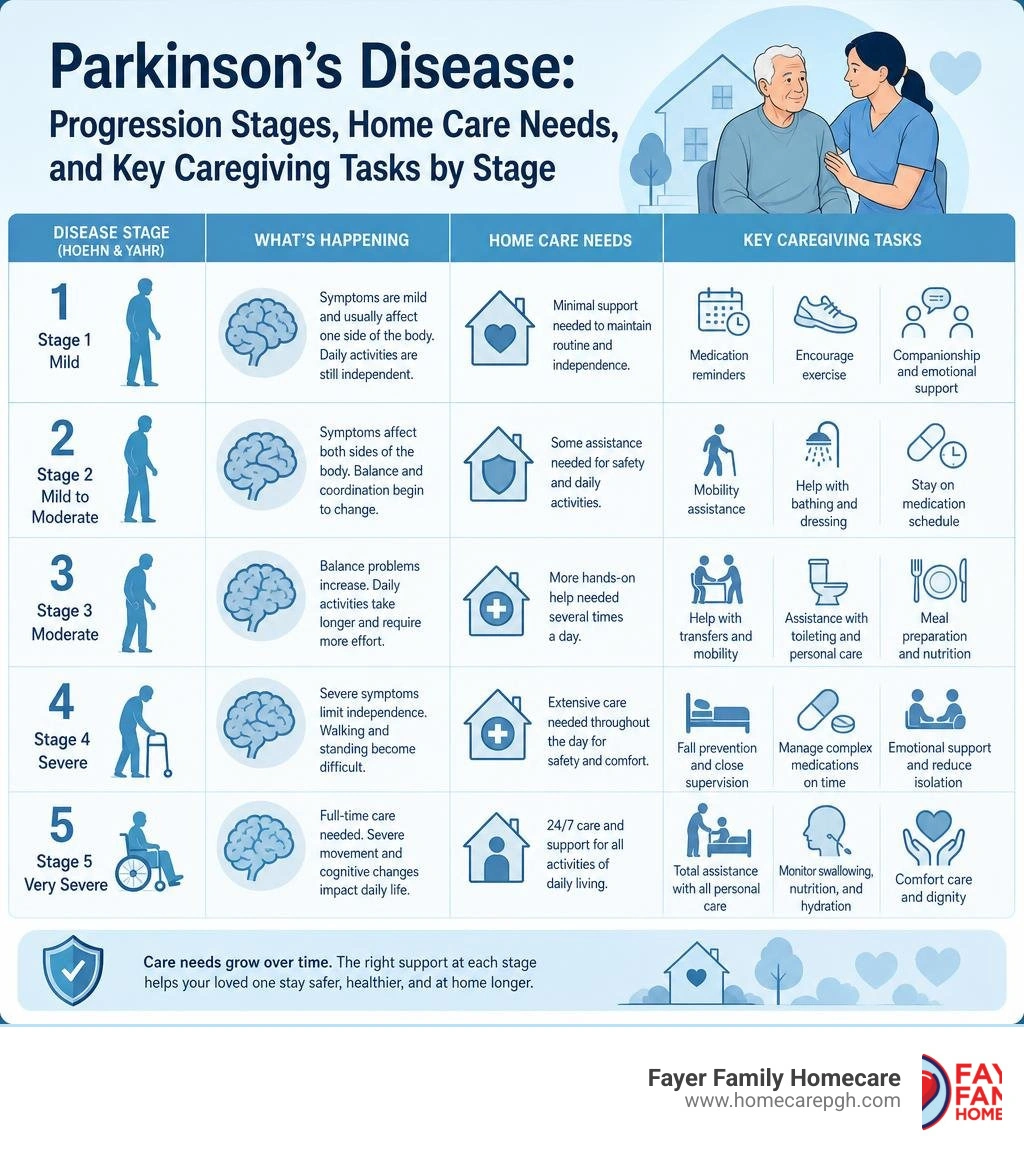
To build an effective strategy for home care for Parkinson's patients, we must first understand how the disease progresses. Parkinson’s is a neurodegenerative brain disorder caused by a loss of dopamine-producing cells in the brain. Its progression is most commonly measured using the Hoehn and Yahr scale, a clinical framework that classifies the severity of symptoms across five distinct stages.
As the disease moves through these stages, motor fluctuations (the "on-off" periods where medications stop working effectively) become more pronounced, and non-motor symptoms like cognitive decline can emerge. Scientific research on the role of professional caregivers in Parkinson's care highlights how specialized in-home care improves clinical outcomes, prevents unnecessary hospitalizations, and directly elevates the patient’s overall quality of life.
By mapping your loved one's current symptoms to this scale, we can proactively prepare for the physical and emotional challenges ahead.
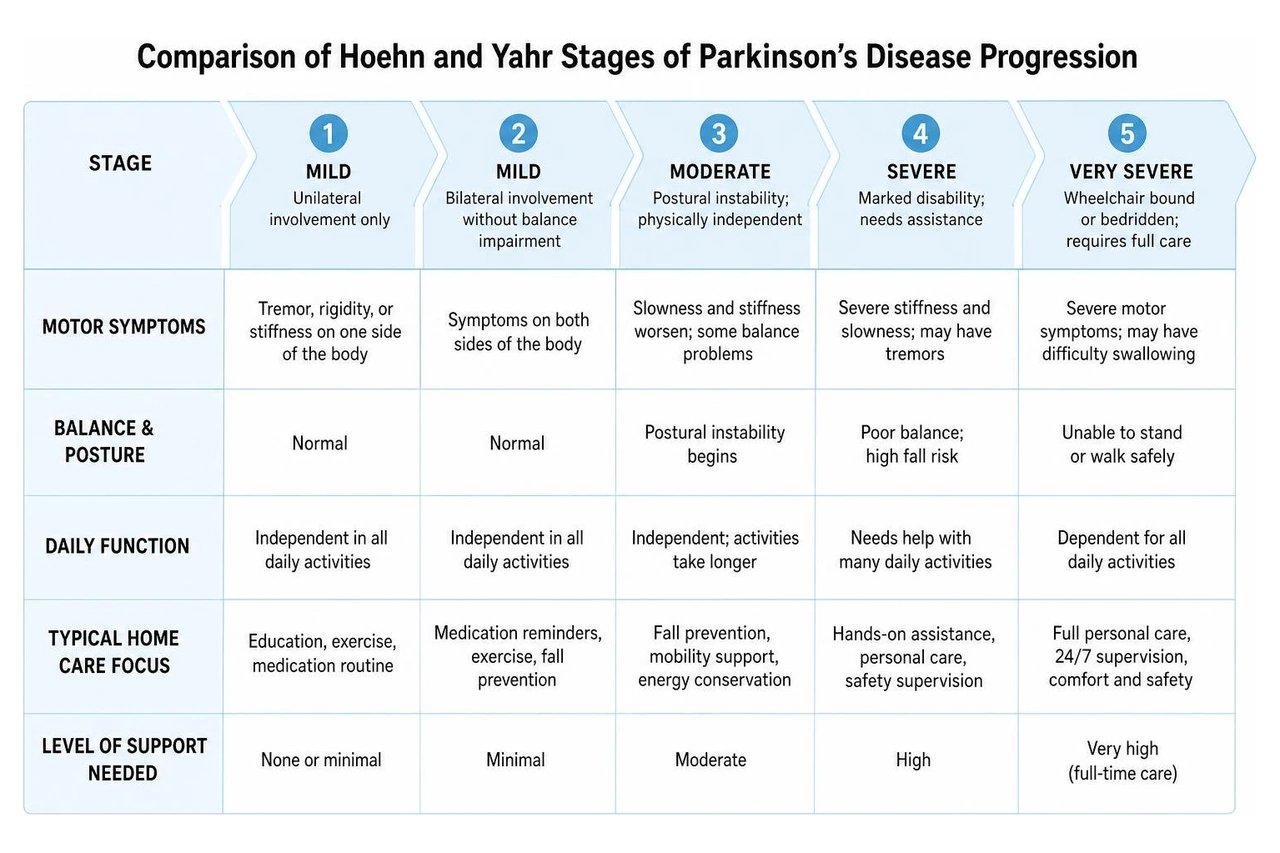
In Stage 1 and Stage 2, symptoms are relatively mild.
At this juncture, the primary goal of care is maintaining independence. We focus on establishing healthy routines, encouraging regular physical activity, and setting up a structured schedule. Introducing professional support early—even for just a few hours a week—helps your loved one adapt to having a caregiver in their space.
During these early stages, setting up a personalized care plan is highly beneficial. You can explore how we construct these tailored approaches by reading our customized care plans complete guide.
As the disease enters Stage 3, Stage 4, and Stage 5, the care dynamic shifts dramatically.
In these advanced stages, solo caregiving becomes physically and emotionally unsustainable for family members. Providing 24-hour care or live-in companion support becomes essential to prevent injuries, manage complex symptoms, and ensure a clean, comfortable environment. To learn more about how round-the-clock support works in practice, read our guide on 24 hour home care pittsburgh.
When seeking outside help, families are often confused by the terminology. It is crucial to understand that home care is generally split into non-medical care (custodial care) and medical care (home health care).
For daily, long-term support, non-medical home care is the foundation. This type of care falls into several categories:
It is important to note that Medicare typically does not cover non-medical home care (custodial care). Medicare will only cover medically necessary, short-term non medical home health services, such as visiting physical therapists, speech-language pathologists, or skilled nursing care.
To help you decide which level of care is right for your family, here is a comparison of companion care versus personal care:
| Feature / Service | Companion Care | Personal Care |
|---|---|---|
| Primary Focus | Socialization, safety supervision, and light household help | Hands-on physical assistance with daily bodily care |
| Bathing & Grooming | No direct physical help (supervision only) | Full hands-on assistance, hair washing, and shaving |
| Toileting & Incontinence | Reminders only | Direct assistance, changing briefs, and skin care |
| Mobility & Transfers | Walking companionship and guiding | Hands-on transfer assistance, pivot transfers, and slide sheets |
| Meal Preparation | Planning, cooking, and cleanup | Meal prep plus direct feeding assistance for swallowing issues |
| Best For... | Early-stage Parkinson's (Stages 1-2) | Moderate to advanced Parkinson's (Stages 3-5) |
Managing medications for a Parkinson’s patient is one of the most critical and stressful tasks a caregiver faces. The gold-standard medication, Levodopa (often prescribed as Carbidopa-Levodopa or Sinemet), must be taken on a strict, down-to-the-minute schedule.
Parkinson’s medications require a precise dosing window—ideally within 15 minutes of the scheduled time. A delay of just 30 minutes can cause the medication levels in the brain to drop, triggering a sudden "off-state." During an off-state, the patient may experience a rapid return of severe motor symptoms: intense tremors, muscle rigidity, extreme slowness (bradykinesia), or an complete inability to move. You can read more about these precise medication windows in this comprehensive Parkinson's Disease Home Care: Management Strategies & Caregiver Resources (2026).
Many families do not know that dietary protein can interfere with Levodopa absorption. Levodopa uses the same pathway in the digestive tract as amino acids from protein. If your parent takes their medication with a high-protein meal (like meat, fish, eggs, or dairy), the protein will compete with the drug, rendering it far less effective.
To optimize absorption:
While the motor symptoms of Parkinson's are highly visible, non-motor symptoms often have an even greater impact on your parent's quality of life. Caregivers must be trained to recognize and support these challenges:
When cognitive decline becomes a factor, specialized care strategies are required. Families navigating these complex cognitive symptoms can find comprehensive guidance in our resource on alzheimers care at home.
Up to 60% of people living with Parkinson’s disease fall every year, and two-thirds of those individuals fall repeatedly. Falls are the leading cause of emergency room visits and loss of independence for seniors with Parkinson's.
To keep your loved one safe, a professional home care team can conduct a comprehensive fall risk assessment and help you implement targeted interventions.
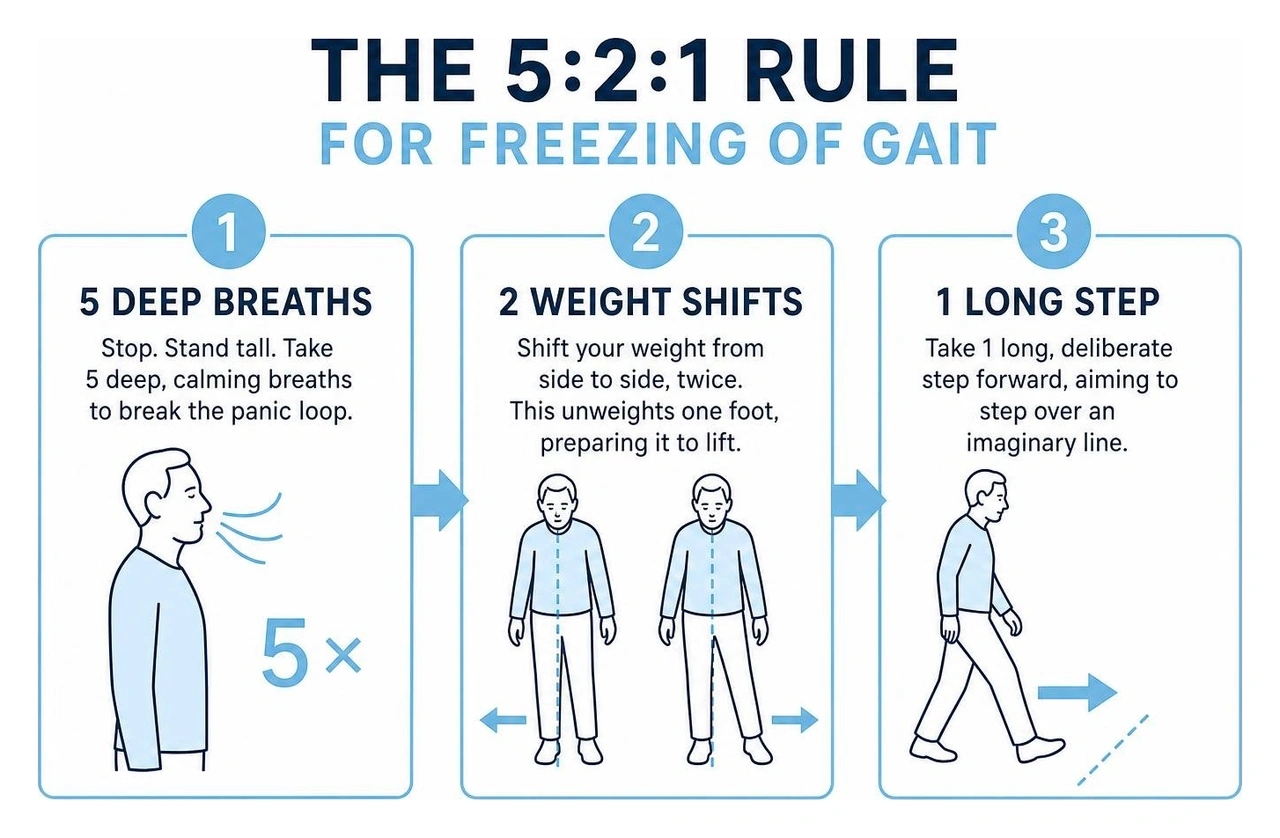
Freezing of gait (FoG) is a temporary, involuntary inability to move the feet. It often occurs when transitioning between rooms, turning around, or walking through narrow doorways. It feels as though the patient's feet are literally glued to the floor, while their upper body continues to move forward, leading to a fall.
If your parent freezes, never physically pull or push them. This will throw off their center of gravity and cause a fall. Instead, professional caregivers are trained in sensory cueing and the 5:2:1 Rule:
Modifying the home environment is a non-negotiable step in ensuring dementia safety at home. You can find more safety strategies in our article 6 tips for ensuring the safety of your loved one at home.
Research consistently shows that exercise can slow functional decline and preserve motor function in Parkinson's patients. Caregivers can support active aging by assisting with daily mobility exercises. To understand how structured movement maintains independence, read our guide on stay active stay healthy how senior home care supports active aging.
Specialized exercise programs that can be incorporated into home care routines include:
Caring for a parent with Parkinson's is a marathon, not a sprint. Over time, the physical demands of transfers, the anxiety of medication schedules, and the emotional weight of cognitive changes can lead to severe family caregiver burnout.
It is time to seek professional, outside help when:
When hiring a home care agency in the Greater Pittsburgh Area, you must look for providers licensed by the Pennsylvania Department of Health. To prepare for this transition, we recommend scheduling an in-home care assessment to evaluate safety and establish a baseline care plan.
Here are critical questions to ask potential agencies:
For more detailed advice on selecting a provider, refer to our guide on choosing the right personal care provider what you need to know.
No, Medicare does not cover non-medical, long-term home care (custodial care), which includes help with bathing, dressing, meal prep, and supervision. Medicare only covers short-term, medically necessary "home health" services prescribed by a doctor, such as physical therapy or skilled nursing. Most families pay for non-medical Parkinson's home care out-of-pocket (private pay) or utilize long-term care insurance. Veterans may also qualify for financial assistance through programs like the VA Aide and Attendance benefit.
The 5:2:1 rule is a sensory cueing framework used to help a Parkinson's patient break out of a freezing episode safely:
Dietary protein breaks down into amino acids that compete with Levodopa (Parkinson's medication) for absorption in the small intestine and the blood-brain barrier. If taken too close to a high-protein meal, the medication may not absorb properly, leading to a sudden return of motor symptoms. To prevent this, Levodopa should be taken on an empty stomach—either 30 minutes before or 60 minutes after eating protein.
Caring for a loved one with Parkinson's disease is a complex, deeply emotional journey. At Fayer Family Homecare, we believe that staying in a predictable, comfortable home environment is the absolute best way to manage the progressive symptoms of Parkinson's.
Serving families throughout the Greater Pittsburgh Area, we provide specialized senior care, including companion care, hands-on physical assistance, reliable supervision, and engaging recreational activities. Our experienced caregivers are committed to ensuring cleanliness, comfort, and safety, giving your family the peace of mind you deserve.
You do not have to walk this path alone. To learn more about how we can support your family's unique needs, schedule a customized care consultation with our compassionate team today.

April 3, 2024
The Benefits of House Cleaning Services for SeniorsMaintaining a clean and well-organized living space is more than just a matter of aesthetics; it's a cornerstone of healthy and safe living for seniors.
Read Article
January 30, 2025
Household Help Services: The Best Options for SeniorsDiscover top household help services for seniors: find reliable, affordable options for domestic and personal care.
Read Article
March 16, 2026
How to Care for Alzheimer's and Dementia and Keep Your SanityLearn how to provide care for Alzheimer's and dementia at home, manage behaviors, ensure safety, and avoid burnout. Expert tips inside!
Read Article