Understanding Your Options for Specialized Alzheimer's Care

Specialized Alzheimer's care provides structured support designed specifically for individuals with dementia and Alzheimer's disease. If you're exploring care options for a loved one, here's what makes it different from general senior care:
Key Features of Specialized Alzheimer's Care:
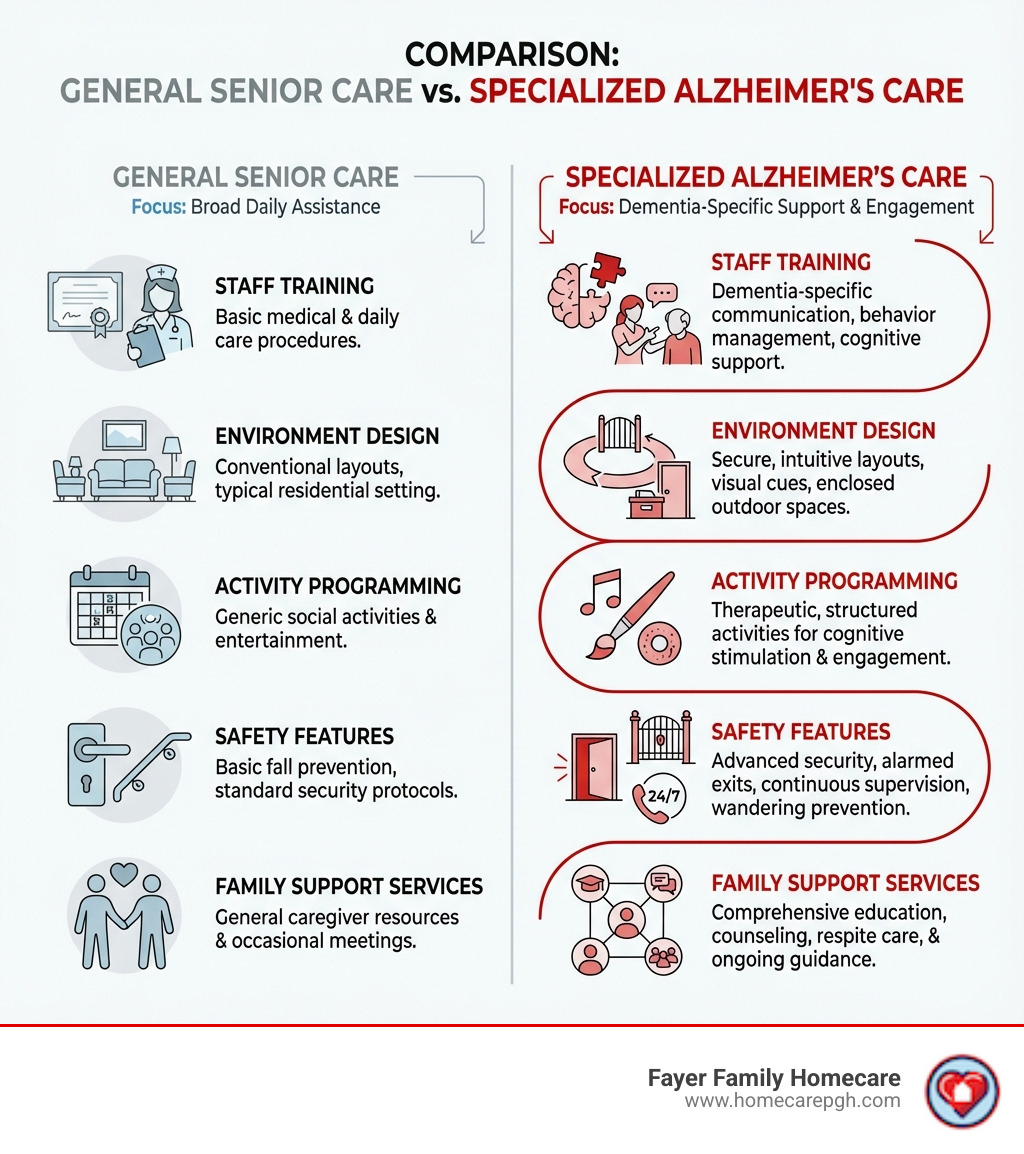
- Trained staff who understand dementia-related behaviors and communication needs
- Safe, secure environments with features like alarmed doors and enclosed outdoor spaces
- Structured routines that reduce stress and confusion
- Therapeutic activities designed to support cognitive function and engagement
- Low staff-to-resident ratios (often 1-to-5) for personalized attention
- 24/7 supervision to ensure safety and prevent wandering
Nearly 7 million Americans aged 65 and older are living with Alzheimer's—a number projected to double by 2060. As the disease progresses, the challenges of providing safe, dignified care at home often become overwhelming for families.
The good news? You have options. Specialized care isn't one-size-fits-all. Whether your loved one benefits most from in-home support, a memory care program, or adult day services depends on their unique needs, the stage of their disease, and what works best for your family.
This guide walks you through the different types of specialized care available, what quality programs look like, how to choose the right provider, and what to expect in terms of costs. Our goal is to help you make an informed decision that prioritizes your loved one's safety, dignity, and quality of life—while also supporting you as a caregiver.
What is Specialized Alzheimer's Care and Why is it Different?
When a loved one is diagnosed with Alzheimer's disease or another form of dementia, the path ahead can seem daunting. Specialized Alzheimer's care is designed to meet the unique and evolving needs of individuals living with these conditions, offering a level of support that general senior care simply cannot. It's more than just assistance with daily tasks; it's a holistic approach that focuses on maintaining dignity, fostering engagement, and ensuring safety in a structured environment.
At its core, specialized Alzheimer's care involves environments and programs carefully crafted to support cognitive function, manage behavioral changes, and reduce anxiety. This means a structured environment that provides predictability and comfort, staffed by professionals who are not only compassionate but also specifically trained in dementia care. These care providers understand the nuances of Alzheimer's—from communication techniques to managing sundowning or wandering behaviors. Safety features are paramount, integrating seamlessly into the environment to protect residents without feeling restrictive. The focus is on cognitive support, aiming to slow decline, encourage independence, and improve the overall quality of life.
The Core Benefits Over General Care
The distinctions between general senior care and specialized Alzheimer's care translate into significant benefits for both the individual with dementia and their family.
- Reduced stress for residents: Individuals with Alzheimer's thrive on routine and familiarity. Specialized settings provide consistent schedules and environments, which can dramatically reduce confusion and anxiety. Staff are trained to interpret non-verbal cues and respond with patience and understanding, rather than reacting to challenging behaviors in ways that might escalate them.
- Improved safety: Many people with dementia are prone to wandering—an estimated 6 in 10 individuals with dementia will wander. Specialized facilities incorporate subtle but effective safety measures like alarmed doors, secure perimeters, and tracking bracelets to prevent residents from getting lost or injured. Even in a home setting, trained caregivers implement safety protocols, as we do at Fayer Family Homecare in the Greater Pittsburgh Area, to mitigate risks and create a secure living space.
- Slower cognitive decline: While Alzheimer's is a progressive disease, specialized care can help maintain cognitive function for longer. Through custom therapeutic activities and cognitive engagement strategies, these programs stimulate the brain, promoting mental acuity and slowing the progression of symptoms.
- Improved social engagement: Isolation can worsen cognitive decline. Specialized care environments, whether in a residential facility or through in-home companionship, offer opportunities for meaningful social interaction. Group activities, one-on-one engagement, and a sense of community can foster connection and reduce feelings of loneliness. For more on how companionship can make a difference, you can find more info about Dementia Companionship Care.
- Peace of mind for families: Perhaps one of the most profound benefits is the peace of mind it offers families. Knowing your loved one is in a safe, supportive environment with trained professionals who understand their unique needs allows family members to shift back into the role of a loving relative, rather than a full-time caregiver. This can restore family dynamics and alleviate the immense stress and burnout often experienced by primary caregivers.
Understanding Levels of Care for Alzheimer's & Dementia
The journey of Alzheimer's is unique for everyone, and care needs change as the disease progresses. Understanding the different levels of specialized care is crucial for finding the right fit at the right time.
| Level of Care | Environment | Staff Training | Typical Resident Needs | Level of Medical Care |
|---|
| In-Home Care | Familiar home setting | Dementia-specific training | Early to mid-stage dementia; assistance with ADLs, companionship | Limited medical care; medication reminders, basic health monitoring |
| Adult Day Programs | Structured community setting | Dementia-specific training | Socialization, engagement, supervision during the day | Medication administration, health monitoring by program nurses |
| Memory Care Units | Secure, specialized residential facility | Extensive dementia-specific training | Mid to late-stage dementia; 24/7 supervision, behavioral support | On-site nursing, medication management, coordination with physicians |
| Nursing Homes with SCUs | Medicalized residential facility with special care units | Advanced dementia-specific and medical training | Late-stage dementia; complex medical needs, high dependency for ADLs | 24/7 skilled nursing care, physician oversight, comprehensive medical management |
As you can see, each level offers distinct advantages depending on the individual's condition. For instance, in the early stages, an individual might thrive with in-home care, maintaining independence and comfort in their familiar surroundings. As symptoms progress, a memory care unit or adult day program might offer the structured environment and specialized supervision needed. It's also important to remember that Alzheimer's and dementia, while often used interchangeably, have distinct differences. For a clearer understanding, you can refer to our article on Understanding the Difference Between Alzheimer's & Dementia.
Exploring the Types of Specialized Care Options
The landscape of specialized Alzheimer's care is diverse, offering a continuum of options that can be custom to match the disease stage and individual preferences. From maintaining independence at home to immersive residential programs, the goal remains the same: to provide dignity, safety, and a high quality of life.
In-Home Specialized Alzheimer's Care
For many families in the Greater Pittsburgh Area, the thought of moving a loved one out of their cherished home is heartbreaking. This is where in-home specialized Alzheimer's care truly shines. It allows individuals to age in place, surrounded by familiar sights, sounds, and memories, which can be incredibly comforting and reduce agitation often associated with new environments.
Our experienced home caregivers at Fayer Family Homecare provide one-on-one attention, tailoring personalized routines that honor the individual's past habits and preferences. This might include assistance with daily living activities, engaging in favorite recreational activities, ensuring cleanliness and comfort, and providing compassionate supervision. The familiarity of home, combined with expert support, can significantly improve an individual's sense of security and well-being. For more in-depth information, explore our resources on Alzheimer's Care at Home and Dementia Safety at Home.
Memory Care Programs in Residential Settings
When in-home care becomes insufficient due to the progression of the disease or complex behavioral needs, memory care programs in residential settings offer a comprehensive solution. These are not just assisted living facilities; they are specialized memory care units designed specifically for individuals with Alzheimer's and other dementias.
Key features of these programs include:
- 24/7 Supervision: Round-the-clock monitoring ensures safety, especially for individuals prone to wandering.
- Secure Settings: Facilities are equipped with alarmed doors, code-required elevators, and enclosed outdoor spaces to prevent elopement and provide a safe environment for exploration.
- Group Socialization: Structured group activities encourage interaction, reducing isolation and fostering a sense of community.
- Supportive Environments: The physical layout is often designed with dementia-friendly features, such as circular hallways, clear labeling, and reduced sensory overload, to minimize confusion and promote independence.
The senior housing market has seen a significant increase in these specialized options, with the number of memory care units growing by nearly 84 percent from 2013 to 2023. Occupancy rates have also rebounded by 17 percent, returning to pre-pandemic levels, reflecting the growing demand for this critical care.
Adult Day Programs and Respite Services
Adult day programs offer a vital bridge between full-time in-home care and residential facilities, especially for those in the early to mid-stages of dementia. These programs provide structured activities, social interaction, and supervision during the day, allowing individuals to engage in meaningful experiences outside the home.
The benefits are twofold:
- For the individual: They receive cognitive stimulation, social engagement, and a change of scenery, often in a safe and familiar community setting. Programs typically include therapeutic activities like pet therapy, art therapy, music therapy, and physical exercise.
- For the caregiver: Adult day programs offer much-needed respite, providing family members with a break from caregiving responsibilities. This allows caregivers to attend to personal needs, work, or simply rest and recharge, preventing burnout. The impact of these programs is remarkable: one statistic shows that 94.4% of patients who exited daycare DID NOT enter a nursing home, highlighting their effectiveness in maintaining independence and delaying higher-acuity care.
Additionally, many services, including in-home care providers like Fayer Family Homecare, offer dedicated respite care options. This can be short-term care provided in the home or another setting to give family caregivers a temporary break. For caregivers, understanding and utilizing these options is crucial for their own well-being and the sustainability of their caregiving journey. You can find more information on Getting Help With Alzheimer’s Caregiving.
Key Features of a Quality Program: What to Look For
Choosing a specialized Alzheimer's care provider requires careful due diligence. It's about looking beyond the brochures and understanding the true quality indicators that will make a difference in your loved one's life. A person-first philosophy should be at the heart of any program, ensuring that care is custom to the individual's unique needs, preferences, and dignity.
Staffing Ratios and Specialized Training
The people providing the care are the most critical component of a quality program. We can't stress enough the importance of staff training and adequate staffing levels.
- Specialized Training: Caregivers should have specific training in dementia care, understanding its complexities, communication techniques, and how to manage challenging behaviors with patience and empathy. Look for programs where staff receive ongoing education and hold dementia care certifications, such as those recommended by the Alzheimer's Association. For professional care providers, the Alzheimer's Association offers evidence-based Dementia Care Practice Recommendations.
- Staff-to-Patient Ratio: A lower staff-to-patient ratio ensures more personalized attention and quicker responses to individual needs. For example, some specialized adult day centers maintain an impressive staff-to-patient ratio of 1-to-5, allowing for highly individualized care. This is a strong indicator of a program's commitment to quality.
- Communication Skills: Beyond formal training, observe how staff interact with residents. Do they speak respectfully, make eye contact, and use clear, simple language? Do they seem genuinely engaged and empathetic?
Custom Services and Therapeutic Activities
A quality specialized care program goes beyond basic custodial care. It actively seeks to engage residents and support their cognitive and emotional well-being through customized services and therapeutic activities.
- Assistance with Activities of Daily Living (ADLs): This is fundamental. Caregivers should assist with personal care tasks like bathing, dressing, grooming, and toileting with respect and dignity, adapting to the individual's changing abilities. More information on this can be found in our article on Assistance with ADLs.
- Medication Management: Proper medication management is crucial, ensuring medications are administered correctly and on schedule, and side effects are monitored.
- Therapeutic Activities: Look for programs that incorporate a variety of activities specifically designed for individuals with dementia. These often include:
- Music Therapy: Listening to familiar music can evoke positive memories, reduce agitation, and improve mood.
- Art Therapy: Engaging in creative expression can be a non-verbal outlet and a source of enjoyment.
- Reminiscence Therapy: Using prompts like old photos, music, or objects to help individuals recall memories and share their life stories.
- Physical Exercise: Gentle exercises, walking, or chair yoga can improve mobility, reduce restlessness, and promote better sleep.
- Socialization: Opportunities for group interaction and one-on-one companionship.
- For more ideas on engaging activities, check out our guide on Dementia Activities at Home.
Safe and Supportive Environments
The physical environment plays a crucial role in the well-being of individuals with Alzheimer's. A well-designed setting can reduce confusion, prevent accidents, and promote a sense of calm.
- Secure Exits and Wander Gardens: In residential settings, secured exits are essential to prevent wandering, while safe, enclosed outdoor spaces (often called "wander gardens") allow residents to enjoy fresh air and exercise freely.
- Circular Hallways: These designs prevent dead ends, which can be disorienting, and encourage continuous movement, which is beneficial for restless individuals.
- Clear Labeling and Non-Confusing Decor: Rooms and common areas should be clearly labeled with both words and pictures. Excessive clutter, busy patterns, or reflective surfaces can be overwhelming and should be avoided.
- Reduced Noise and Sensory Overload: Environments should be designed to minimize loud noises and sensory distractions that can trigger anxiety or agitation.
At Fayer Family Homecare, we understand that for those receiving in-home care in the Greater Pittsburgh Area, adapting the home environment to be safe and supportive is paramount. Our caregivers are trained to identify and mitigate risks, ensuring comfort and peace of mind.
How to Choose the Right Provider for Your Loved One
Making the decision to seek specialized Alzheimer's care is one of the most challenging a family can face. It's a journey that requires careful consideration, thorough research, and ultimately, trusting your instincts. Our goal is to empower you with the information needed to make an informed decision that truly benefits your loved one.
Signs It's Time for Specialized Care
Recognizing when it's time for specialized care can be difficult, as the progression of Alzheimer's is gradual. However, there are clear signs that indicate the need for more structured and expert support:
- Safety Concerns: This is often the most pressing indicator. If your loved one is wandering outside the home, experiencing frequent falls, leaving stoves on, or misusing medications, their safety is at risk.
- Caregiver Burnout: Caregiving for someone with Alzheimer's is incredibly demanding, often leading to physical and emotional exhaustion, stress, and even illness. If you find yourself neglecting your own health, work, or family, or becoming increasingly irritable, it's a sign that you need more support.
- Declining Personal Hygiene: A noticeable decline in personal care, such as infrequent bathing, wearing soiled clothes, or poor grooming, suggests they need more consistent assistance than currently provided.
- Increased Aggression or Anxiety: While challenging behaviors are part of the disease, if they become frequent, intense, or dangerous to themselves or others, a specialized environment with trained staff can provide a safer and more therapeutic approach to management.
- Social Isolation: If your loved one is no longer able to participate in social activities or if their behaviors make it difficult for them to be in group settings, specialized programs can offer structured, supportive opportunities for engagement.
Seeking help is not a failure; it's a responsible and loving decision. For a deeper dive into these signs and how to steer them, our guide on Navigating Alzheimer's: A Comprehensive Guide to Senior Home Care offers valuable insights.
A Step-by-Step Guide to Finding a Provider
Once you recognize the need for specialized care, the search for the right provider begins. Here's a step-by-step approach:
- Assess Needs: Start by clearly defining your loved one's current needs, preferences, and the stage of their disease. Consider their personality, past routines, and what kind of environment they would feel most comfortable in.
- Research Options Online: Use online resources to find providers in the Greater Pittsburgh Area. Websites like the Eldercare Locator or Medicare's Care Compare tool can help you identify local options.
- Compile a List of Essential Questions: Prepare a comprehensive list of questions to ask during tours and consultations. This ensures you gather consistent information from each provider. Here are some key questions:
- What is your staff-to-resident ratio, especially during evenings and weekends?
- What specific dementia-specific training do your staff receive, and how often?
- How do you handle challenging behaviors, such as aggression or wandering? What is your philosophy?
- Can you describe a typical day's routine and the types of activities offered?
- What are your safety and security measures (e.g., alarmed doors, enclosed outdoor spaces)?
- How do you communicate with families about a resident's progress or changes in condition?
- What is included in the monthly fee, and what services might incur additional charges?
- What is your discharge policy? Under what circumstances might a resident need to leave?
- Do you have a nurse on-site, and how often are doctors available?
- Can you accommodate special dietary needs?
- What is your policy on family involvement and visiting hours?
- Visit Multiple Times: Schedule tours, but also make unannounced visits at different times of day, including meal times or evenings. Observe the interactions between staff and residents. Do residents seem engaged and well-cared for? Does the environment feel welcoming and calm?
- Check References and State Licenses: Ask for references from current families and follow up. Verify the provider's licensing and check for any complaints with state regulatory agencies. Look for certifications like The Joint Commission Memory Care Certification, which indicates adherence to high standards.
- Trust Your Gut: After gathering all the information, reflect on how each place felt. Your intuition is a powerful tool in this process.
For more guidance on finding reliable care specifically in our area, you can read our article on How to Find Reliable Alzheimer's Care Near You.
Costs, Payment Options, and Caregiver Support
Understanding the financial aspects of specialized Alzheimer's care is a significant part of the decision-making process. While costs can be substantial, various payment options and support systems are available to help families steer these challenges. It's also crucial to remember the essential role family caregivers play and the support they need.
Understanding the Cost of Specialized Alzheimer's Care
The cost of specialized Alzheimer's care can vary widely based on the type of care, geographic location, and specific services provided.
- Memory Care Facilities: The average memory care monthly rent is $8,399 in the U.S. (2023 NIC statistics). For those in nursing homes with specialized memory care units, the average annual cost for a private room is $116,800, and for a semi-private room, it's $104,025. These figures reflect the intensive staffing, specialized environment, and therapeutic programming required.
- In-Home Care: While often perceived as less expensive, in-home care costs can accumulate, especially for round-the-clock needs. However, for many, it offers the flexibility to scale services as needed, potentially making it a more cost-effective option for earlier stages of the disease. Costs for in-home care in the Greater Pittsburgh Area will depend on the hours of care, the level of assistance required, and the specific services chosen. For a detailed look at in-home care expenses, refer to Understanding the Costs and Options in Private Home Care.
- Adult Day Programs: These programs are typically less expensive per day than residential care, offering a more affordable option for daytime supervision and engagement. The cost for a full day (up to 10 hours) can be around $120, and a half-day plan around $90.
Navigating Payment Options
Most families pay for specialized Alzheimer's care through a combination of sources:
- Private Pay: This involves using personal savings, pensions, or income. Many families start with private pay before exploring other options.
- Long-Term Care Insurance: If your loved one has a long-term care insurance policy, it can be a significant help in covering the costs of both in-home and residential care. Review the policy carefully to understand what services are covered and for how long.
- Medicaid: For individuals with limited income and assets, Medicaid can cover a substantial portion of long-term care costs, including memory care. Eligibility requirements are strict and vary by state, so it's advisable to consult with an elder law attorney.
- Veterans Benefits: Eligible veterans and their spouses may qualify for Aid and Attendance benefits, which can help cover the costs of in-home care, assisted living, or nursing home care.
- Other Programs: Resources like Benefits.gov and BenefitsCheckUp can help you find federal and state benefit programs that may assist with care costs. The Program of All-Inclusive Care for the Elderly (PACE) is another option for eligible individuals.
The Essential Role of Family Caregivers
Even with professional specialized Alzheimer's care, family caregivers remain an indispensable part of their loved one's journey. Their role often evolves from primary care provider to partner in care planning, advocate, and source of emotional support.
- Partner in Care Planning: Family members provide invaluable insights into their loved one's history, preferences, and triggers, helping professional caregivers deliver truly person-centered care.
- Advocate for Your Loved One: You are your loved one's voice, ensuring their needs are met, their dignity is protected, and their care plan is continuously adjusted as their condition changes.
- Emotional Support: Your presence, love, and connection remain vital for your loved one's emotional well-being, even when professional caregivers handle daily tasks.
- Respite is Crucial: For family caregivers, taking care of yourself is not selfish; it's essential. Utilizing respite care, whether through adult day programs or temporary in-home care, allows you to recharge and sustain your own health. This ensures you can continue to provide loving support without succumbing to burnout. We offer resources like Support for Caregivers and Caring for the Caregiver: Tips for Self-Care in Senior Home Care to help you prioritize your well-being.
Conclusion: Your Partner in the Alzheimer's Journey
Navigating the complexities of specialized Alzheimer's care is a significant undertaking, but you don't have to face it alone. We've explored what makes this care unique, the various types available, key indicators of a quality program, and how to approach the financial and emotional aspects. The journey is deeply personal, and finding the right fit for your loved one means prioritizing their safety, dignity, and quality of life at every stage.
Person-centered care is paramount—it's about treating the individual, not just the diagnosis. By understanding your options, asking the right questions, and leveraging available resources, finding the right fit is not only possible but achievable.
At Fayer Family Homecare, we are committed to being your partner in this journey, offering experienced home caregivers and expertise in providing compassionate, specialized care for individuals with Alzheimer's and dementia in the Greater Pittsburgh Area. We focus on companionship, supervision, recreational activities, and ensuring cleanliness and comfort, all within the familiar surroundings of home.
We are here to support you and your loved one every step of the way. To learn more about our specialized Alzheimer's & Dementia Services and how we can help, please visit our page: Learn more about our specialized Alzheimer's & Dementia Services.

.svg)