


January 2, 2025
How to Define Light Housekeeping: A Caregiver's GuideDiscover what light housekeeping entails for caregivers. Learn tasks, tips, and its importance for senior well-being.
Read Article
.svg)
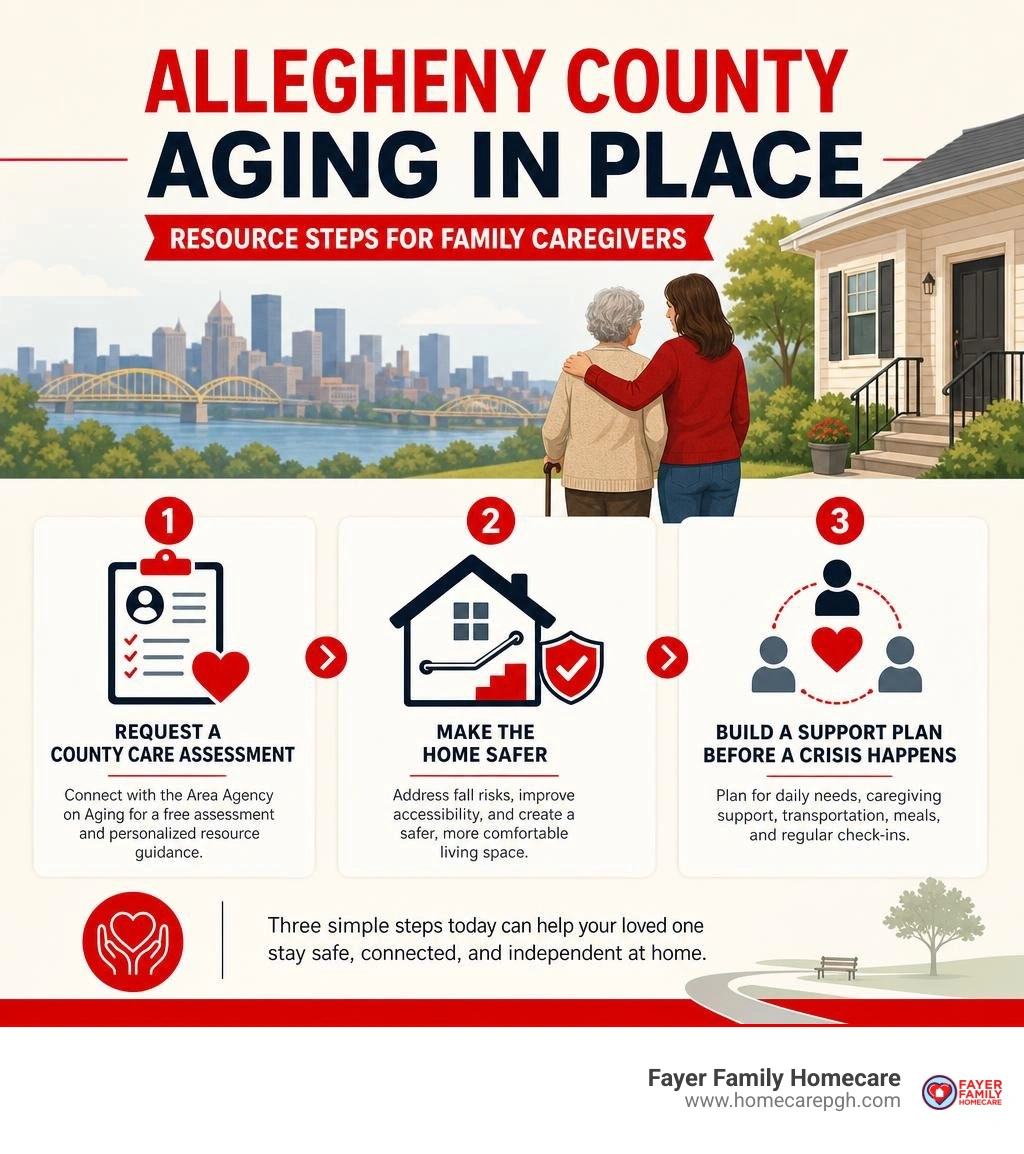
If your parent wants to remain at home, start with three steps: request a county care assessment, make the home safer, and build a support plan before a crisis happens. The most useful aging in place resources Pittsburgh families can use include the Allegheny County Area Agency on Aging, transportation and meal programs, caregiver support, Medicare and prescription counseling, and trusted in-home care.
Allegheny County has one of the nation's highest shares of adults age 65 and older. Many have lived in the same home for decades, often in houses with stairs, narrow bathrooms, and other fall risks. More than 31% of county residents age 65 and older live alone, so regular check-ins, help with hygiene, medication routines, meals, and companionship can make a meaningful difference.
For families, aging in place is not simply about helping a loved one stay in a familiar house. It is about creating a realistic plan that protects their safety, dignity, connection, and daily quality of life.
Fayer Family Homecare Staff can help families understand how in-home support can fit alongside Pittsburgh's public and community resources.
Aging in place resources pittsburgh word list:
Caring for an aging loved one in Southwestern Pennsylvania means navigating a very distinct regional reality. According to the State of Aging, Disability, and Family Caregiving in Allegheny County report, Allegheny County has one of the highest concentrations of older adults among the 40 largest counties in the country. Approximately 19.7% of our local population is 65 or older, ranking our region second nationwide only to Palm Beach County, Florida.
Unlike Florida, however, Pittsburgh did not become a retirement hub because people moved here for the sunshine. Our senior population grew out of historical economic shifts in the 1980s, when younger generations relocated for work while older residents stayed, put down deep roots, and aged in place. Today, more than 62% of seniors live in family households, but 31.5% live alone.
As we outline in our aging in place pittsburgh guide, several local municipalities have effectively become Naturally Occurring Retirement Communities (NORCs). In communities like Aleppo, 71.2% of residents are 55 and older, while Rosslyn Farms (53.0%), Harmar (52.7%), Sewickley Hills (51.7%), and Springdale Township (50.2%) also report majorities of mature residents. Regional initiatives like Age-Friendly Greater Pittsburgh work across sectors to support this population. With about 33.1% of our local seniors reporting at least one disability—predominantly ambulatory or mobility challenges—family members must proactively coordinate care to support their loved ones.
Pittsburgh leads the nation in housing longevity: 56.5% of homeowners aged 65 and older have lived in their homes for over 30 years, compared to just 38% nationally. While these historic properties carry decades of cherished memories, they present major physical challenges for senior caregiving.
Nationwide, only 10% of homes are properly equipped for aging residents, and Western Pennsylvania's architecture illustrates why. Our classic housing stock is full of steep front steps, multi-story floor plans, narrow doorways, and the famous basement "Pittsburgh potty." As your loved one's mobility changes, steep staircases, high bathtub thresholds, and poor lighting can turn familiar hallways into serious fall hazards. Helping seniors remain safely at home requires adapting these historic homes to meet evolving mobility needs.
When organizing care for an aging parent, you do not have to handle everything alone. The county's designated gateway for senior services is the Allegheny County Area Agency on Aging (AAA), based out of the Birmingham Towers on the South Side. The agency manages and coordinates public services for more than 40,500 older adults each year.
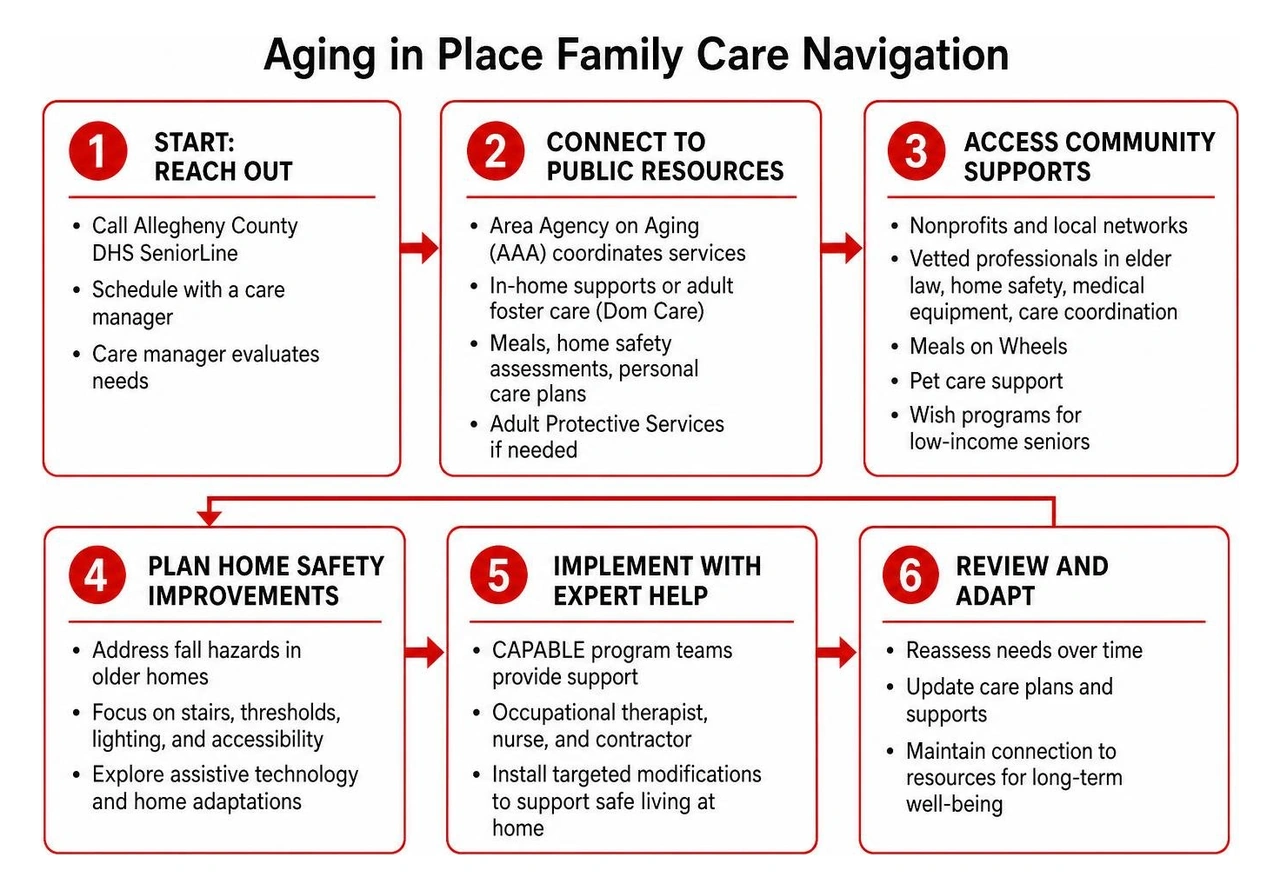
The easiest way to begin is by calling the Allegheny County Department of Human Services (DHS) SeniorLine at 412-350-5460 (or 1-800-344-4319). When you contact SeniorLine, you can schedule an appointment with a care manager who evaluates your loved one's functional status and connects you with pittsburgh senior services. This central hub can connect your family to community senior centers, adult day centers, and county transit options, including paratransit programs that help older adults attend medical appointments without relying entirely on family schedules.
The Area Agency on Aging administers core programs funded through the Older Americans Act, intended to provide sustainable nursing home alternatives. If your parent needs hands-on assistance with activities of daily living—such as bathing, dressing, meal preparation, or medication reminders—county care managers can help evaluate eligibility for state-funded in-home supports or adult foster care (Domiciliary Care, or Dom Care).
To understand the care evaluation process, review our free in home care assessment guide. Through these county pathways, families can arrange meal deliveries, home safety assessments, and personal care plans. The AAA also houses the local Adult Protective Services division, offering intake and crisis intervention for seniors at risk of self-neglect, physical vulnerability, or financial exploitation.
In addition to county government departments, Pittsburgh is home to over 200 non-profit organizations and regional networks dedicated to supporting older adults. A key starting point for family caregivers is Home | Life Options Pittsburgh, a non-profit coalition connecting families to local vetted professionals in elder law, home safety, medical equipment, and care coordination.
Other notable community supports include:
Preventing falls is one of the most critical responsibilities for family caregivers. In our region, innovative housing solutions are being tested locally. Through the This Central Oakland house is actually an innovative lab for aging in place | University of Pittsburgh initiative, Pitt researchers converted an authentic 1860s multi-story home into the "Healthy Home Lab."
The lab develops and tests low-cost, practical modifications designed specifically for Western Pennsylvania's older housing stock. Pitt also collaborates with the Area Agency on Aging to deploy the CAPABLE program (Community Aging in Place — Advancing Better Living for Elders). This initiative pairs an occupational therapist, a nurse, and a licensed contractor to install targeted modifications that help aging in place.
Rather than undertaking costly full-scale structural remodels, family caregivers can make high-impact, targeted adaptations to protect their loved ones from daily home hazards.
| Adaptation Category | Modification / Tool | Practical Benefit for Older Homes |
|---|---|---|
| Low-Cost Physical | Bathroom grab bars & comfort-height toilets | Eliminates reliance on towel racks for balance; reduces fall risk during transfers. |
| Low-Cost Physical | Shower benches & zero-threshold ramps | Replaces high tub edges; removes tripping hazards across raised historic door thresholds. |
| Accessibility Hardware | Double stair railings & motorized stairlifts | Provides continuous two-handed support or safe mechanical transit up multi-story staircases. |
| Smart Technology | Motion-activated automated lighting | Automatically illuminates stairways and hallways at night, eliminating searches for light switches. |
| Smart Technology | Assistive mobility devices (e.g., RailBot) | Provides motorized stability alongside stairs, helping offset physical caregiving strain. |
| Monitoring & Safety | Smart home environmental & fall sensors | Alerts family members to unusual periods of inactivity or nighttime wandering without relying on wearable pendants. |
Managing long-term care costs requires a clear understanding of state and federal assistance programs. Medicare generally does not pay for non-medical, long-term personal home care; however, many Medicare Advantage plans now offer supplemental allowances for home safety modifications, meal deliveries, and personal support hours.
Families should take advantage of the following public financial and legal resources:
Family caregiving is rewarding, but it can also be physically and emotionally demanding. In Pennsylvania, unpaid family members providing daily support can apply for the Pennsylvania Caregiver Support Program through the local Area Agency on Aging.
This program offers:
Balancing work, family, and eldercare often requires professional support. Coordinating flexible in home care in pittsburgh pa provides trained assistance for personal care, meal preparation, light housekeeping, and companionship, giving families dependable peace of mind.
To begin the process, call the Allegheny County DHS SeniorLine at 412-350-5460. A care manager will speak with you and schedule an in-person assessment to evaluate your parent’s daily functional abilities, home safety, and financial eligibility for county-funded supports or Community HealthChoices Medicaid waiver programs.
Prescription medications can be covered through Pennsylvania's PACE and PACENET programs for residents 65 and older. For home modifications, families can explore the CAPABLE program via the Area Agency on Aging, local municipal housing accessibility grants, and supplemental benefits available through select Medicare Advantage plans.
You can report suspected physical abuse, financial exploitation, caregiver neglect, or self-neglect 24/7 by calling the Pennsylvania Department of Aging Helpline at 1-800-490-8505 or contacting the local Allegheny County protective services line directly at 412-350-6905. Reports can be made confidentially.
Creating a safe environment for an aging parent in Pittsburgh requires connecting community programs, practical home modifications, and professional support into a cohesive plan. By taking advantage of Allegheny County's Area Agency on Aging, non-profit resources, caregiver assistance grants, and targeted fall-prevention tools, you can help your parent stay safe and comfortable in their home.
At Fayer Family Homecare, we understand the unique rewards and challenges that come with caring for an aging loved one in Greater Pittsburgh. Our experienced caregivers provide specialized support for seniors, including dedicated assistance for individuals living with Dementia or Alzheimer’s. We deliver warm companionship, engaging recreational activities, gentle supervision, and a clean, comfortable home environment.
To learn how we can support your family's caregiving journey, explore our comprehensive home care services or reach out to us today to schedule a care consultation.

January 2, 2025
How to Define Light Housekeeping: A Caregiver's GuideDiscover what light housekeeping entails for caregivers. Learn tasks, tips, and its importance for senior well-being.
Read Article
November 3, 2025
Senior Care Cleaning: What to Look for in a Home ServiceFind the best cleaning service for seniors near me. Ensure safety, health, and independence for your loved one with expert home care.
Read Article
March 20, 2025
A Step-by-Step Guide to Care Companions ServicesExplore how care companions enhance seniors' lives with personalized support and companionship. Choose the right service for you today!
Read Article