
August 26, 2025
Your Pittsburgh Senior Services Compass: Finding the Best Care and SupportDiscover comprehensive Pittsburgh senior services. Find top healthcare, housing, community support, and public resources for aging well.
Read Article
.svg)
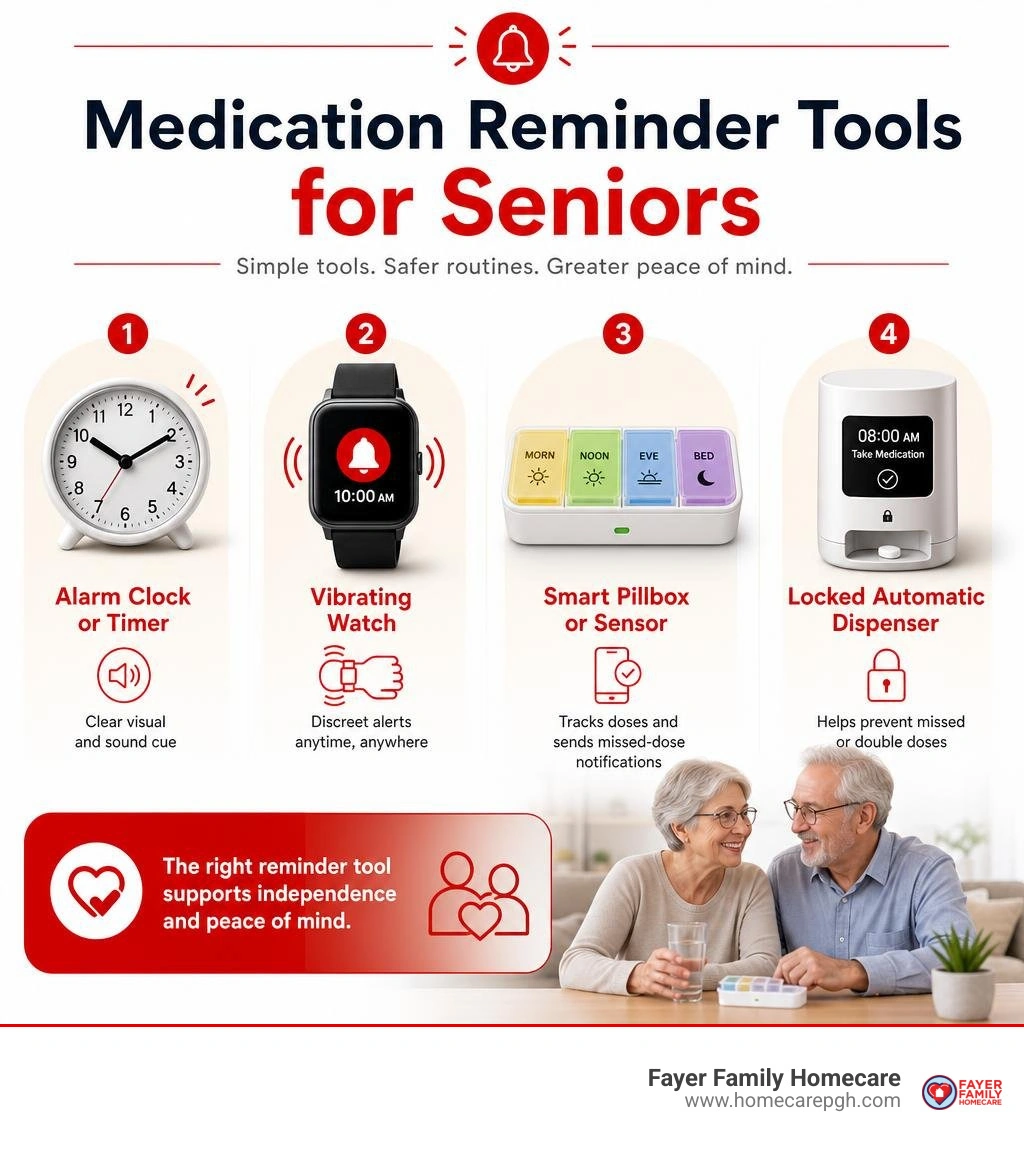
Medication reminders for seniors can help family caregivers reduce missed doses, prevent confusion, and make daily prescription routines feel more manageable. The best choice depends on your loved one's needs: a simple alarm clock may work for a clear, consistent routine, while a locked automatic dispenser with caregiver alerts may be safer for someone with memory loss or several medications.
| Reminder type | Often best for |
|---|---|
| Alarm clock or timer | Seniors who need a clear visual and sound cue |
| Vibrating watch | People who are away from home often or have hearing loss |
| Smart pillbox or sensor | Families who want dose tracking and missed-dose notifications |
| Locked automatic dispenser | Seniors with complex schedules, dementia, or double-dose risk |
Older adults may take several prescriptions each day, often at different times. Memory changes, small print on labels, limited hand strength, hearing or vision loss, and a confusing medication schedule can all make it harder to stay on track. For families, that uncertainty can create daily stress: Did Mom take her morning pill? Did Dad take it twice?
This guide compares practical reminder tools and explains what features matter most when you are helping an aging parent stay safe and independent at home.
Written by the Fayer Family Homecare Staff, who understand that reliable routines can bring families greater peace of mind.
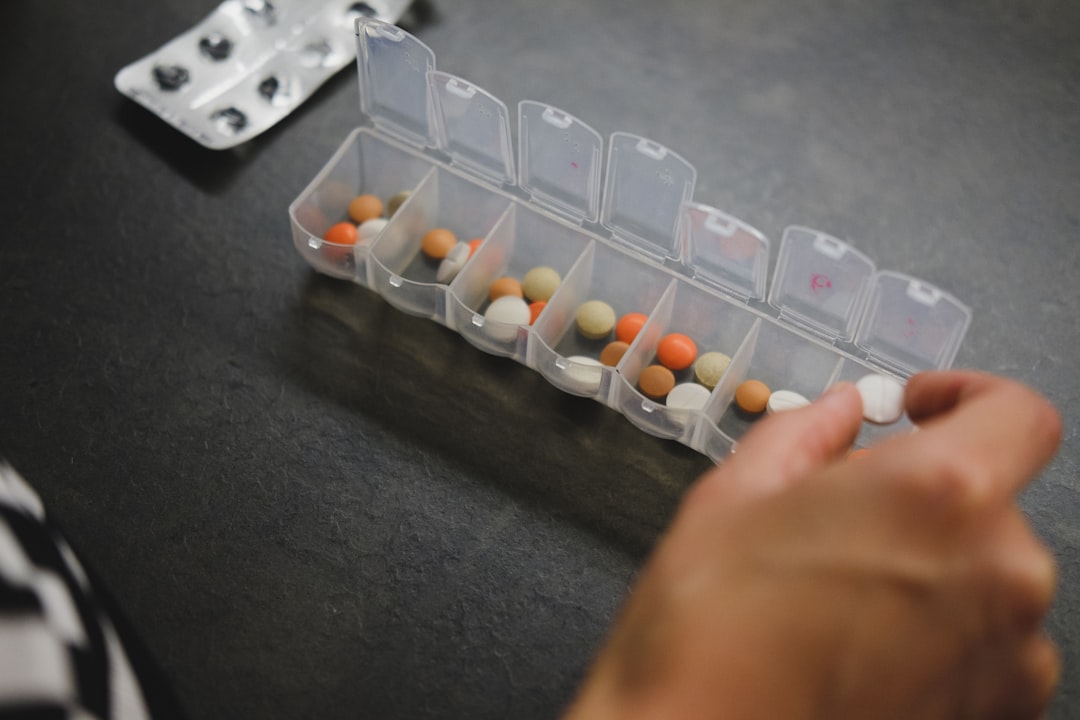
As our parents get older, staying healthy often requires managing a delicate puzzle of daily prescriptions. Studies show that the average adult over age 65 takes six or more prescription medications every single day. When you combine multiple bottles with different dosing schedules—some with food, some on an empty stomach, some twice daily, and others once every three days—it is easy to see how manageable health routines can turn into a source of daily anxiety.
In fact, research indicates that nearly 50% of adults struggle to take their medications exactly as prescribed. Even worse, clinical studies show that people delay or miscalculate dose times up to 80% to 85% of the time. Non-adherence isn't caused by a lack of effort; it is driven by physical, sensory, and cognitive changes that naturally happen as we age.
Here are the most common hurdles family caregivers encounter when managing senior prescription routines:
When these obstacles accumulate, seniors may suffer from preventable medical complications, unexpected emergency room visits, or avoidable hospital readmissions. Helping an aging parent navigate these challenges often requires structured support with assistance with daily living to build safe, stress-free habits.
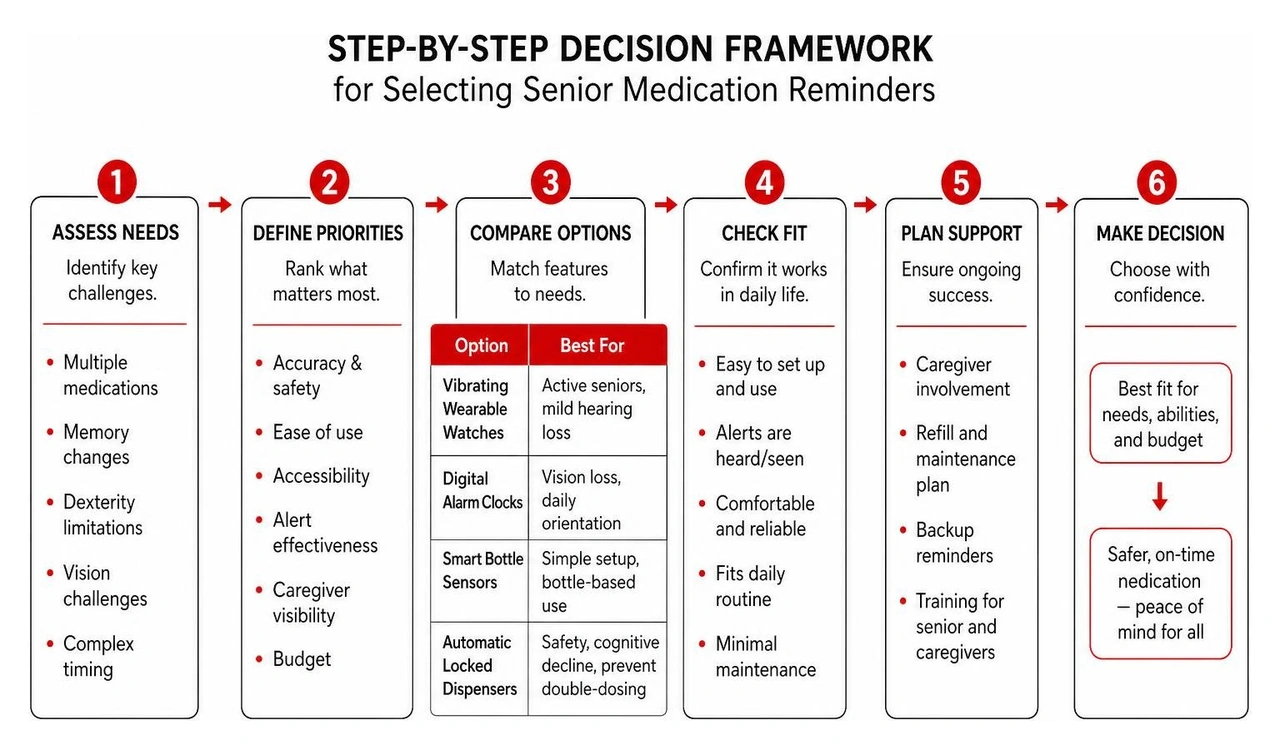
No single reminder tool works for every older adult. What brings peace of mind to an active senior taking a single blood pressure pill might fall short for someone living with moderate memory loss who manages eight daily prescriptions. Choosing the right tool requires matching the technology to your loved one's physical abilities, tech comfort, and cognitive routine.
The table below breaks down the primary categories of medication reminders for seniors to help you evaluate which approach best fits your family's needs:
| Reminder Category | Display Size & Visuals | Alarm Volume & Types | Accessibility Features | Typical Price Range |
|---|---|---|---|---|
| Vibrating Wearable Watches | Compact digital screen or classic watch face | Tactile wrist vibrations + optional subtle chimes | Great for active seniors or those with mild hearing loss | $30 – $100 |
| Digital Alarm Clocks | Extra-large LCD screens with day, date, & time of day | Loud audio alarms (up to 85 dB) + spoken voice cues | Ideal for vision loss & daily orientation | $40 – $90 |
| Smart Bottle Sensors | LED light rings on caps or base units | Escalating chime stages + light pulses | Simple; attaches directly to standard prescription bottles | $20 – $80 |
| Automatic Locked Dispensers | Large illuminated screens showing next dose time | Loud chimes, flashing lights, & remote phone notifications | Excellent for preventing double-dosing & cognitive decline | $80 – $400 |
To decide which device will work best in your loved one's home, let's take a closer look at how these options compare in real-world caregiving scenarios.
When safety is your top priority—especially if an aging parent is prone to confusion or double-dosing—smart automatic dispensers provide the highest level of protection. Devices like the LiveFine WiFi Automatic Pill Dispenser feature a motorized internal carousel with up to 28 dosage slots. Family caregivers fill the internal compartments once every one to four weeks depending on daily dose frequency.
When it is time for a dose, the internal carousel rotates to reveal only the exact pills required for that specific hour, while a motorized lid shutter opens. The device then sounds a loud alarm and flashes an LED light. The key safety benefit of a locked automatic dispenser is its tamper resistance: the solid or frosted lid locks securely with a physical key. Your loved one cannot open other compartments or take extra pills early, eliminating accidental double-dosing risks.
For seniors who take multiple pills throughout the day or those who prefer smart tracking without full mechanical lockboxes, products like the Medikyu Smart Dispenser offer intelligent tracking containers that monitor when a bottle or lid is opened. These devices transmit real-time dose confirmations over cellular or Wi-Fi networks directly to a caregiver's mobile phone, letting you verify that Dad took his noon medication even if you are at work miles away.
For older adults who prefer to keep using their standard prescription bottles or existing weekly plastic organizers, standalone smart sensors offer a brilliant, non-intrusive alternative.
A standout in this category is the Nudge Smart Pill Reminder. Rather than forcing you to sort pills into specialized plastic slots, the Nudge device sits on a counter or nightstand alongside your parent's current pill bottle or weekly organizer. It uses motion sensors to detect physical movement.
When a scheduled medication window arrives, the device alerts your loved one through a gentle multi-stage sequence:
Similarly, dedicated digital medication alarm clocks combine high-contrast calendar displays (highlighting the day of the week, date, and time of day like "Tuesday Morning") with loud chimes or customizable voice alarms. These devices plug directly into wall outlets, requiring no battery charging or complex touchscreens.
In our modern digital world, smartphone apps are often touted as the ultimate solution for keeping track of daily habits. Apps like the Pillzer iPhone Medication App provide sleek interfaces, detailed adherence logs, refill tracking, and customizable exportable health reports for doctor visits. For tech-savvy seniors who already carry their smartphones everywhere, a mobile app can be a convenient, cost-effective tool.
However, when caring for older adults, dedicated physical devices frequently outperform smartphone apps for several reasons:
While apps are helpful tools for adult children who want to manage schedules remotely, placing a dedicated physical hardware device in your parent's home usually leads to far better consistency and lower daily frustration.
When shopping for medication reminders for seniors, it is easy to get caught up in flashy features. However, the best device is simply the one your loved one can comfortably operate every day without feeling frustrated.
Here are the essential features to evaluate before making a purchase:
Integrating these user-friendly tools directly into your parent's living space is one of the most practical 6 tips for ensuring the safety of your loved one at home.
Caring for a parent living with Alzheimer's disease, dementia, or age-related memory decline presents unique challenges. Standard reminder tools that rely on a senior's ability to read instructions, press buttons, or remember what an alarm sound means often lose efficacy as cognitive impairment progresses.
When memory loss is present, medication management requires an approach built around simplified interfaces, physical barriers, and remote caregiver oversight.
Seniors living with cognitive decline benefit from devices that reduce cognitive load to near zero. Traditional multi-compartment plastic pillboxes can actually increase risk for dementia patients, as they might open tomorrow's compartment by mistake or take an entire week's worth of medication at once.
Integrated systems like the Idem Starter Bundle pair a large dementia-friendly orientation clock with a Bluetooth-connected automated pill dispenser. The 10-inch smart clock display continuously highlights the day, date, and moment of day in large, calm lettering, while supporting over 13 languages. When a dose is due, the connected dispenser releases the exact pills needed while playing a friendly voice prompt. If the dose isn't taken within a set timeframe, the system notifies family caregivers immediately through a unified app.
Key adaptations when choosing medication tools for dementia include:
For families in the Greater Pittsburgh Area navigating advanced memory loss, combining smart hardware with professional alzheimers dementia care ensures that a trained, compassionate caregiver is present in the home to oversee medication routines safely.
Technology works best when paired with steady daily habits. Establishing a predictable routine helps anchor medication times to existing daily cues, turning prescription compliance into second nature.
Here is a practical checklist family caregivers can follow to establish a consistent, stress-free routine:
Managing a complex care routine for an aging parent can be emotionally and physically demanding. Practicing smart habits and utilizing caring for the caregiver tips for self-care in senior home care helps ensure that you stay healthy and supported while looking after your loved one.
Currently, traditional Medicare (Parts A and B) does not cover the cost of automated pill dispensers, medication reminder clocks, or smart tracking devices, as they are classified as personal comfort items or convenience tools rather than durable medical equipment (DME). Some Medicare Advantage (Part C) plans may offer limited flex allowances or OTC drug benefit stipends that can be applied toward basic pill organizers, but coverage varies widely by plan provider.
However, there is great news regarding tax-advantaged healthcare accounts: medication reminder devices, automated pill dispensers, and smart pillboxes are FSA (Flexible Spending Account) and HSA (Health Savings Account) eligible expenses. You can use pre-tax FSA or HSA funds or submit receipts for reimbursement, providing direct savings on higher-end automated dispensers.
Automated dispensers prevent double-dosing through secure physical access controls and automated scheduling locks:
Modern smart medication reminders use multi-tiered escalation protocols to ensure missed alarms are caught quickly:

Keeping an aging parent safe and consistent with their daily prescriptions doesn't have to be a constant source of stress. By pairing the right reminder tools—whether a simple motion-sensing light, a dementia-friendly orientation clock, or a locked automatic dispenser—with a predictable daily routine, you can protect your loved one's health and restore daily peace of mind for your entire family.
At Fayer Family Homecare, we understand that technology is most effective when supported by compassionate human care. Serving families across the Greater Pittsburgh Area, our experienced home caregivers provide personalized support, friendly companion supervision, and reliable routine assistance tailored to your loved one's exact needs. Whether your parent needs help organizing daily activities, managing memory loss, or simply enjoying friendly conversation at home, we are here to support your family every step of the way.
Explore our dedicated personal care services today to learn how our team can help your aging parent maintain their health, dignity, and independence right at home in Pittsburgh.

August 26, 2025
Your Pittsburgh Senior Services Compass: Finding the Best Care and SupportDiscover comprehensive Pittsburgh senior services. Find top healthcare, housing, community support, and public resources for aging well.
Read Article
November 26, 2025
Peace of Mind: Creating a Dementia-Friendly Home EnvironmentEnsure dementia safety at home with our comprehensive guide. Create a secure, supportive environment for your loved one, room by room.
Read ArticleNovember 3, 2025
Senior Care Cleaning: What to Look for in a Home ServiceFind the best cleaning service for seniors near me. Ensure safety, health, and independence for your loved one with expert home care.
Read Article