July 14, 2025
Finding Housekeeping Help for Seniors Near YouFind trusted housekeeping assistance for seniors near you. Learn services, costs, subsidies, and tips to keep your loved ones safe at home.
Read Article
.svg)

Senior caregiving is the support provided to older adults who need help with daily activities, medical management, or companionship as they age. With 73 million Americans expected to be 65 or older by 2030, understanding your options is essential.
Quick Answer: Senior Caregiving Options
| Type of Care | Who Provides It | Best For |
|---|---|---|
| Family Caregiving | Relatives, friends | Close relationships, flexible schedules |
| Professional In-Home Care | Trained caregivers | Specialized needs, respite for family |
| Personal Care Services | Home care agencies | Daily living assistance (bathing, dressing) |
| Companion Care | Professional companions | Social connection, supervision, activities |
| Specialized Care | Dementia/Alzheimer's trained staff | Memory loss, behavioral changes |
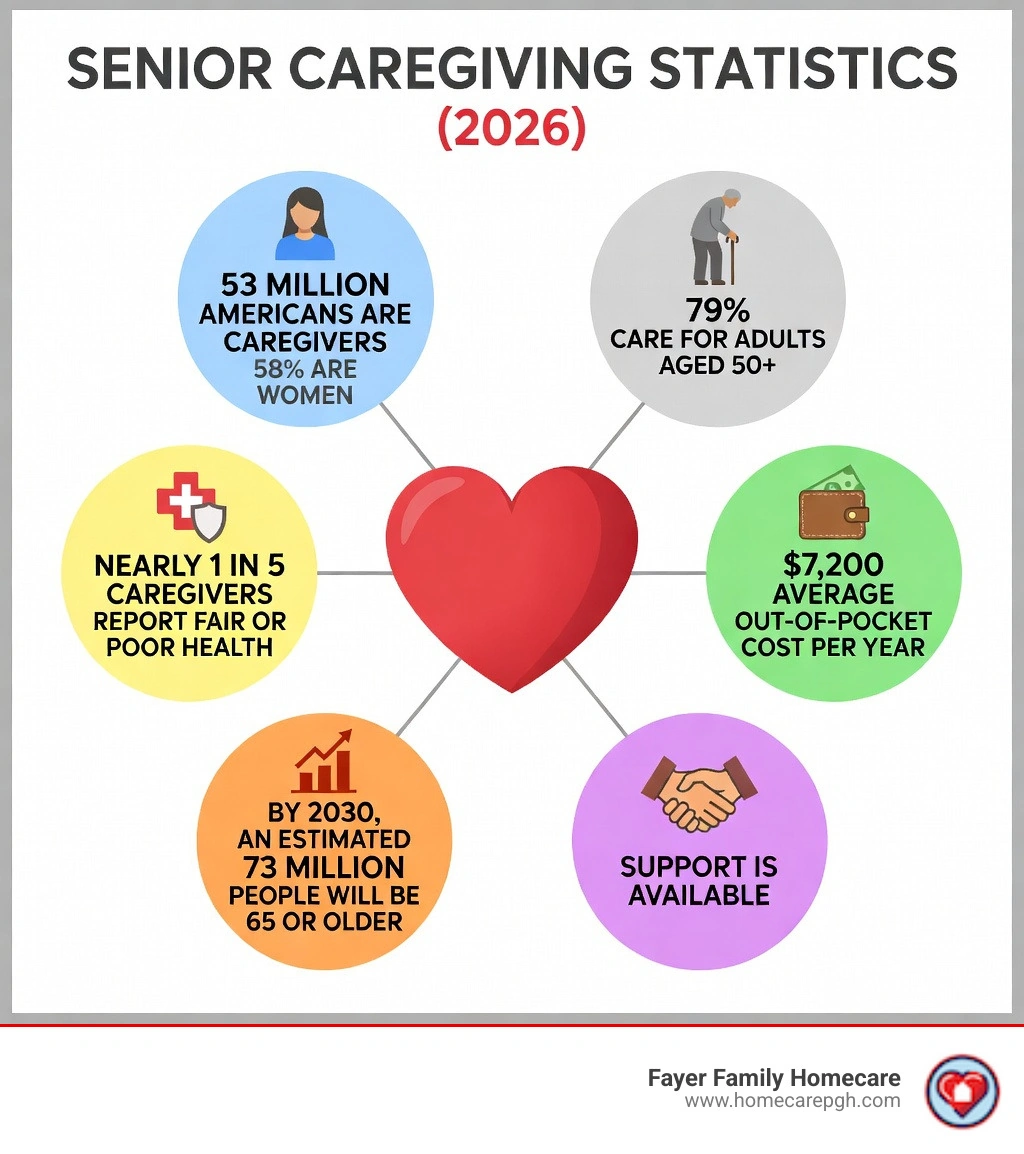
Caregiving can be overwhelming, especially at the beginning. More than 53 million Americans now provide care for a friend or family member with a serious health condition. That's more than 1 in 5 people.
The reality is stark. Nearly 1 in 4 caregivers says caregiving has made their health worse. Almost 80% pay out-of-pocket for routine care expenses, averaging $7,200 per year. And 2 in 10 employed caregivers had to stop working entirely.
But you don't have to do this alone.
Whether you're supporting a parent who's aging at home, seeking help for a loved one with Dementia, or simply trying to understand what's available, this guide walks you through your options. We'll cover family caregiving support, professional in-home services, financial assistance programs, and how to create a care plan that works for your situation.
The goal isn't to replace family involvement. It's to find the right balance between what you can provide and when professional support makes sense for everyone's well-being.
Senior caregiving terms made easy:
When we talk about senior caregiving, we are looking at a massive, often invisible workforce. Most care in the United States is provided by "informal" caregivers—unpaid family members and friends. If this labor were purchased at market rates, it would cost nearly $470 billion a year.
The demographics of those providing this care are diverse, but certain trends stand out. Approximately 58% of caregivers are women, and nearly one-third of all caregivers provide at least 20 hours of help every week. It is a significant commitment that often spans years. For more in-depth data on these trends, you can explore scientific research on caregiving trends.
We are currently witnessing a "silver tsunami." By 2030, an estimated 73 million people in the U.S. will be 65 years or older. Research shows that more than two-thirds of the population will likely need help with daily tasks at some point in their lifetime.
Most seniors express a strong desire to "age in place," meaning they want to stay in their own homes for as long as possible. This makes The Essential Role of Caregivers in Home Health Care more critical than ever. Caregivers are the bridge that allows seniors to maintain their independence while staying safe.
Caregiving is rarely a solo act. It usually involves a mix of:
Understanding the distinction between these roles is the first step in building a sustainable support system. For a deeper dive into these roles, check out our Caregivers and Companions Ultimate Guide.
Being a family caregiver is a labor of love, but let’s be honest: it’s also exhausting. The physical and emotional toll can lead to "caregiver burnout," a state of total exhaustion that can affect your own health.
The statistics are sobering. Nearly 1 in 5 caregivers reports being in fair or poor health themselves. Furthermore, 2 in 5 have at least two chronic diseases. Between the physical strain of assisting with mobility and the financial strain of out-of-pocket costs, it’s easy to feel like you’re drowning. Finding Support for Caregivers isn't a luxury; it's a necessity for survival.
You don't have to carry the world on your shoulders. There are numerous community resources designed to help. From local Area Agencies on Aging (AAAs) to the Eldercare Locator, help is available for those who know where to look.
Professional home care agencies also offer guidance on navigating these systems. Whether you need help understanding Medicaid's consumer-directed programs or just need someone to talk to, there is More info about family caregiver support available to help you navigate the complexities of the system.
To be a good caregiver, you must first take care of yourself. This means:
If you are feeling the weight of your responsibilities, read our tips on Caring for the Caregiver Tips for Self-Care in Senior Home Care.
Understanding the different levels of care is essential for choosing the right solution. Not every senior needs a nurse; sometimes, they just need a friend.
| Feature | Personal Care | Companion Care |
|---|---|---|
| Primary Goal | Physical assistance & safety | Socialization & mental well-being |
| Daily Tasks | Bathing, dressing, toileting | Conversation, hobbies, walks |
| Medical Help | Medication reminders, mobility | Supervision, light housekeeping |
| Independence | Helps with ADLs | Focuses on IADLs (shopping, chores) |
For many families in the Pittsburgh area, Personal Care Services provide the necessary physical support to keep a loved one safe at home.
Personal care focuses on Activities of Daily Living (ADLs). This includes hygiene, mobility assistance, and dressing. These services are designed to preserve a senior's dignity while ensuring they are clean and comfortable. If your loved one is struggling with the basics of morning routines, you can find More info about personal care services to see how professional help can fill the gaps.
Never underestimate the power of a good conversation. Social isolation is a major health risk for seniors, linked to higher rates of depression and cognitive decline. Senior caregiving isn't just about physical health; it's about Senior Citizen Companionship.
Professional companions engage seniors in hobbies, take them on outings, and provide the social connectedness that makes life worth living. It’s about more than "watching" someone; it’s about participating in life with them.
A senior's home should be their sanctuary, but it can also be full of hidden dangers. Falls are the leading cause of injury-related hospitalizations for older adults. Ensuring a safe environment is one of the most important tasks of senior caregiving. For a comprehensive look at home safety, consult this Scientific research on home safety for seniors.
To prevent falls, we recommend a room-by-room safety check:
Fall prevention is especially critical for those with cognitive impairments. If you are caring for someone with memory loss, our guide on Caregivers for Alzheimers offers specific safety strategies tailored to their unique needs.
It is a difficult topic, but one we must address. Hundreds of thousands of seniors are victims of abuse, neglect, or financial exploitation every year. Signs of abuse include:
If you suspect abuse, contact the National Elder Fraud Hotline or your local Adult Protective Services immediately.
A care plan is your roadmap. It shouldn't just be a list of chores; it should be a living document that evolves as your loved one's needs change. An effective plan includes a needs assessment, medical management details, and a clear division of responsibilities among the care team. For families in our area, Elder Care Pittsburgh resources can help you get started with the right framework.
There are many programs designed to lighten the financial and logistical load:
Use tools like the BenefitsCheckup Screening Tool to see what programs your loved one qualifies for.
When the time comes to hire help, vetting the agency is crucial. Look for providers that offer:
Finding the right Companion Care for Seniors Near Me can change the entire dynamic of your household, moving it from a place of stress to one of support.
Support ranges from financial assistance (like Medicaid or VA benefits) to emotional support (support groups and counseling). Local Area Agencies on Aging are the best place to start for finding community-specific resources.
First, get a clear picture of the senior's medical situation. Next, determine what help you can realistically provide and where you need reinforcements. Finally, seek training—many organizations offer free or low-cost caregiver training online.
It’s not always an "either/or" choice. Many families find that a hybrid model works best. Family provides the emotional core, while professionals handle the heavy lifting, specialized medical needs, or provide respite so the family can maintain their own lives and careers.
At Fayer Family Homecare, we understand that senior caregiving is deeply personal. Serving the Greater Pittsburgh Area, we specialize in providing the extra layer of support that families need to thrive. Whether you need expert care for a loved one with Dementia or Alzheimer’s, or you're looking for a companion to provide supervision and recreational activities, we are here to help.
Our experienced home caregivers ensure that your loved one enjoys cleanliness, comfort, and meaningful social interaction every day. You don't have to navigate this journey alone. Let us partner with you to provide the high-quality care your family deserves. Explore our Companion Care for Seniors Near Me to learn more about how we can support your family in Pittsburgh.

July 14, 2025
Finding Housekeeping Help for Seniors Near YouFind trusted housekeeping assistance for seniors near you. Learn services, costs, subsidies, and tips to keep your loved ones safe at home.
Read Article
August 10, 2026
Aging in Place Care: Growing Older at Home SafelyLearn how professional home care and safety modifications help aging in place safely for seniors in Pittsburgh.
Read Article
November 17, 2025
Beyond the Basics: Unpacking Daily Living Support for SeniorsDiscover when seniors need assistance with daily living, understand ADLs/IADLs, and explore compassionate home care options.
Read Article