


April 20, 2026
Finding the Best Home Care Agency in Pittsburgh for Your FamilyDiscover top home health care agencies in Pittsburgh. Compare home care vs. health, benefits, costs & choose the best for seniors aging in place.
Read Article
.svg)


Alzheimer's care costs can feel overwhelming when you're trying to plan for your loved one's future. The truth is, these expenses are substantial and growing—but understanding them now helps you prepare and make informed decisions.
Quick Answer: Average Annual Alzheimer's Care Costs
Note: Costs vary significantly by location and level of care needed
The numbers tell a sobering story. Someone develops dementia every three seconds worldwide. As the disease progresses, the financial burden grows—often in ways families don't anticipate.
Beyond the direct costs of medical care and professional support, there are hidden expenses: lost wages when family members reduce work hours, home modifications for safety, transportation to appointments, and countless hours of unpaid caregiving.
The good news? You don't have to steer this alone. With proper planning and knowledge of available resources, you can create a financial roadmap that provides quality care for your loved one while protecting your family's financial stability.
This guide breaks down the real costs of Alzheimer's care, explores different care settings, and shows you practical steps to plan ahead—whether your loved one was recently diagnosed or you're preparing for the possibility of future care needs.
Dementia, and specifically Alzheimer's disease, presents one of the most significant health and economic challenges of our time. The sheer scale of the global burden is staggering, impacting millions of families and healthcare systems worldwide. We often hear about the personal toll of this progressive disease, but the financial implications are equally profound.
Globally, the annual cost of dementia care now exceeds $1.3 trillion. This isn't just a number; it represents the immense resources – both financial and human – being poured into supporting individuals living with dementia and their families. This figure is projected to rise dramatically, reaching $2.8 trillion by 2030, and potentially even higher by 2050. These projections highlight an impending crisis if we don't plan effectively.
In the United States, the national costs associated with Alzheimer's and related dementias are particularly high. In fact, these costs surpass those of heart disease and cancer combined. In 2023 alone, the cost of caring for individuals with Alzheimer's and other dementias was estimated at $345 billion, with projections suggesting it could rise to nearly $1 trillion by 2050. These figures underscore the urgent need for comprehensive financial planning for families facing this diagnosis. You can dig deeper into these projections and their implications in this insightful article on the Cost of care for Alzheimer’s disease and related dementias in the United States: 2016 to 2060.
The societal burden extends beyond healthcare expenditures. It impacts productivity, family dynamics, and the overall well-being of communities. For families, understanding these broad trends can help contextualize the individual Alzheimer's care costs they might face. While the numbers can seem overwhelming, knowledge is power. Learning more about the disease itself, including the differences between Alzheimer's and other forms of dementia, can be a valuable first step in preparing for the journey ahead. For more information on navigating the care journey, we encourage you to explore our resources on Alzheimer's Patient Care.
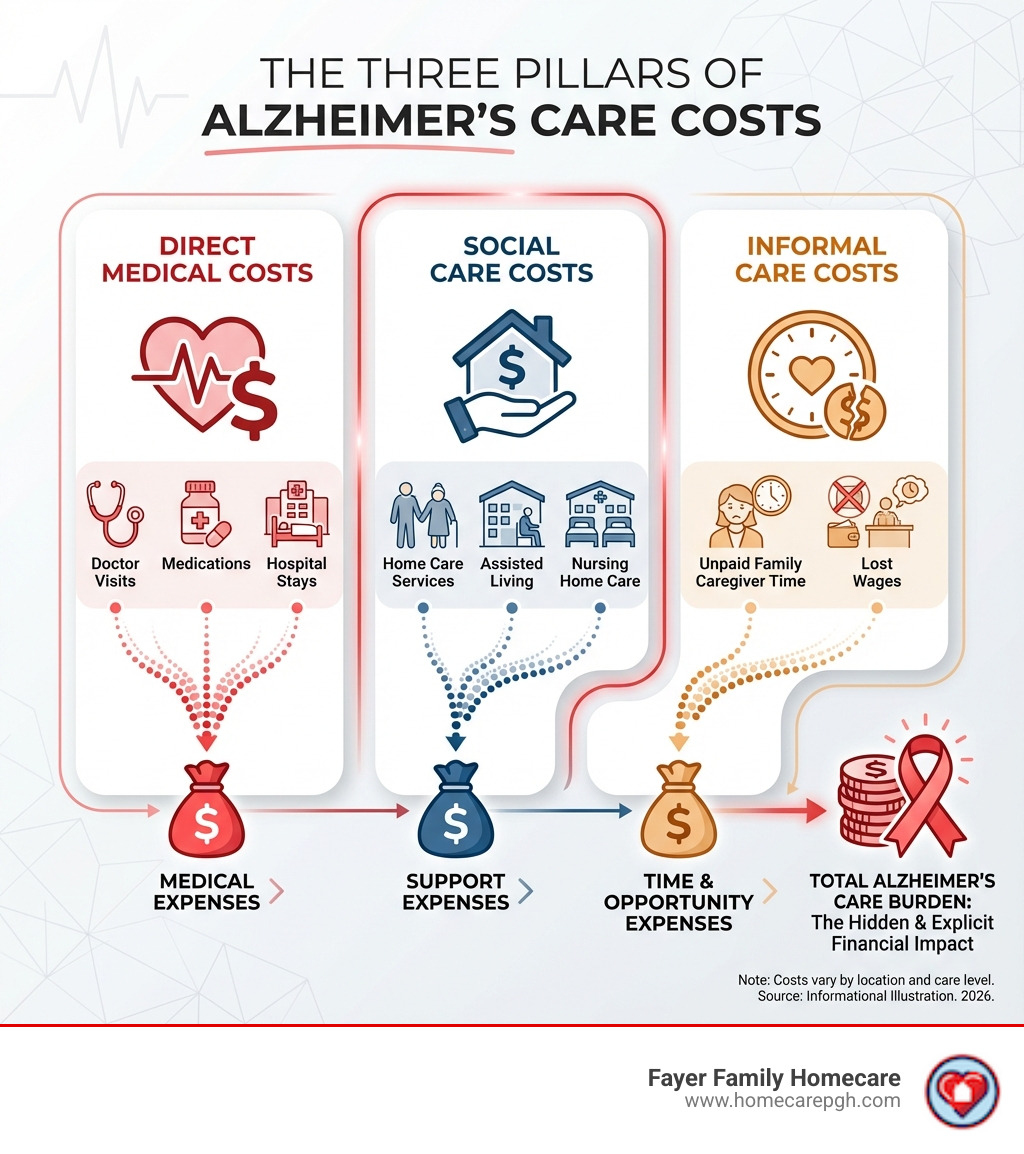
When we talk about Alzheimer's care costs, it's crucial to understand that we're not just referring to a single expense. Instead, it's a complex mix of various financial outlays, often categorized into direct medical, social care, and informal care costs. Each category plays a significant role in the overall financial picture for families.
Let's solve these different components:
Understanding the distinction between Alzheimer's and other forms of dementia is also important, as it can sometimes influence the specific care needs and associated costs. For a clearer picture, we recommend reading our article on Understanding the Difference Between Alzheimer's & Dementia.
One of the biggest decisions families face when planning for Alzheimer's care costs is choosing the most appropriate care setting. Each option comes with its own set of services, environment, and, of course, price tag. It's important to weigh these factors carefully, considering your loved one's needs, preferences, and your family's financial capabilities.
Here's a comparison of the median annual costs for various care settings across the United States. While these are national averages, they provide a valuable benchmark. That costs in the Greater Pittsburgh Area can fluctuate based on local market rates, specific services offered, and the level of care required.
| Care Setting | Median Annual Cost (National Average) | Description |
|---|---|---|
| In-Home Care | $62,000-$75,000 | This includes non-medical care provided in the comfort of your loved one's home. Services often include assistance with daily living activities (ADLs) like bathing, dressing, meal preparation, medication reminders, light housekeeping, and companionship. This option allows individuals to remain in a familiar environment, which can be particularly beneficial for those with dementia. For families in the Greater Pittsburgh Area, Fayer Family Homecare specializes in providing compassionate in-home care, ensuring comfort and peace of mind. For more details on this flexible option, explore our insights on Alzheimer's Care at Home. |
| Adult Day Services | $20,000-$25,000 | These centers provide supervised care, social activities, and sometimes meals during daytime hours. They offer a safe environment for individuals with dementia while providing respite for family caregivers. It's often a more affordable option for families who can provide evening and weekend care. |
| Assisted Living | $54,000-$60,000 | Assisted living facilities offer a balance of independence and support. Residents typically have private or semi-private apartments and receive assistance with ADLs, meals, medication management, and social activities. Many facilities have specialized memory care units designed for individuals with Alzheimer's, which may come at an additional cost. |
| Nursing Home Care | $94,000-$108,000 | This level of care provides 24-hour skilled nursing supervision and medical care. It's typically for individuals with significant health issues or advanced dementia who require extensive assistance with ADLs and complex medical needs. Costs vary depending on whether it's a semi-private or private room. |
Source: Genworth. Cost of Care Survey: National Median Costs (2021 data, adapted for ranges). For the most up-to-date national figures, we encourage you to visit the Genworth. Cost of Care Survey: National Median Costs directly.
When considering in-home care, understanding the various services available, such as senior companion care, can help you tailor a plan that fits your loved one's specific needs and budget. You can learn more about Senior Companion Care Costs and how they might factor into your financial roadmap.
Beyond the direct expenses paid to care providers or medical facilities, there's a deeper layer of Alzheimer's care costs that significantly impacts families: the hidden, indirect, and often unquantified burdens. These costs, while not always appearing on a bill, can profoundly affect a family's financial stability and overall well-being.
One of the most substantial hidden costs is the value of unpaid caregiving hours. Family members often step into the role of primary caregiver, dedicating countless hours to their loved one's needs. This includes everything from personal care, meal preparation, medication management, transportation, and managing finances, to simply providing companionship and supervision. While born out of love, this labor has a real economic value. If these hours were paid at market rates, the total cost of care would be significantly higher.
Closely related are the lost wages for caregivers. Many family caregivers, often spouses or adult children, find they must reduce their work hours, take unpaid leave, or even leave their jobs entirely to provide care. This results in a direct loss of income for the family, impacting their current financial situation and potentially their retirement savings and future earning potential.
Then there are the more tangible, yet often underestimated, expenses:
As the introduction highlighted, the average family out-of-pocket spending for Alzheimer's care costs can exceed $61,000 throughout the care journey. This figure often includes many of these indirect expenses, painting a clearer picture of the comprehensive financial impact.
Recognizing and planning for these hidden costs is a vital part of creating a robust financial roadmap. It's also why caregiver support is so crucial. Supporting caregivers, both financially and emotionally, can help mitigate some of these burdens. We have dedicated resources to assist families, including insights on Support for Caregivers.
Navigating the financial landscape of Alzheimer's care can feel like a daunting task, but it doesn't have to be. The key is early planning and open communication within the family. Proactive steps taken today can significantly ease the burden tomorrow, ensuring your loved one receives the best possible care while safeguarding your family's financial future.
We encourage families to begin discussions about potential care needs and financial strategies as early as possible, ideally shortly after a diagnosis. This includes:
Understanding the options available for private home care can also be a critical component of your financial strategy, offering flexibility and personalized support. For more insights into this, we recommend reviewing our guide on Understanding the Costs and Options in Private Home Care.
For many families, navigating the intricacies of insurance and government assistance programs is a crucial step in managing Alzheimer's care costs. These resources can provide significant financial relief, but their rules and eligibility criteria can be complex.
Navigating these programs can be challenging. A great starting point for finding local resources and assistance is the Eldercare Locator, a public service of the U.S. Administration for Community Living.
Proactive planning is the cornerstone of managing future Alzheimer's care costs. By putting certain legal and financial documents in place early, families can ensure that their loved one's wishes are honored, and financial decisions can be made smoothly, even if cognitive abilities decline.
Here's a list of essential legal and financial documents we strongly recommend preparing:
Finding an elder law attorney in the Greater Pittsburgh Area who specializes in these matters is highly recommended. They can help you steer the complexities of estate planning, asset protection, and government benefit eligibility, ensuring all documents are legally sound and aligned with your loved one's specific needs and local regulations.
For additional guidance on managing the finances of someone else, the Consumer Financial Protection Bureau offers an excellent free guide. We encourage you to Download the Consumer Financial Protection Bureau’s free guide on "Managing Someone Else's Money".
Planning for future care also involves considering daily support needs. Assistance with daily living can evolve, and having a plan for how these needs will be met financially and practically is key. You can find more information on this topic in our resource on Assistance with Daily Living.
Understanding the various elements that impact Alzheimer's care costs is crucial for accurate financial planning. These factors can cause significant variations in expenses, even within the same geographic area or for individuals with similar diagnoses.
By considering all these influencing factors, families can develop a more realistic and comprehensive financial roadmap for managing Alzheimer's care costs.
Navigating the complexities of Alzheimer's care costs is undoubtedly one of the most challenging aspects of caring for a loved one with dementia. We've explored the immense global and national financial burden, broken down the various types of expenses from direct medical to hidden family costs, and compared the financial implications of different care settings. We've also equipped you with strategies for financial planning, leveraging insurance and government programs, and preparing essential legal documents.
The journey ahead may seem daunting, but knowledge is power, and proactive planning is your greatest ally. By understanding the potential financial landscape, you empower yourselves to make informed decisions, advocate for your loved one, and ensure they receive the dignified, compassionate care they deserve. Taking these proactive steps helps to alleviate stress, foster peace of mind, and protect your family's financial well-being.
At Fayer Family Homecare, we understand these challenges deeply. For families in the Greater Pittsburgh Area, we are here to support you every step of the way. We provide specialized Alzheimer's & Dementia Care Services designed to create a safe, supportive, and engaging environment for your loved one in the comfort of their own home. Our experienced home caregivers offer companionship, supervision, and recreational activities, ensuring cleanliness and comfort while providing much-needed respite for family caregivers.
Don't hesitate to reach out. Whether you need assistance with daily living activities, specialized dementia care, or simply someone to provide companionship, we are here to help. Learn more about our companionship services and find how we can be a trusted partner in your care journey. Together, we can create a path forward that prioritizes both quality care and financial stability.

April 20, 2026
Finding the Best Home Care Agency in Pittsburgh for Your FamilyDiscover top home health care agencies in Pittsburgh. Compare home care vs. health, benefits, costs & choose the best for seniors aging in place.
Read Article
October 27, 2025
Making Memories: Fun & Fulfilling Activities for Elderly CompanionshipDiscover the joy of volunteer companionship for the elderly. Boost senior well-being with fun activities and meaningful connections today!
Read Article
August 17, 2026
Home Care for Parkinson's Patients: How to Get Outside HelpHome Care for Parkinson's Patients: How to Get Outside Help - Learn about home care for parkinson's patients
Read Article