
September 1, 2025
Your Guide to Personal Care: Supporting Daily Living with DignityUnlock independence with compassionate Personal care services. Support daily living, dignity, and quality of life for your loved ones.
Read Article
.svg)
If you're comparing home health agencies in Pittsburgh PA for an aging parent, here's a quick snapshot to help you get oriented fast:
| What You Want to Know | Quick Answer |
|---|---|
| How many agencies are in Pittsburgh? | 86 home care agencies |
| Average rating | 3.6 out of 5 stars (based on 69 reviews) |
| Counties typically served | Allegheny, Armstrong, Beaver, Butler, Washington, Westmoreland, Fayette, Greene |
| Types of care available | Non-medical home care and skilled home health services |
| Does Medicaid cover it? | Yes, often 100% for qualifying individuals |
| Can family members get paid to help? | Yes, through programs like Agency with Choice |
Choosing care for a parent is one of the hardest decisions a family can make. You want someone you can trust — a real person who will show up, treat your loved one with dignity, and give you peace of mind.
Pittsburgh has a large network of home care options. But more choices can mean more confusion.
This guide is written for families — not medical professionals. We'll walk you through what to look for, what questions to ask, and how to cut through the noise so you can find the right agency for your loved one.
Home health agencies in pittsburgh pa definitions:
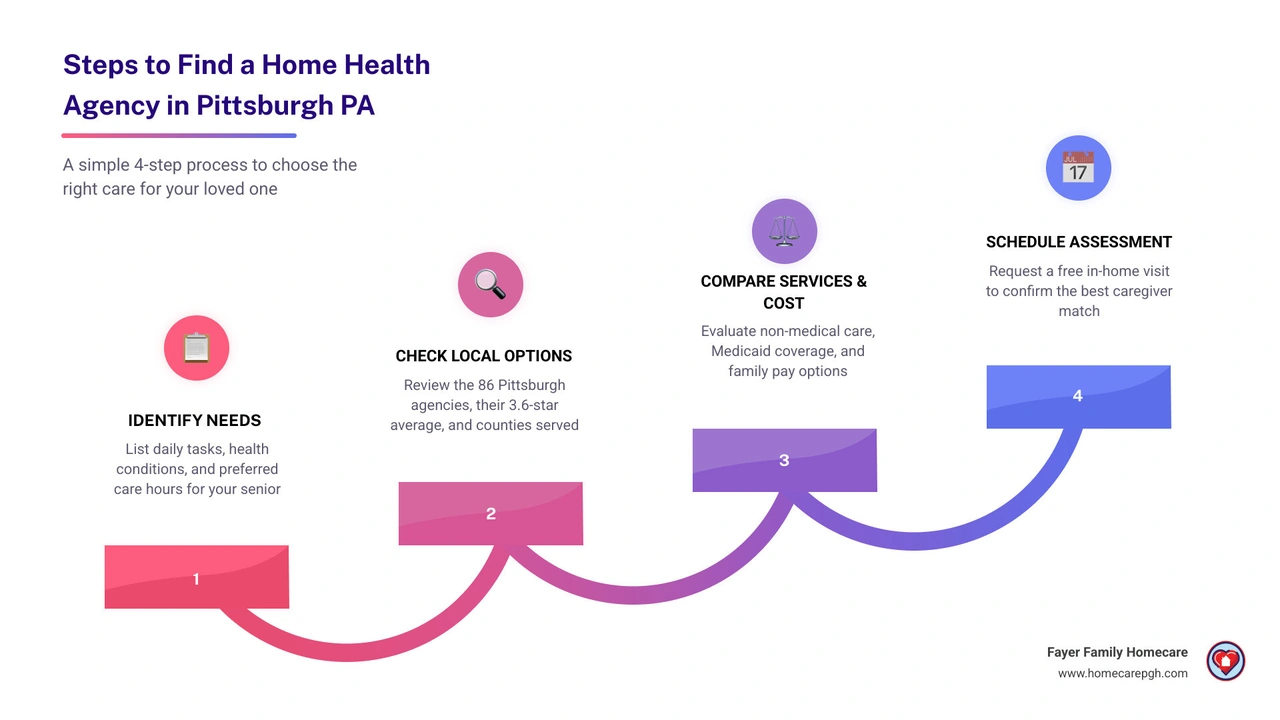
When you first begin looking into senior care in Western Pennsylvania, the sheer volume of options can feel overwhelming. Currently, there are 86 home care agencies operating right here in the Pittsburgh area. Across these providers, the average rating stands at a 3.6 out of 5 stars based on 69 public reviews.
While a 3.6-star average tells us there are many wonderful caregivers in our community, it also highlights how important it is to do your homework. Not every agency offers the same level of reliability, compassion, or specialized training.
To help make sense of the landscape, it is helpful to look at a comprehensive Home Health Agencies Pittsburgh overview. At Fayer Family Homecare, we believe that finding the right care starts with understanding what your family actually needs. The industry is broadly split into two categories:
Comparing agencies requires looking beyond basic star ratings. You want to ask about caregiver training, background checks, and the agency’s specific service footprint.
Most established agencies in the region serve a wide geographic area, but coverage can vary. While some limit their staff to the immediate city limits, others cover the broader Western Pennsylvania counties, including:
When comparing providers, use a structured Home Health Care Agencies Pittsburgh Guide to ask the right questions. Make sure to ask if they have minimum hourly requirements, how they handle caregiver call-offs, and whether their staff has specific experience with your loved one’s unique health needs.
For the vast majority of families, non-medical home care is the key to helping an aging parent stay in their beloved home. These services focus on the daily routines that keep seniors healthy, happy, and safe.
| Service Type | What It Includes | How It Helps |
|---|---|---|
| Companion Care | Conversation, reading, light hobbies, and accompaniment to appointments. | Combats social isolation and keeps minds active. |
| Personal Care | Assistance with bathing, grooming, dressing, and toileting. | Preserves dignity while preventing slips and falls in the bathroom. |
| Meal Preparation | Planning, cooking, and clean-up of nutritious meals. | Ensures proper nutrition and prevents kitchen-related accidents. |
| Light Housekeeping | Laundry, dusting, vacuuming, and keeping walkways clear. | Maintains a sanitary environment and reduces tripping hazards. |
| Medication Reminders | Prompting seniors to take the right pills at the right times. | Prevents dangerous medication errors and hospitalizations. |
By focusing on Non-Medical Home Health support, families can step back from being full-time chore-planners and go back to simply being daughters, sons, and spouses. At Fayer Family Homecare, our experienced caregivers are dedicated to providing these essential daily services with the highest standards of warmth and professionalism. You can explore our full range of personalized options on our Fayer Family Homecare Services page.

It is a story we hear all too often: a family visits their aging parent for Sunday dinner, only to realize things aren't quite right. Maybe the refrigerator is empty, or there is a stack of unpaid bills on the counter. Often, seniors will try to hide their struggles because they fear losing their independence.
As a family member, recognizing the warning signs early can prevent a major health crisis or a dangerous fall. Key indicators that your loved one may need in-home support include:
If you are noticing these changes in your loved one, taking action early is crucial. We recommend reviewing our Free In-Home Care Assessment Guide to help you objectively evaluate their living situation and start a loving, constructive conversation about bringing in help.
One of the biggest worries families face is how to pay for care. Fortunately, Pennsylvania offers several programs designed to make home care accessible and affordable. Navigating these options requires some planning, but the financial relief can be life-changing.
When exploring Understanding the Costs and Options in Private Home Care, families should look into the following primary funding sources:
Yes! This is one of the most common questions we receive from devoted family members who have stepped away from their own careers to care for an aging parent.
In Pennsylvania, the Medicaid Waiver program allows for participant-directed care, often managed through an Agency with Choice model. Under this system, the state recognizes that a familiar face is often the best caregiver.
If your loved one qualifies for the Medicaid Waiver, a local agency licensed by the Pennsylvania Department of Health can officially hire, train, and pay you to care for your family member. To learn more about how this process works and how to get started, take a look at our guide on Home Care Agencies in Pittsburgh PA.
When a loved one is diagnosed with a progressive illness like Dementia or Alzheimer's, their care needs become much more complex. Standard companionship is no longer enough; they need specialized oversight from professionals who understand the cognitive and behavioral changes associated with memory loss.
Finding specialized care means looking for agencies that offer tailored programs, including:
If you are exploring your options for memory care and specialized support in the local area, we encourage you to read our guide to In-Home Care in Pittsburgh PA to find a provider that truly matches your family's needs.
There are 86 home care agencies operating in the Pittsburgh area. Currently, these agencies hold an average rating of 3.6 out of 5 stars based on 69 public reviews. Because quality can vary, it is highly recommended to speak directly with agencies to learn about their caregiver screening process and experience.
Most major agencies in the region serve a multi-county footprint. This typically includes Allegheny, Armstrong, Beaver, Butler, Washington, Westmoreland, Fayette, and Greene counties.
Yes, for individuals who qualify both financially and clinically for Pennsylvania's Medicaid Waiver programs (such as Community HealthChoices), Medicaid can cover 100% of the cost of required in-home personal care and daily living assistance.
Other public organizations also provide excellent resources for families comparing care options. You can explore services and resources through local government agencies like the Pennsylvania Department of Aging or the Allegheny County Area Agency on Aging.
At the end of the day, finding the right care for your aging parent isn't just about checking boxes on a list of services. It is about finding a team that treats your family like their own.
At Fayer Family Homecare, we specialize in providing warm, experienced senior care throughout the Greater Pittsburgh Area. We focus on what matters most: specialized care for individuals who are aging, as well as those living with Dementia or Alzheimer’s. Our dedicated caregivers offer genuine companionship, close supervision, and engaging recreational activities, all while ensuring absolute cleanliness and comfort for your loved one.
You don't have to navigate this journey alone. Let us help bring peace of mind back to your family. Schedule a consultation with Fayer Family Homecare today, and let's talk about how we can support your loved one in staying safe, happy, and independent at home.

September 1, 2025
Your Guide to Personal Care: Supporting Daily Living with DignityUnlock independence with compassionate Personal care services. Support daily living, dignity, and quality of life for your loved ones.
Read Article
April 20, 2026
Finding the Best Home Care Agency in Pittsburgh for Your FamilyDiscover top home health care agencies in Pittsburgh. Compare home care vs. health, benefits, costs & choose the best for seniors aging in place.
Read Article
February 13, 2026
Finding the Right Fit: Specialized Care for Alzheimer's & DementiaFind the best specialized Alzheimer's care for your loved one. Explore options, understand costs, and get caregiver support.
Read Article