February 20, 2025
Essential Tips for Cleaning and Maintaining Elderly HomesDiscover essential tips for cleaning elderly homes, boosting health and safety with effective schedules and professional services.
Read Article
.svg)

Customized care plans are personalized roadmaps that outline exactly how a senior's physical, emotional, and daily living needs will be met — tailored to their health conditions, routines, preferences, and goals.
Quick answer: What is a customized care plan?
If you're caring for an aging parent — especially one living with dementia, Alzheimer's, or a chronic condition — you know that generic care rarely cuts it. What works for one person may be completely wrong for another.
Think about it this way: one senior may manage pain comfortably with medication, while another can't take the same drug due to allergies or job-related safety concerns. The details matter enormously.
According to research, personalized care planning has been linked to real health improvements — including lower blood sugar levels and reduced blood pressure — compared to standard care approaches. Care plans can also reduce unnecessary emergency room visits and hospitalizations, giving families genuine peace of mind.
At Fayer Family Homecare, we believe every senior deserves care that fits them — not a checklist designed for everyone.
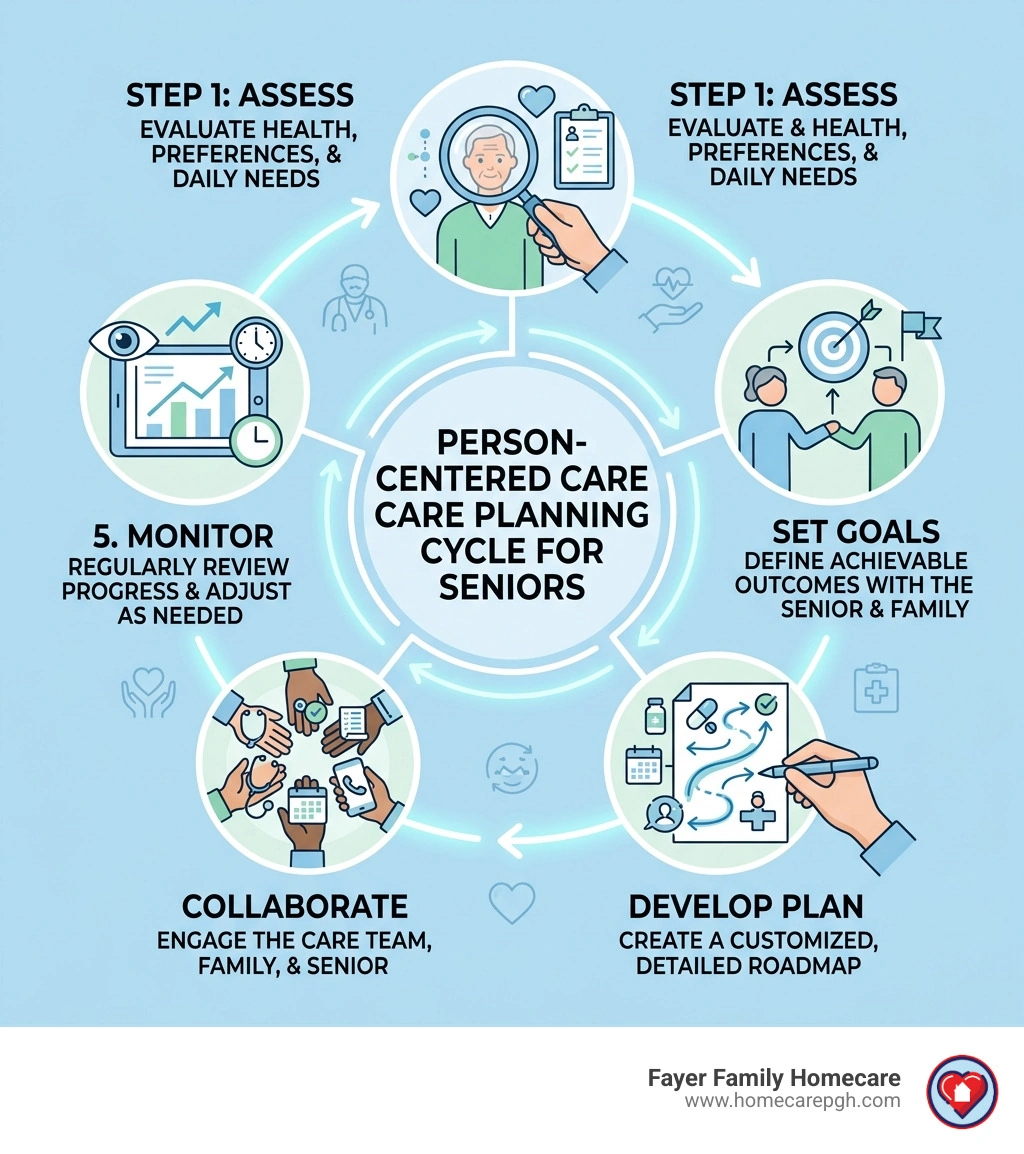
In the healthcare landscape of April 2026, we have moved far beyond the "one-size-fits-all" model. Today, a customized care plan is considered the "playbook" for a senior’s health and happiness. It isn't just a list of medications; it is a holistic document that captures who the person is, what they need to stay safe, and what they want their daily life to look like.
At its heart, this approach is patient-centered. It treats the person, not just the illness. For many families in the Greater Pittsburgh Area, a care plan serves as a bridge between medical necessity and the comfort of home. By focusing on The Importance of Personalized Care Plans, we ensure that every hour of care provided is purposeful.
Whether it’s managing a chronic condition or providing extra support after a hospital stay, these plans provide a structured way to track health while maintaining the senior’s dignity. You can find more info about customized care through our specialized service pages, which detail how we integrate medical support with emotional well-being.
Imagine two seniors who both need help with morning routines. One might be a "morning person" who loves a brisk walk and a heavy breakfast by 7:00 AM. The other might have chronic pain that makes moving difficult until 10:00 AM and prefers a quiet cup of tea while listening to the news. A generic agency might send a caregiver to both at 8:00 AM with the same "to-do" list.
Customized care plans prevent this mismatch. We look at:
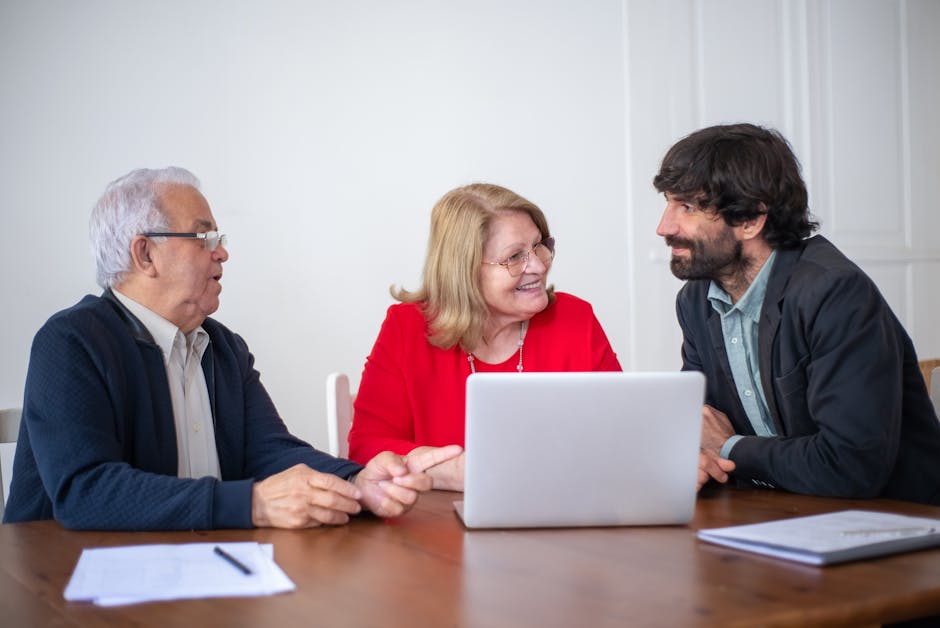
We don't create these plans in a vacuum. Effective care planning is a team sport involving the senior, their family, and an interdisciplinary team of professionals. We believe in shared decision-making. After all, you know your loved one better than anyone else.
When Choosing the Right Personal Care Provider, it is vital to find a team that prioritizes communication. We establish clear channels—whether through digital portals or regular phone check-ins—to ensure everyone is on the same page. This builds trust and ensures that if a senior’s mood or mobility changes on a Tuesday, the entire care team knows by Wednesday.
Why go through the effort of creating a bespoke plan? Because the results are measurable. For seniors, the difference between "standard" care and personalized care is often the difference between struggling and thriving.
| Feature | Generic Care Approach | Customized Care Plan |
|---|---|---|
| Focus | Task-oriented (e.g., "give bath") | Person-oriented (e.g., "support independence during bath") |
| Scheduling | Fixed agency hours | Flexible to senior's natural rhythm |
| Health Impact | Reactive (treats symptoms) | Proactive (prevents complications) |
| Safety | General home safety | Specific mobility & fall risk assessment |
| Cost | May include unnecessary services | Optimized to specific needs and budget |
By Customized Care Plans: Tailoring Support to Your Needs, we focus on three main pillars: independence, safety, and cost-effectiveness. By sharing the caregiving load with professionals, we also see a massive reduction in family caregiver burnout, allowing you to go back to being a son or daughter rather than a full-time medical manager.
The numbers don't lie. Research indicates that personalized care planning interventions lead to significant improvements in physical health. For seniors with chronic conditions, these plans help manage:
According to scientific research on chronic care management, these interventions also reduce the number of emergency room visits. When a caregiver knows exactly what a senior’s "normal" looks like, they can spot a problem—like a developing UTI or a slight change in respiratory rate—long before it becomes a 911 call.
It might seem counterintuitive, but more care can lead to more independence. When a senior has a customized care plan, they are empowered to do what they can do, while receiving help for what they can't.
This empowerment boosts self-management and satisfaction. We don't just "do things" for our clients; we provide Companionship and encouragement. If a senior wants to keep cooking their own Sunday sauce, we don't take over the kitchen—we provide the supervision and prep help to make it safe for them to continue their tradition. This preserves their quality of life and emotional well-being.
Creating an effective plan isn't a one-off event; it’s a process. Here is how we handle it:
A truly effective plan includes several non-negotiable elements:
Safety is about more than just grab bars in the bathroom, though those are important! We look at safety through a wider lens:
In 2026, technology is a caregiver's best friend. AI is now capable of performing up to 30% of the administrative tasks typically assigned to nurses, which means our team spends less time on paperwork and more time with your loved one.
We use tools like Electronic Health Records (EHR) to ensure that every member of the team—from the caregiver in the home to the family member at work—has real-time access to updates. This is especially helpful for Personalized Care Plans & Trusted Caregivers in Pittsburgh.
Technology also helps with Food Preparation. We can track nutritional intake and ensure that dietary restrictions are strictly followed, even if different caregivers are rotating through the home.
Health isn't static. A plan that works in January might be outdated by July. We use the concept of the "inflection curve of disease" to guide our monitoring. This means we try to intervene early—proactively—before a minor health change becomes a major crisis.
Our In-Home Care Assessment process includes regular reviews. If a senior recovers from a surgery, their plan might shift from intensive physical therapy support to lighter companionship and housekeeping. If a condition like dementia progresses, we adapt the safety protocols and cognitive activities accordingly. This dynamic approach ensures that the care is always "just right."
At a minimum, we recommend an annual review during a yearly wellness visit. However, a plan should be updated immediately if there is a change in health status, a new medication, or after a hospital stay. We treat the care plan as a living document that evolves with the senior.
Yes, for many programs. Personalized care plans are now required for chronic care management reimbursement under many Medicare and insurance guidelines. Proper documentation ensures that you meet regulatory standards while receiving the highest quality of care.
For those with Alzheimer's or other forms of dementia, a customized care plan provides the structure and "cues" needed to navigate the day. It includes task reminders, specialized supervision to prevent wandering, and behavioral management strategies that are specific to what triggers or soothes that particular individual.
At Fayer Family Homecare, we are proud to serve the Greater Pittsburgh Area with a heart-first approach to senior support. We know that behind every care plan is a person with a lifetime of stories, and a family that wants the very best for them.
By focusing on specialized care for those who are aging or living with Dementia and Alzheimer’s, we provide more than just a service—we provide peace of mind. Whether it’s ensuring cleanliness and comfort or providing engaging recreational activities, our experienced caregivers are here to help.
Don't settle for a one-size-fits-all approach. Your loved one deserves a plan as unique as they are. Start your customized care journey with us today and see the difference that true personalization can make.

February 20, 2025
Essential Tips for Cleaning and Maintaining Elderly HomesDiscover essential tips for cleaning elderly homes, boosting health and safety with effective schedules and professional services.
Read Article
December 23, 2024
247 Live-In Companions: Comfort and Care Around the ClockDiscover comfort and care with 247 live in companions, offering personalized senior support and companionship around the clock.
Read Article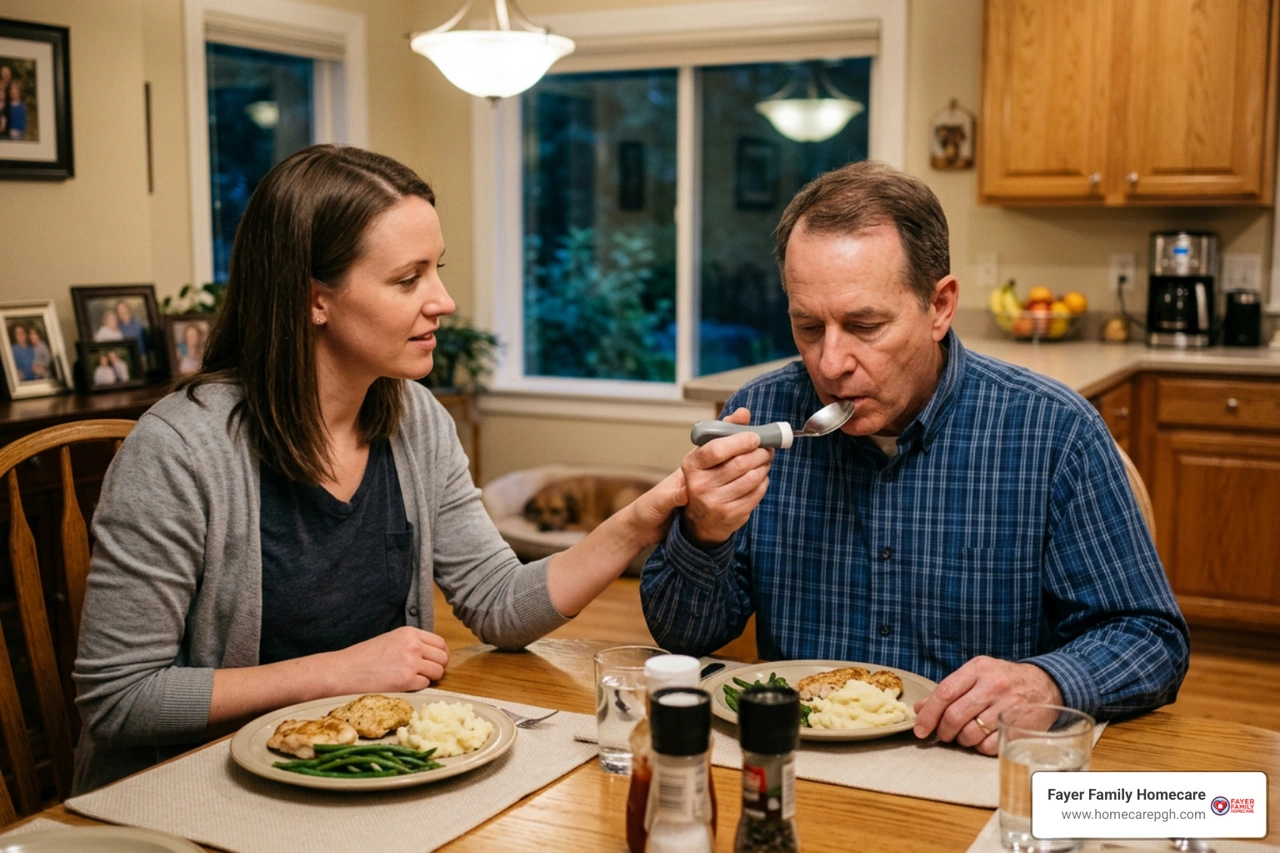
September 14, 2026
Parkinson's Daily Living Assistance and Practical Mobility StrategiesDiscover practical Parkinson's daily living assistance tips for hygiene, mobility, safety, and caregiver support to improve quality of life.
Read Article