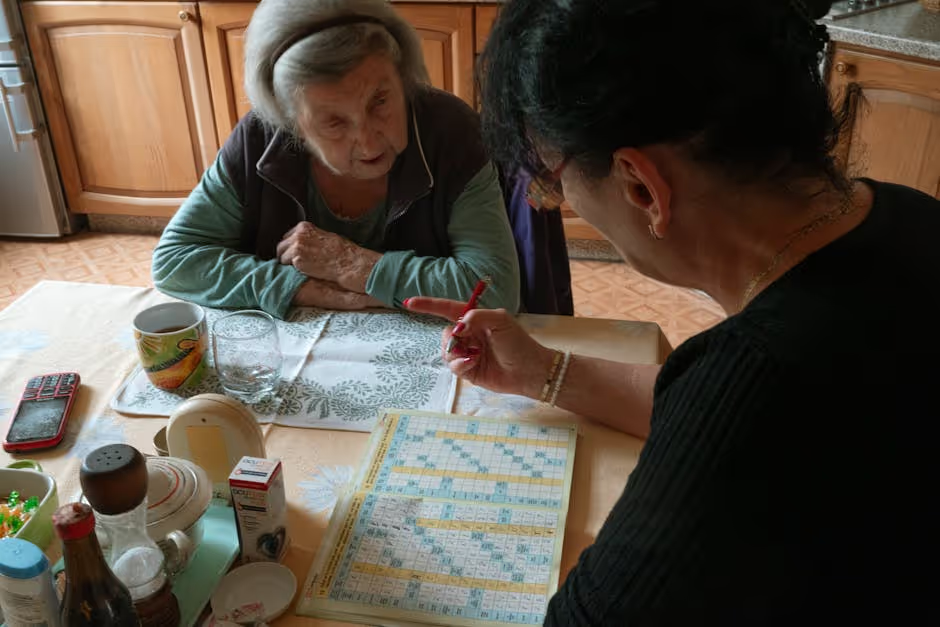
Understanding Homemaker and Companion Services for Your Aging Loved One
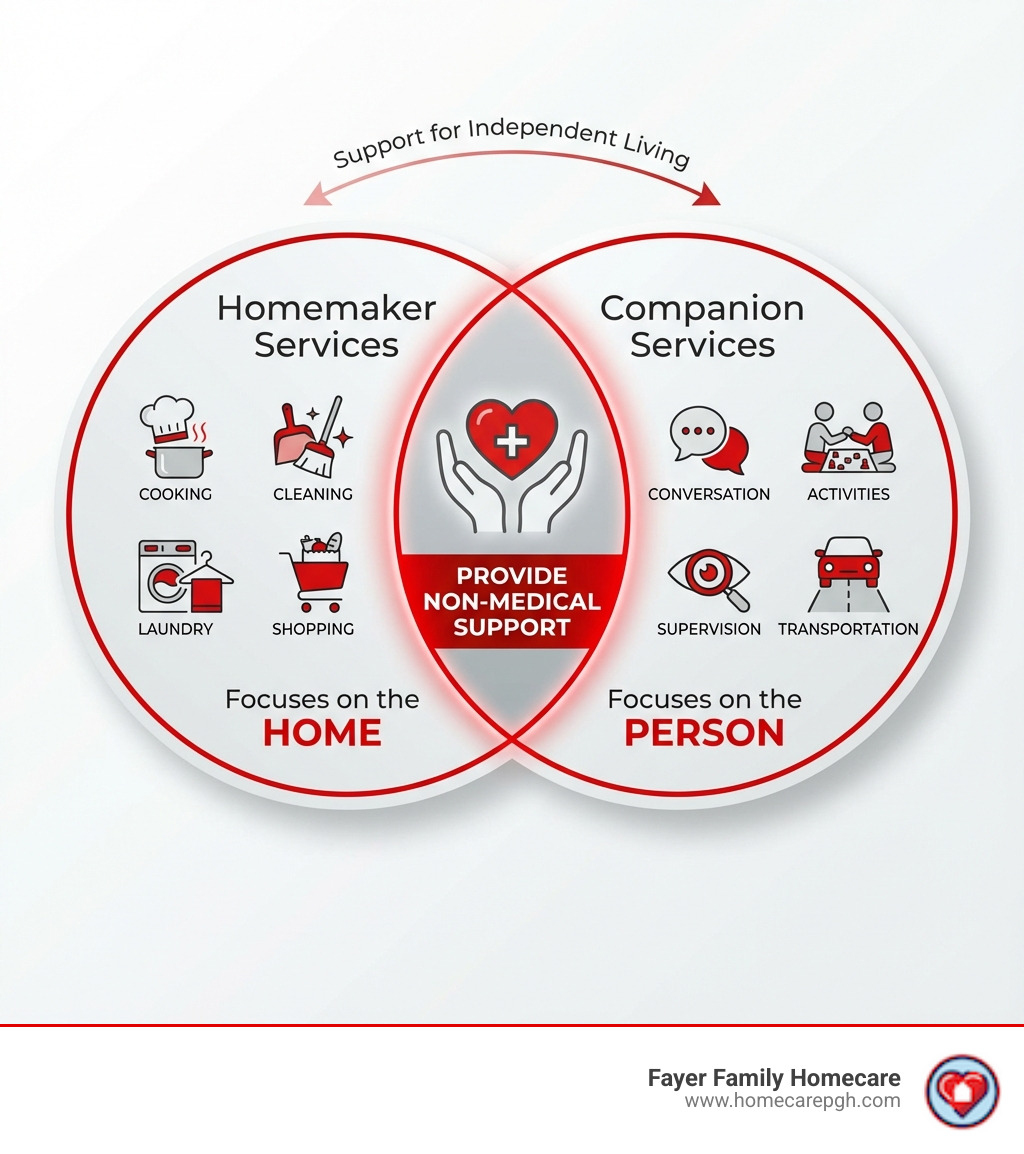
Homemaker and companion services provide non-medical support to help seniors live independently at home. These services include two distinct but complementary roles: homemakers focus on household tasks like cooking, cleaning, and laundry, while companions provide social engagement, supervision, and emotional support.
Quick Answer: What You Need to Know
- Homemaker services handle household management tasks (meal prep, laundry, light cleaning, shopping)
- Companion services provide social support and supervision (conversation, activities, escorts to appointments)
- Neither role provides medical care - they cannot administer medications, assist with bathing, or provide nursing services
- Key benefit: Allows seniors to age in place safely while reducing isolation
- Typical cost: Generally less expensive than home health aide services or assisted living
As your parent ages, you may find yourself wondering how to help them maintain their independence while ensuring their safety and well-being. The statistics are sobering: 40% of seniors ages 65 and up currently require some day-to-day assistance, and 70% will need help in the future.
Many families struggle to balance their own responsibilities with the growing needs of an aging loved one. You want your parent to stay in their familiar home environment, but you worry about their isolation, their ability to keep up with household tasks, and their safety when you're not there.
This is where homemaker and companion services become invaluable. These non-medical care providers bridge the gap between complete independence and needing full-time medical care. They help your loved one maintain their dignity and quality of life while giving you peace of mind that someone trustworthy is checking in regularly.
In this guide, we'll walk you through everything you need to know about homemaker and companion services - what they are, what they can and cannot do, how they differ from home health aides, what to look for in a quality agency, and how to make the right choice for your family.
Handy homemaker and companion terms:
Defining the Roles: Homemaker vs. Companion Services
When we talk about in-home support for seniors, the terms homemaker and companion are often used together, but they actually refer to distinct sets of services. Both roles provide crucial non-medical support, helping individuals with Instrumental Activities of Daily Living (IADLs) that maintain their independence and quality of life. At Fayer Family Homecare, we understand that these services are about more than just tasks; they're about enhancing daily living and providing peace of mind.
While a homemaker focuses primarily on the upkeep and management of the home environment, a companion centers on social interaction, emotional support, and supervised activities. Both are invaluable for helping seniors age in place comfortably and safely.

Here's a side-by-side look at the typical responsibilities:
| Homemaker Services | Companion Services |
|---|
| Meal preparation and planning | Social engagement and conversation |
| Laundry and linen changes | Escort to appointments and social outings |
| Light housekeeping (dusting, vacuuming, tidying) | Recreational activities (games, hobbies) |
| Grocery shopping and running errands | Supervision for safety |
| Organizing and decluttering | Emotional support and companionship |
| Communicating changes to family/agency | Reading aloud, writing letters |
| Reminders for medications (not administration) |
| Light meal preparation (often overlaps) |
What are Homemaker Services?
Homemaker services are designed to maintain a clean, safe, and organized living space, allowing seniors to enjoy their home without the physical strain of daily chores. Our goal is to perform the functions generally undertaken by the natural homemaker, ensuring a comfortable environment.
Key tasks included in homemaker services often are:
- Meal preparation and planning: This goes beyond just cooking. It involves planning nutritious meals, preparing them according to dietary needs, and ensuring leftovers are stored properly. Nourishing Seniors: The Importance of Meal Preparation in Home Care highlights how vital this is for senior health.
- Laundry: Washing, drying, folding, and putting away clothes and linens.
- Light housekeeping: This includes tasks such as making beds, vacuuming, dusting, tidying surfaces, changing bed linens, sweeping floors, and washing and putting away dishes. Our caregivers ensure a hygienic, healthy, and safe living environment through light cleaning. For more details, see our article on Light Housekeeping for Seniors.
- Grocery shopping and running errands: This can involve creating shopping lists, going to the store, and picking up prescriptions or other necessary items.
- Maintaining a clean and safe home: Beyond routine cleaning, this involves identifying and addressing potential hazards, ensuring pathways are clear, and keeping the home in an optimum state of cleanliness and safety depending upon the client’s and the caregiver’s resources.
What are Companion Services?
Companion services focus on providing social interaction, emotional support, and supervision to alleviate loneliness and promote mental well-being. Companions are there to engage with your loved one, offering friendship and a watchful eye.
Specific tasks included in companion services are:
- Social engagement and conversation: Engaging in friendly conversations, sharing stories, and simply being present. This helps combat loneliness and social isolation, which can significantly impact senior health.
- Recreational activities: Participating in hobbies, playing cards or board games, watching television together, or engaging in other enjoyable pastimes.
- Escorting to appointments and transportation: Providing escort services such as taking the client to the health care provider, social outings, or other appointments, and providing incidental transportation as needed.
- Supervision: Offering a watchful presence to ensure safety, especially for those who might be prone to falls or forgetfulness. Companions remain in the client's vicinity at all times during their shift.
- Emotional support: Providing a listening ear, a comforting presence, and helping to create a cozy atmosphere. The importance of this is explored in Being a Companion to the Elderly.
- Casual, cosmetic assistance: This can include brushing the client’s hair, assisting with make-up, filing and polishing nails (with the exception of clipping nails for diabetic patients).
- Stabilizing the client when walking: As needed, by holding the client’s arm or hand.
- Reporting unusual incidents: Reporting any unusual incidents or changes in the patient’s or client’s behavior to the person(s) designated by the client or agency.
Homemaker and Companion vs. Home Health Aide: Knowing the Boundaries
It's critical for families to understand that while a homemaker and companion provides invaluable support, their role is strictly non-medical. This distinction is not just about the type of care, but often a legal boundary set by state regulations. We often encounter questions about where the line is drawn, and it's a very important one.
The fundamental difference lies in the level of care provided: homemaker and companion services offer non-medical support, while home health aide services include hands-on personal care and can sometimes involve basic health monitoring under supervision.
Services NOT Provided by a Homemaker and Companion
To ensure safety and compliance, it's important to be clear about what homemaker and companion agencies are explicitly not permitted to do. According to state laws in many regions, homemaker and companion services cannot provide any personal care or nursing.
Services explicitly NOT provided by a homemaker and companion include:
- Hands-on personal care: This is the most significant boundary. Homemakers and companions cannot assist with activities that require physical contact for personal hygiene.
- Bathing assistance: They cannot help with showering, bathing, or bed baths.
- Toileting assistance: They cannot assist with using the toilet or managing incontinence.
- Dressing and grooming: They cannot help with putting on clothes, shaving, or other personal grooming activities that require direct physical assistance.
- Administering medication: This includes giving pills, injections, or managing medication schedules beyond simple reminders.
- Wound care: They are not trained or permitted to change dressings or treat wounds.
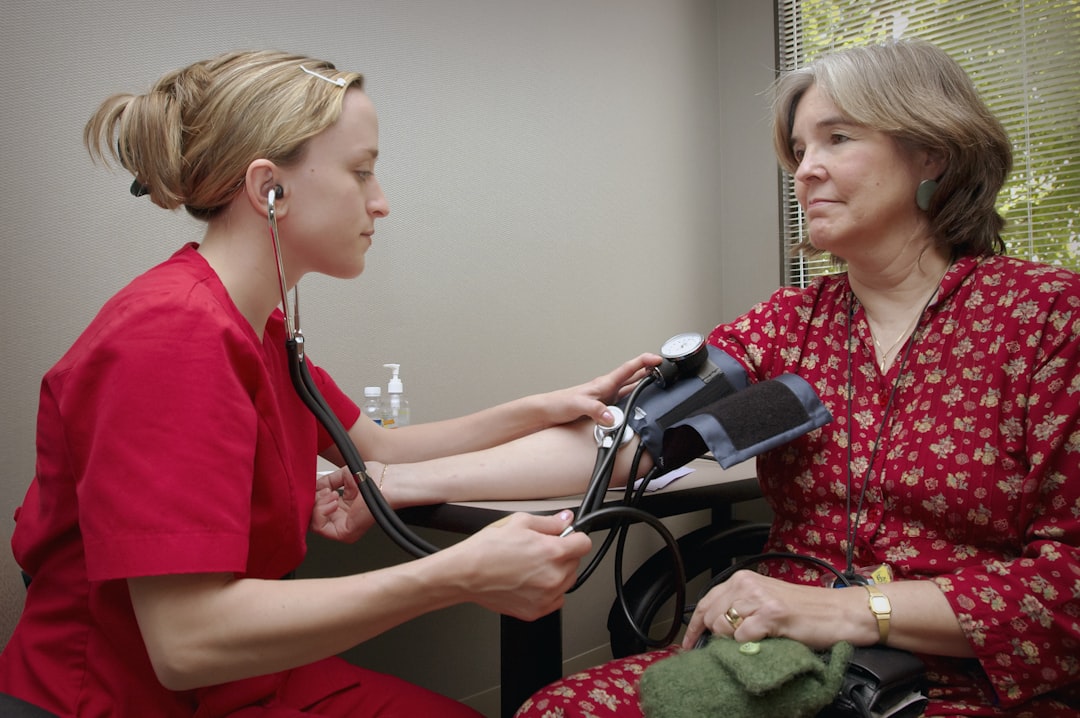
- Physical therapy or other skilled medical procedures: They cannot perform any tasks that fall under the scope of licensed medical professionals, such as directing physical therapy or assessing blood pressure.
- Managing medical equipment: They cannot operate or manage medical devices.
These are typically the domain of Personal Care Services or licensed medical professionals.
The Role of a Home Health Aide (HHA)
A Home Health Aide (HHA) is a trained and often licensed professional who can provide all the services of a homemaker and companion, plus hands-on personal care. HHAs bridge the gap when a senior needs more direct physical assistance.
The role of a Home Health Aide includes:
- Hands-on personal care: This is their primary distinction. HHAs assist with Activities of Daily Living (ADLs) that homemakers and companions cannot.
- Assisting with mobility: Helping clients with ambulation, transfers (e.g., from bed to chair), and repositioning.
- Dressing and grooming: Providing direct physical assistance with putting on clothes, brushing hair, and other personal grooming needs.
- Bathing and hygiene: Assisting with showers, baths, and personal hygiene routines.
- Medication reminders with assistance: While they cannot administer medication, some HHAs can assist with self-administered medications after appropriate training, ensuring they are taken correctly.
- Monitoring vital signs: In some cases, and under supervision, HHAs may monitor and record vital signs like blood pressure and pulse.
- Specialized care: Often recommended after a hospital stay or for individuals with specific health conditions requiring a higher level of personal support. Assistance with ADLs further details these crucial tasks.
Essentially, if your loved one needs help with fundamental self-care tasks that involve direct physical contact, a Home Health Aide is the appropriate choice. If their needs are primarily for household support, companionship, and supervision without hands-on personal care, then a homemaker and companion is the right fit.
The Benefits and Costs of In-Home Support
Deciding on in-home care for an aging loved one is a significant step, and understanding both the advantages and financial implications is key. For many families in the Pittsburgh area, the goal is to improve their loved one's quality of life and provide peace of mind, knowing they are safe and cared for.
Why Hire a Homemaker or Companion for a Senior Loved One?
Hiring a homemaker or companion offers a multitude of benefits that extend far beyond simply getting tasks done. These services are foundational to helping seniors thrive in their own homes.
- Combating loneliness and reducing social isolation: This is one of the most profound benefits. Loneliness can have serious health consequences for seniors. A companion provides consistent social interaction, conversation, and a friendly face.
- Promoting independence: By assisting with daily tasks that have become challenging, homemakers and companions empower seniors to remain in their homes rather than moving to assisted living facilities. This support allows them to maintain their routines and dignity. Our article on 5 Ways Home Care Services Can Help Seniors Stay Independent digs deeper into this.
- Ensuring safety at home: Whether it's a homemaker ensuring clear pathways or a companion providing supervision, these services contribute significantly to a safer home environment, reducing the risk of falls or other accidents.
- Respite for family caregivers: We know that family caregivers often shoulder immense responsibilities. A homemaker and companion provides much-needed relief, allowing family members to rest, manage their own affairs, or simply have a break, knowing their loved one is in good hands. This is vital for caregiver well-being, as discussed in Caring for the Caregiver: Tips for Self-Care in Senior Home Care.
- Supporting aging in place: The desire to age in place is strong for most seniors. Homemaker and companion services make this desire a reality by providing the practical and emotional support needed to stay in a familiar environment.
Understanding the Costs of Homemaker and Companion Services
The cost of homemaker and companion services can vary based on several factors, but it's generally considered a more cost-effective alternative compared to full-time home health aide services or residential care facilities.
Key factors influencing costs include:
- Hourly rates: Most services are billed hourly. The rate can depend on the specific tasks required, the time of day (e.g., nights or weekends might be higher), and the caregiver's experience.
- Live-in care costs: Some agencies offer live-in homemaker and companion services, where a caregiver resides in the client's home. This can provide continuous presence and support, often at a flat daily rate, which can be more economical than hourly care for extensive needs.
- Agency fees: When hiring through an agency, the costs typically cover the caregiver's wages, taxes, insurance (worker's compensation, liability), background checks, and agency overhead.
- Geographic location: Costs can fluctuate based on the cost of living in the Pittsburgh area.
- Level of need: More complex care plans or specialized needs might incur different rates.
While specific numbers vary, it's important to discuss pricing transparently with any agency you consider. Many agencies, including us, offer free in-home evaluations to assess needs and provide a personalized quote. Our article on Senior Companion Care Costs provides more information, as does Understanding the Costs and Options in Private Home Care.
Choosing a Reputable Homemaker and Companion Agency
Finding the right homemaker and companion agency for your loved one is a decision that requires careful consideration. It's about entrusting someone with your family member's well-being and the upkeep of their home. A thorough vetting process will ensure you select a reputable and reliable provider in the Pittsburgh area.
What Qualifications Should a Caregiver Have?
The quality of care your loved one receives is directly tied to the qualifications and character of their caregiver. We believe the overall experience is largely dependent upon our caregivers, which is why we strive to hire only the best.
When looking for a homemaker and companion caregiver, consider these essential qualifications:
- Experience: Look for caregivers with prior experience in home care, especially with seniors.
- Compassion and empathy: These are non-negotiable traits. A good caregiver should genuinely care for your loved one's comfort and happiness.
- Reliability and professionalism: Punctuality, consistency, and a professional demeanor are crucial.
- Communication skills: The caregiver should be able to communicate effectively with your loved one, you, and the agency.
- Training in specialized care: If your loved one has specific conditions like Dementia or Alzheimer's, ensure the caregiver has relevant training and understanding. Our caregivers at Fayer Family Homecare are experienced in providing Dementia Care Pittsburgh, PA.
- Background checks and screening: Reputable agencies conduct comprehensive background checks, including criminal history, and often drug testing, to ensure the safety of your loved one.
- Bonding and insurance: Caregivers should be bonded and insured through their agency, protecting both the client and the agency. The Essential Role of Caregivers in Home Health Care further elaborates on what makes a great caregiver.
Legal and Regulatory Insights for Homemaker and Companion Agencies
While we operate in the Pittsburgh, PA area, it's helpful to understand the general landscape of legal and regulatory requirements that apply to homemaker and companion agencies across the country. These regulations are designed to protect consumers and ensure a standard of care.
Key aspects often include:
- State registration or licensure: Many states require homemaker and companion agencies to be registered or licensed. This ensures they meet certain operational standards. Families should always verify that an agency is properly licensed or registered with the relevant state authorities in Pennsylvania.
- Background check requirements: Comprehensive background checks for all employees are a cornerstone of reputable agencies. For instance, some states, like Connecticut, mandate detailed background check records for employees, as outlined in Public Act 21-37, Section 38, to ensure safety and trust.
- Written contracts and service agreements: Agencies should provide a clear, written contract or service plan outlining anticipated services, terms, costs, and the employment relationship. This contract should also detail data safeguards, job categories, gratuity policies, and a process for filing complaints.
- Surety bonds or insurance: Agencies are often required to maintain a surety bond or insurance coverage, which can protect clients in cases of employee theft or other issues.
- Covenants not to compete: Some states have regulations regarding non-compete clauses for caregivers. For example, C.G.S. 20-681 in Connecticut, for example, voids covenants not to compete for these services, ensuring caregivers have freedom to work. While this is a Connecticut law, it highlights a consumer-friendly principle that ensures caregivers are not unduly restricted from providing essential services.
Always ask agencies in the Pittsburgh area about their specific licensing, bonding, and insurance details to ensure they meet all local and state requirements.
How to Find and Vet the Right Agency
Choosing the right homemaker and companion agency is a crucial decision for your family. Here's a step-by-step approach to finding and vetting a reputable provider in the Pittsburgh area:
- Start your search: Look for agencies that specifically mention homemaker and companion services. Check online directories, ask for recommendations from friends, family, or healthcare professionals. Our blog post on Home Care Agencies in Pittsburgh, PA is a great starting point.
- Interview multiple agencies: Don't settle for the first one you find. Interview at least two or three agencies to compare their services, philosophies, and costs.
- Ask for references: A reputable agency will gladly provide client references. Contact these references to ask about their experience with the agency and their caregivers.
- Review contracts carefully: Before signing anything, thoroughly read the service agreement. Ensure it clearly outlines:
- The specific services to be provided.
- The schedule and duration of services.
- The costs, billing frequency, and any potential extra charges.
- The agency's policies on cancellations, changes in service, and emergencies.
- The process for resolving complaints.
- Confirmation that caregivers are employees (not independent contractors) and that the agency handles taxes, insurance, and bonding.
- Inquire about caregiver screening and matching: Ask about their hiring process, including background checks, drug testing, and how they match caregivers to clients. A good agency will strive to match personalities and preferences.
- Understand supervision and communication: How does the agency supervise its caregivers? How often do they check in with clients? What is their communication protocol for any changes or concerns?
- Discuss custom care plans: Each senior is unique. The agency should be willing to develop a personalized care plan that addresses your loved one's specific needs and preferences.
- Verify insurance and bonding: Confirm that the agency is fully insured and bonded to protect against unforeseen circumstances.
By taking these actionable steps, you can confidently choose an agency that provides high-quality, compassionate homemaker and companion services, giving your loved one the support they need and giving you peace of mind. For more guidance, see Choosing the Right Personal Care Provider: What You Need to Know.
Conclusion: Enhancing Quality of Life for Your Loved One
Choosing homemaker and companion services is a proactive and compassionate decision that significantly improves the quality of life for your aging loved one. These non-medical supports are not just about completing tasks; they're about fostering independence, safety, and emotional well-being within the comfort and familiarity of their own home. We've seen how the right support can transform daily living, turning challenges into opportunities for continued dignity and joy.
From ensuring a tidy home and nutritious meals to providing engaging conversation and a watchful eye, homemakers and companions fill crucial gaps in care that family members, despite their best intentions, often cannot manage alone. This vital assistance reduces the burden on family caregivers, offering them much-needed respite and peace of mind.
At Fayer Family Homecare, we are dedicated to providing specialized care for individuals who are aging and those with Dementia or Alzheimer’s, right here in the Greater Pittsburgh Area. Our experienced home caregivers offer compassionate companionship, vigilant supervision, and engaging recreational activities, all while ensuring the cleanliness and comfort of our clients' homes. We understand the unique needs of each family and are committed to creating a supportive environment where your loved one can thrive.
If you're considering how homemaker and companion services could benefit your family, we encourage you to reach out. Together, we can help your loved one live their best possible life.
Learn more about our companionship services


.svg)