
May 11, 2026
Pittsburgh Home Care: Comfort, Compassion, and Convenience DeliveredDiscover compassionate home care in Pittsburgh for seniors. Learn about services, benefits, and how to choose the right provider for aging in place.
Read Article

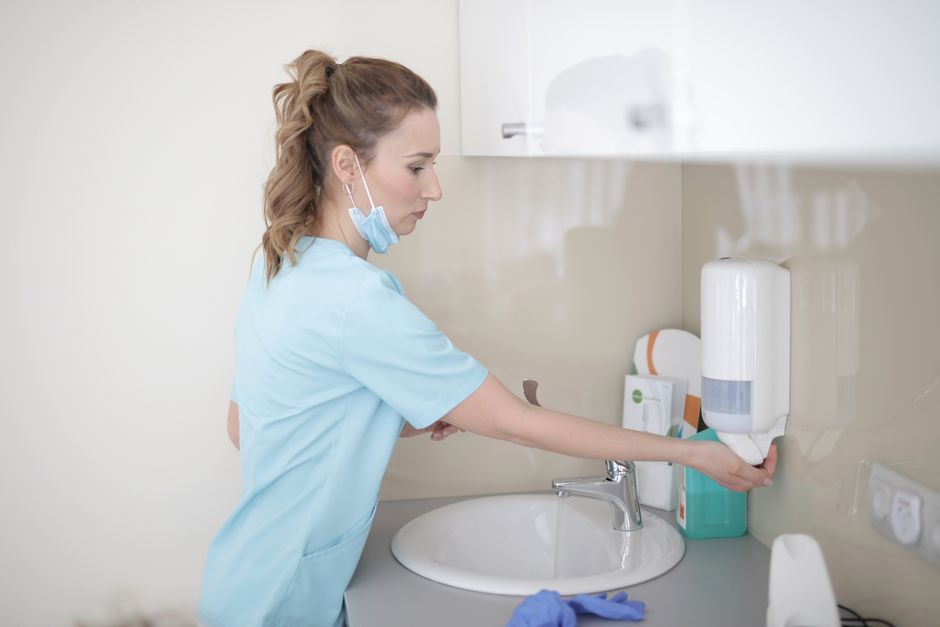
When an elderly loved one lives in a residential facility, their living space is shared with dozens of other residents, healthcare workers, visitors, and support staff. An infection prevention and control (IPC) risk assessment is an ongoing, systematic evaluation of every point in the facility where harmful bacteria, viruses, or fungi could enter, spread, or cause harm.
Aging immune systems, chronic conditions, and congregate living make seniors especially susceptible to infectious illnesses. A routine seasonal virus that causes minor discomfort in a young adult can rapidly escalate into severe complications for an older resident. By conducting a formal Infection Prevention and Control Organizational Risk Assessment for Long-Term Care and Retirement Homes, care providers move from reacting to outbreaks to proactively preventing them.
Assessing infection risk is not just about institutional protocols; it starts with understanding the unique vulnerabilities of the individual. Just as families conduct an in-home care assessment to identify personal physical and medical hazards, residential facilities must evaluate how a resident's underlying health status, mobility limitations, and medical devices interact with the broader environment.
To prevent illness from spreading, care staff must interrupt the "chain of infection." This clinical concept consists of six distinct, connected links:
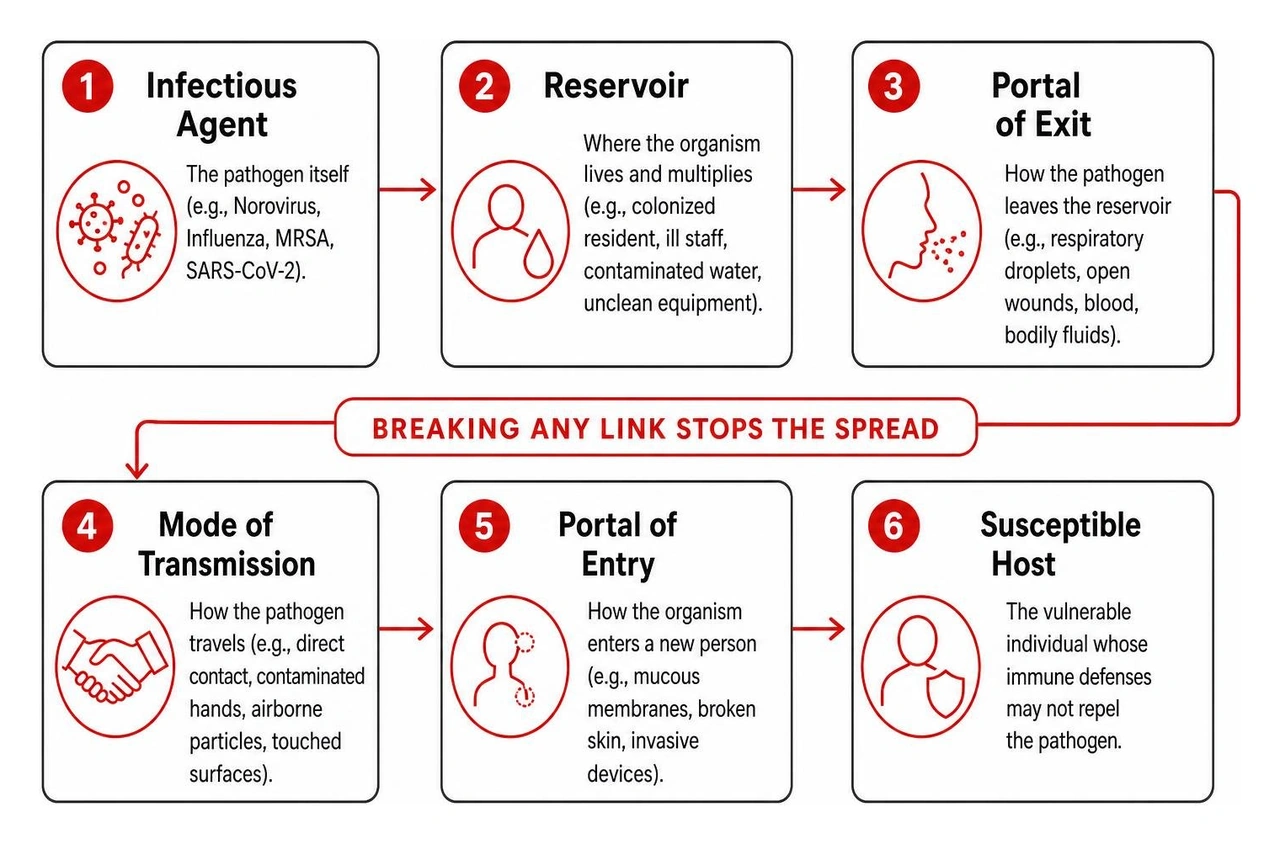
Breaking even one link in this sequence stops the spread of disease completely. In a senior living setting, staff break these links daily through targeted interventions: sanitizing hands between resident interactions breaks the mode of transmission, covering wounds protects portals of entry, and prompt symptom isolation neutralizes the reservoir.
An effective IPC risk assessment template is structured and practical rather than theoretical. It provides care staff with a repeatable framework to evaluate hazards across the building. Key components include:
Maintaining high infection control standards requires adhering to structured regulatory guidance and proven clinical toolkits. Standardized frameworks ensure facilities do not overlook subtle transmission risks.
Care facilities operate under two overarching tiers of protection: Standard Infection Control Precautions (SICPs), which must be applied consistently for all residents at all times, and Transmission-Based Precautions (TBPs), which are deployed when an active, contagious illness is suspected or confirmed.
| Precaution Tier | Application Scope | Core Safeguards & Interventions | Primary Objective |
|---|---|---|---|
| Standard Precautions (SICPs) | Every resident, every interaction, regardless of known infection status. | Routine hand hygiene, basic PPE selection based on anticipated exposure, cough etiquette, safe linen management, and routine surface cleaning. | Prevent baseline cross-contamination and protect against unrecognized infection sources. |
| Transmission-Based Precautions (TBPs) | Targeted residents with known or suspected transmissible pathogens. | Pathogen-specific PPE (N95 respirators, fluid-resistant gowns), dedicated single-room isolation, restricted cohorting, and specialized terminal cleaning. | Interrupt specific transmission pathways (airborne, droplet, or contact) during active contagion. |
Standardized toolkits provide consistency when evaluating facility readiness. One widely respected resource is the Infection Control Assessment and Response (ICAR) modular framework developed by health authorities. Rather than relying on guesswork, trained observers use specialized ICAR modules to evaluate specific functional areas:
Regulatory bodies evaluate whether a facility maintains active safety governance. Under frameworks such as the Health and Social Care Act 2008 code of practice, inspectors look for clear accountability, an appointed IPC lead, regular policy reviews, and verifiable audit trails.
Inspectors typically assess operations against key lines of enquiry, determining whether the provider is assured, somewhat assured, or not assured across core domains:
A solid risk assessment translates directly into daily operational habits. The physical care environment and daily personal hygiene routines represent the front line of defense against pathogens.
Hand hygiene remains the single most effective way to prevent healthcare-associated infections. Hand rubs containing at least 60% alcohol should be mounted at points of care, outside every resident door, and along corridors. When hands are visibly soiled, staff must use warm water and liquid soap, lathering vigorously for at least 15 to 20 seconds. Handrails, doorknobs, call buttons, and shared tabletops require frequent sanitation using approved hospital-grade disinfectants. When seniors transition from residential care back to private residences, maintaining these environmental standards remains vital; specialized housekeeping services help eliminate biological hazards on everyday household surfaces.
Managing foot traffic and new arrivals prevents community pathogens from entering the care facility:
For individuals experiencing cognitive decline, isolation measures must be carefully tailored. Practical techniques for dementia safety at home and in care facilities help manage disorientation and reduce distress when room changes or protective barriers are necessary.
Proper cleaning and protective wear require rigorous systems to prevent cross-contamination:

Even well-prepared facilities will eventually encounter an infectious illness. The true test of a care home's risk management program is how swiftly it detects, contains, and clears an outbreak before it spreads widely.
Care teams rely on established public health instructions, such as the Kirklees and Wakefield Council Infection Prevention Guidance, to guide containment steps. An outbreak is generally defined as two or more linked cases showing similar symptoms within a 48-hour window. Once identified, staff notify local health authorities, initiate enhanced daily sanitization, designate dedicated care staff to symptomatic residents, and monitor health metrics across all units.
Over time, daily routines can lead to subtle lapses in infection defense. Recognizing these common pitfalls helps maintain high safety standards:
Modern infection control pairs clinical assessment with data-driven surveillance. Quality-focused care homes track infections using standardized surveillance definitions, such as the revised McGeer criteria, which establish consistent symptom thresholds for long-term care settings.
Facilities track their healthcare-associated infection (HAI) rates using a standard incidence calculation. To calculate the rate, divide the number of new infections by the total resident days, then multiply the result by 1,000. This produces a rate expressed as infections per 1,000 resident days.
Calculating these metrics monthly allows care coordinators to identify rising trends, such as an uptick in catheter-associated urinary tract infections or localized skin conditions, and implement immediate corrections. Modern digital governance platforms simplify this tracking by generating automated cleaning alerts, scheduling routine hygiene audits, and maintaining clear digital compliance logs for regulatory reviews.
Care homes should review and update their comprehensive IPC organizational risk assessment at least annually. It must also be reviewed immediately whenever a major operational change occurs, such as a facility renovation, a newly emerging public health threat, or following the conclusion of an infectious outbreak to document lessons learned.
An outbreak is typically declared when two or more residents or staff members develop similar infectious symptoms (such as acute gastroenteritis or respiratory illness) within 48 hours, where an epidemiological link exists. Declaring an outbreak prompts notifications to public health authorities and triggers enhanced isolation, cleaning, and communication protocols.
Cognitive decline presents unique infection control challenges. Residents living with Alzheimer's or dementia may not remember hand hygiene steps, may wander into other residents' rooms, or may feel frightened by staff wearing full PPE. Caregivers address these challenges using clear, non-verbal cues, sensory-friendly hygiene stations, specialized communication techniques, and gentle distraction rather than rigid physical containment.
Protecting vulnerable seniors from infectious diseases requires clear protocols, consistent daily habits, and ongoing risk evaluation. When residential care facilities maintain structured risk assessments, equip staff with proper supplies, and monitor infection trends, they build a secure environment where elderly residents can thrive.
At Fayer Family Homecare, we understand that nothing matters more than the health, safety, and dignity of your aging loved ones. Whether your family is evaluating residential facilities or seeking professional support at home, our dedicated caregivers in the Greater Pittsburgh Area provide compassionate companionship, hands-on assistance, and meticulous care. Explore our comprehensive home care services to see how we help families maintain safe, comfortable living environments for the seniors they cherish.

May 11, 2026
Pittsburgh Home Care: Comfort, Compassion, and Convenience DeliveredDiscover compassionate home care in Pittsburgh for seniors. Learn about services, benefits, and how to choose the right provider for aging in place.
Read Article
June 14, 2023
6 Tips for Ensuring the Safety of Your Loved One at HomeWhen it comes to our loved ones, their safety and well-being are always at the top of our minds. This concern becomes even more significant when they are at home, where accidents or incidents can occur unexpectedly. To create a safe and secure environment for your loved ones, it's essential to take proactive measures.
Read Article
November 2, 2026
Office of Aging PA: Services, Benefits, and Family GuideOffice of Aging PA guide for families: learn how to find local aging services, benefits, care assessments, and in-home support.
Read Article