
September 3, 2025
Plan, Prep, Prosper: How to Master Your Weekly MealsMaster senior meal planning for better health & less stress. Get our 4-step guide to nutritious, easy meals today!
Read Article


The Pennsylvania Department of Aging (PDA) oversees statewide policies, coordinates funding, and ensures older adults can age with dignity, purpose, and independence. However, the state does not deliver every service directly. Instead, it funds and guides local Area Agencies on Aging (AAAs) across all 67 counties.
For families searching for an Office of Aging PA resource, the best starting point is usually the local Area Agency on Aging. It can explain available programs, screen for needs, connect eligible adults with services, and clarify which supports may have waiting lists or financial requirements.
Whether you live in Allegheny County, Beaver County, or elsewhere in the Commonwealth, your county agency operates under a state-approved multi-year plan. These plans address local community needs while maintaining state standards for service delivery, quality, and protective oversight. Local agencies serve as the primary entry point for public senior benefits, offering objective information, program enrollment, and care coordination.
Local county agencies provide a robust safety net for residents aged 60 and older. Understanding these offerings allows you to secure the right support before an unexpected fall or illness creates an emergency.
Families exploring community resources can review our guide to Pittsburgh senior services to see how local public programs interact with private in-home care options.
Securing public support begins with a comprehensive needs assessment. When you contact your local agency, an intake specialist conducts an initial screening over the phone to understand your parent's physical, cognitive, and financial situation.
Following the initial intake, a care manager visits your parent's home to conduct an in-person evaluation. This assessment examines:
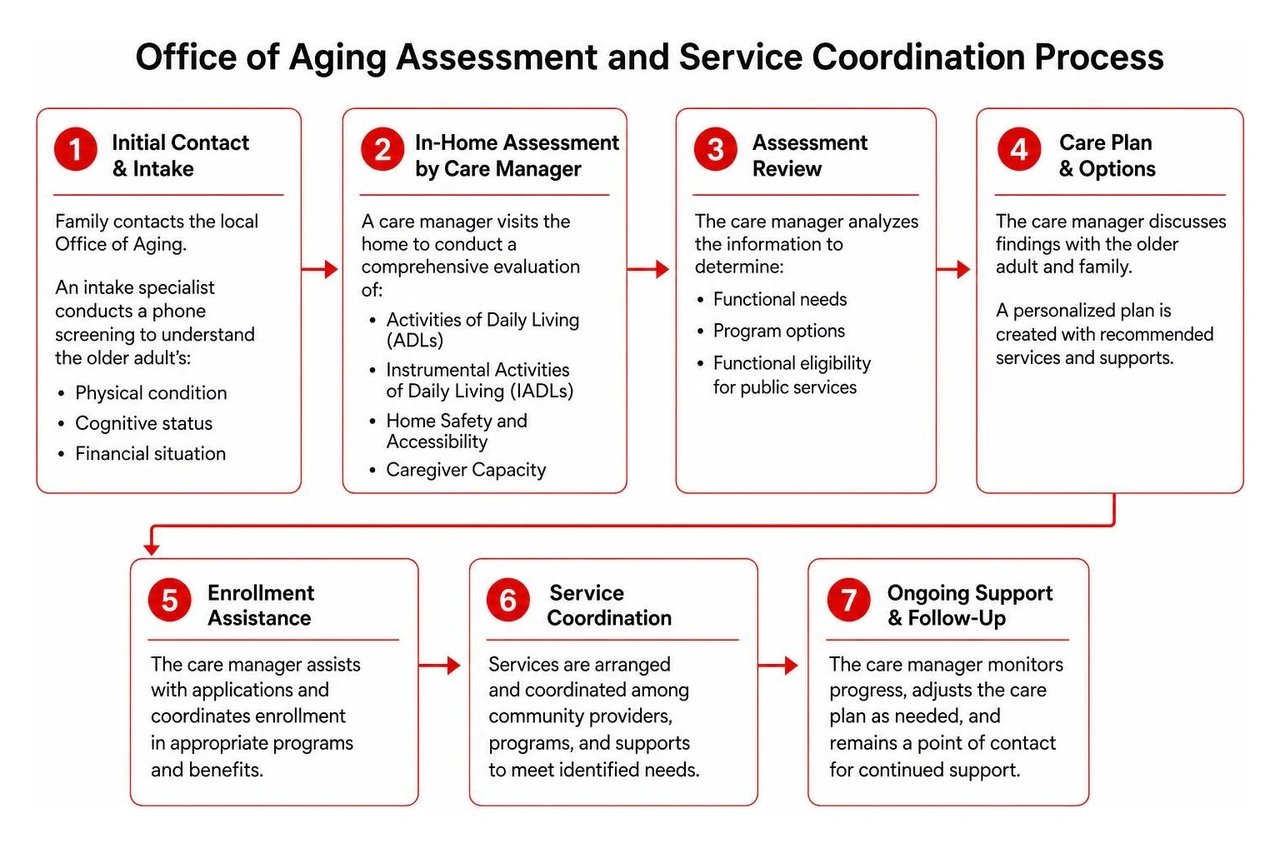
Based on this evaluation, the care manager outlines available program options, determines functional eligibility, and assists with enrollment. Because public assessment processes can take several weeks depending on agency caseloads, families often consult our free in-home care assessment guide to evaluate care needs immediately and prepare for the state interview.
A short preparation list can make the first conversation more productive. Gather a current medication list, insurance information, details about daily-living challenges, recent hospital or rehabilitation records when relevant, and the name of the person authorized to speak with the agency. Families should also write down the support they need most urgently, such as meal delivery, transportation, fall-prevention help, caregiver respite, or a home-safety evaluation.
Pennsylvania provides targeted financial assistance programs to help older adults offset healthcare, housing, and transportation expenses. Navigating these options can save your family hundreds of dollars each month.
Pennsylvania leads the nation in state-funded prescription assistance through its lottery-funded programs:
| Program Name | Minimum Age | Income Limits (Single / Married) | Primary Benefit |
|---|---|---|---|
| PACE | 65+ | $14,500 / $17,700 | Low copays on prescription medications |
| PACENET | 65+ | Moderate income above PACE | Tiered discounts and copay caps on prescriptions |
| Senior Dental Care | 65+ | $14,500 / $17,700 | Coverage for routine dental cleanings and basic care |
Medicare options can feel like an alphabet soup of plans, deductibles, and formularies. Pennsylvania offers free, objective health insurance counseling through PA MEDI (Pennsylvania Medicare Education and Decision Insight, formerly known as APPRISE).
PA MEDI counselors work out of local AAAs to help seniors compare Medicare Advantage plans, Part D prescription formularies, and Medigap supplemental coverage without any sales pressure.
Program names and eligibility rules can be difficult to sort through when a family is already managing a health change or safety concern. Ask the local Area Agency on Aging which programs are county-administered, which have income or functional requirements, what documentation is needed, and whether an application includes an assessment or waiting period.
It also helps to separate immediate needs from longer-term planning. A family may need transportation, meals, or caregiver relief right away while also gathering information about prescription assistance, property-tax relief, and options that could help an older adult remain at home over time.

Most older adults want to remain in their own homes for as long as possible. The Commonwealth provides targeted in-home programs designed to prevent premature nursing home placement and support family caregivers.
Living independently often requires practical adjustments to the home environment. Through state programs and nonprofit partnerships, local agencies help arrange:
Families planning long-term home modifications can explore our comprehensive aging in place resources guide for practical room-by-room safety strategies.
Caregiving is demanding work, both emotionally and financially. The federal and state Family Caregiver Support Program (FCSP) eases this burden by reimbursing eligible caregivers for out-of-pocket caregiving expenses.
Depending on household income, the program can reimburse costs for:
Recognizing early caregiver stress signs is critical to avoiding burnout. When state respite funds are limited or have waiting lists, partnering with professional in-home caregivers provides flexible relief. Learn more about local Area Agencies on Aging to find your county's caregiver support coordinator.
Public programs and professional in-home care often work best together rather than as substitutes. Fayer Family Homecare supports aging adults and people living with dementia or Alzheimer’s in the Greater Pittsburgh Area with companionship, supervision, recreational activities, and assistance that promotes cleanliness and comfort at home.
From a provider perspective, families benefit when they use the Office of Aging PA system early, before a routine becomes unsafe or a caregiver is exhausted. A local agency can help identify public resources, while a personalized in-home care plan can help fill practical gaps in day-to-day support, provide continuity, and give family caregivers time to rest or manage other responsibilities.
Under the Older Adults Protective Services Act (OAPSA), every county agency maintains a dedicated protective services team to investigate allegations of abuse, neglect, self-neglect, or financial exploitation involving adults aged 60 and older. Reports can be made anonymously 24 hours a day, 7 days a week.
Call the statewide elder abuse hotline at 1-800-490-8505 immediately. This helpline is free, confidential, and staffed 24 hours a day, 365 days a year.
Once a report is filed, local protective services caseworkers investigate the situation, assess safety risks, and arrange protective interventions, legal relief, or emergency shelter if needed.
For the standard PACE program, single individuals must earn $14,500 or less per year, while married couples must earn $17,700 or less per year.
If your parent's income exceeds these limits, they may qualify for PACENET, which provides tiered prescription drug discounts for moderate-income seniors. Enrollees must be at least 65 years old and have lived in Pennsylvania for at least 90 days.
Call your county's Area Agency on Aging intake department directly. An intake specialist will ask about your parent's daily routines, medical history, and immediate needs.
If your loved one requires in-home care or meal deliveries, the agency will schedule an in-home assessment. While basic information and Medicare counseling are available immediately, subsidized in-home services may involve waiting lists depending on state funding availability and care urgency.
Bring or have access to basic contact information, insurance details, a medication list, recent health changes, and notes about help needed with bathing, meals, mobility, medication reminders, housekeeping, or transportation. Explaining what is already working and where support is falling short helps the assessor recommend services that fit the older adult’s routine and the family caregiver’s capacity.
Navigating public senior care programs can feel daunting, but you do not have to figure it out alone. Pennsylvania's network of aging services provides valuable assistance—from Medicare counseling and PACE prescription savings to protective services and caregiver respite.
While state programs provide an important foundation, families often discover that public support does not cover every hour of supervision or hands-on assistance an older adult needs to remain safely at home. Fayer Family Homecare serves families across the Greater Pittsburgh Area with personalized in-home support for aging adults and for people living with Alzheimer's or dementia. Its experienced caregivers provide companionship, supervision, recreational activities, and practical help that supports comfort and cleanliness at home. When public resources, family caregiving, and professional support are coordinated, families can build a more reliable plan for aging in place.

September 3, 2025
Plan, Prep, Prosper: How to Master Your Weekly MealsMaster senior meal planning for better health & less stress. Get our 4-step guide to nutritious, easy meals today!
Read Article
March 9, 2026
Aging Gracefully with Flexible Home Care and SupportDiscover flexible home care: short visits, no minimums, cost savings & independence for aging in place in Pittsburgh. Learn more!
Read Article
January 9, 2025
Senior Citizen Companionship: A Guide to Emotional and Physical SupportDiscover the benefits and services of senior citizen companionship to enhance quality of life and emotional support for seniors.
Read Article