Understanding the Investment in Your Loved One's Well-Being

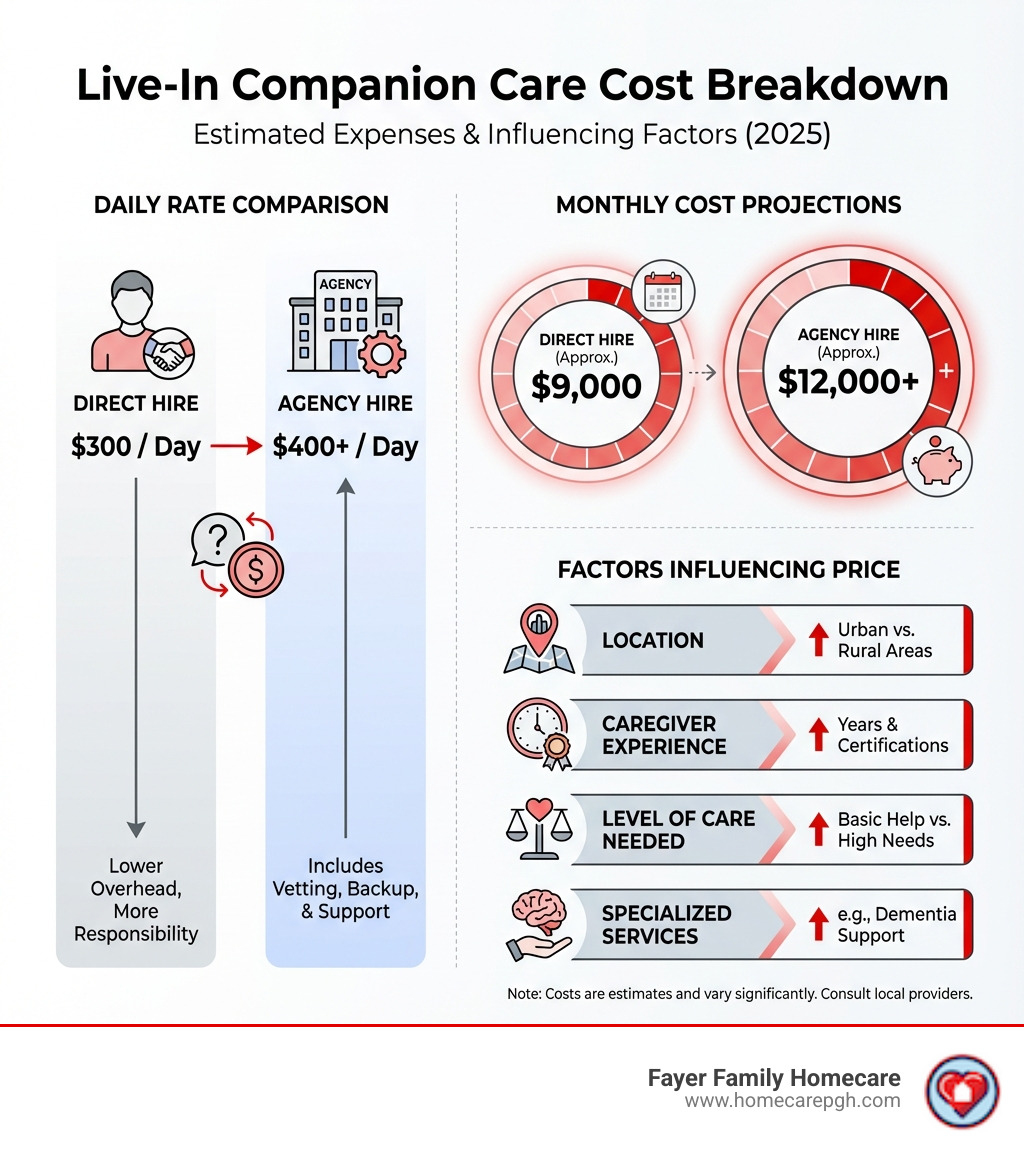
Live in companion for elderly cost typically ranges from $300 to $400+ per day. This translates to roughly $10,000 to $20,000 per month, depending on your location, the level of care needed, and your hiring method.
Quick Cost Overview:
- Direct Hire: Approximately $300 per day ($9,000/month)
- Agency Hire: Approximately $400+ per day ($12,000+/month)
- Factors That Affect Price: Geographic location, caregiver experience, specialized care needs (like dementia support), and hours of service
Many families find themselves needing round-the-clock care for a loved one after an event like a fall. Navigating the emotional and financial realities of keeping an aging parent safe and comfortable at home can be overwhelming.
The cost of live-in companion care may seem high, but understanding what it includes—and the alternatives—helps you make a practical and compassionate decision.
Live-in companion care provides non-medical support, supervision, and companionship for seniors who want to remain at home. Unlike nursing care, companions focus on emotional support, daily activities, and safety. They prepare meals, provide transportation, offer companionship, and help with light housekeeping, which is especially valuable for seniors with dementia or those at risk of loneliness and falls.
This guide breaks down the costs of live-in companion care, explores hiring models, and explains payment options like insurance and tax credits to help you make an informed choice for your family.
What is Live-In Companion Care?
Live-in companion care is a non-medical, in-home service that provides emotional support and social interaction for seniors who wish to age in place. It offers a consistent, caring presence to combat loneliness and improve quality of life through companionship, not medical interventions. At Fayer Family Homecare, we help seniors in the Greater Pittsburgh Area enjoy their golden years with dignity and engaging companionship.

To learn more about how this service can benefit your family, explore our More info about Companionship Care Services Complete Guide.
Services Typically Included
A live-in companion provides a wide array of non-medical services to support a senior's independence at home. You can typically expect:
- Meal Preparation: Planning and preparing nutritious meals and snacks.
- Light Housekeeping: Tidying common areas, doing laundry, and maintaining a clean living environment.
- Medication Reminders: Prompting seniors to take their medications on schedule (without administering them).
- Transportation: Helping seniors get to appointments, social events, or run errands.
- Running Errands: Assisting with grocery shopping or picking up prescriptions.
- Recreational Activities: Engaging in hobbies, games, and walks for mental stimulation and enjoyment.
- Supervision: Providing a watchful presence to ensure safety, especially for those with dementia or a risk of falls.
These services allow seniors to live more fulfilling lives. For more details, see our guide on More info about Assistance with Daily Living.
Services NOT Included
Companion care is strictly non-medical. Companions do not perform:
- Medical Tasks: Injections, wound dressing changes, or managing complex medical equipment.
- Skilled Nursing: Any care that requires a Registered Nurse or Licensed Practical Nurse.
- Hands-on Personal Hygiene: Assistance with intimate personal care like bathing or showering.
- Toileting and Incontinence Care: Direct physical assistance with toileting or managing incontinence products.
- Wound Care: Cleaning or dressing wounds.
If your loved one needs these services, you should explore options like a Certified Home Health Aide or skilled nursing care. Understanding this distinction ensures your loved one receives safe and appropriate support. Learn more in our article, More info about what is Companion Care and How Does It Differ From Caregiving.
The True Live In Companion for Elderly Cost: A Detailed Breakdown
Navigating the live in companion for elderly cost can be complex, as prices vary. Understanding the typical breakdowns can help you budget effectively for your loved one.

The overall cost depends on the services required, caregiver experience, and whether you use an agency or direct hire. For broader insights into national trends, the Cost of Care Survey is a valuable resource.
Factors That Influence Rates
The cost of live-in companion care is shaped by several key factors:
- Location: Costs vary geographically. Rates in the Greater Pittsburgh Area are influenced by local demand and cost of living.
- Agency Services vs. Direct Hire: This is a major cost differentiator. Agencies may charge $400+ per day, while a direct hire might average around $300 per day. Agency fees cover screening, training, insurance, and backup care.
- Caregiver Experience and Certifications: A caregiver with specialized training (e.g., in dementia care) or certifications will command a higher rate.
- Level of Need: The intensity of non-medical supervision required affects the rate. A senior needing constant supervision due to cognitive decline may have higher costs.
- Specialized Care: Conditions like Dementia or Alzheimer’s require caregivers with specialized skills, which can increase the rate. Fayer Family Homecare provides this specialized support.
- Hours Required: While care is 24/7, the rate is based on "active" hours versus time for caregiver sleep and breaks.
Average daily and monthly live in companion for elderly cost
While the exact live in companion for elderly cost fluctuates, here are some general ranges:
- Daily Rate Estimates: Expect to pay between $300 (direct hire) to $400+ (agency) per day for 24-hour assistance.
- Monthly Cost Estimates: This translates to a range of $9,000 to $12,000+ per month.
- Hourly Rates and Overtime: Some agencies charge hourly, with rates from $18 to $35 per hour. Be aware of overtime rules, as they can significantly increase costs if not managed with proper scheduling.
- Caregiver Breaks and Sleep Time: A live-in caregiver is typically entitled to 8 hours of sleep and 2-3 hours of breaks per day. These are not always considered "active" working hours.
- Additional Costs: Remember to budget for room and board (a private room and meals for the caregiver). If hiring directly, you are also responsible for worker's compensation insurance.
Understanding these components helps you build a realistic budget. For a deeper look at costs, review our guide on More info about Understanding the Costs and Options in Private Home Care.
Hiring Models: Agency vs. Direct Hire
One of the biggest decisions is whether to hire through a home care agency or directly. This choice impacts the live in companion for elderly cost, your administrative burden, and your peace of mind.
Hiring directly may seem cheaper, with rates around $300 per day versus an agency's $400+. However, this saving comes with the responsibilities of being an employer, including background checks, taxes, and arranging backup care. The Family Caregiver Alliance notes the importance of honest conversations about expectations and finances, regardless of the hiring model.
Hiring Through a Home Care Agency
Using a home care agency like Fayer Family Homecare offers a streamlined, secure process:
- Screened Caregivers: Agencies handle rigorous vetting, including background and reference checks, ensuring caregivers are trustworthy.
- Insured and Bonded: Agencies provide insurance and bonding, protecting your family from liability in case of accidents, injury, or property damage.
- Payroll Handled: The agency manages all payroll taxes, worker's compensation, and benefits, so you don't have to steer complex employer laws.
- Less Administrative Work: The agency handles scheduling, time off, and finding substitutes, which reduces family stress and ensures continuity of care.
- Backup Care: If the primary caregiver is unavailable, the agency provides a qualified replacement.
While agency fees increase the cost, many families find the security and convenience are worth it. Learn more about our professional services at More info about Home Care Agencies in Pittsburgh, PA.
Hiring a Caregiver Directly
Hiring directly can lower the live in companion for elderly cost and give you more control, but it makes your family the employer. This comes with significant legal and financial responsibilities:
- Family as Employer: You must recruit, screen, interview, and run background checks on all candidates.
- Legal Responsibilities: You must comply with all employment laws, including minimum wage, overtime, and break requirements.
- Contracts: A clear, written contract is essential to outline duties, schedules, pay, and time off.
- Payroll Taxes: You are responsible for managing all payroll complexities, including withholding and paying federal, state, and local taxes.
- Worker's Compensation: You must carry worker's compensation insurance to cover on-the-job injuries.
- Liability Insurance: You may need additional liability coverage, as your homeowner's policy might not cover an employee.
- Backup Care: You are solely responsible for finding a replacement if your caregiver is sick or takes vacation.
Direct hiring requires a substantial commitment of time and effort to manage these responsibilities.
Paying for Live-In Companion Care
Once you understand the live in companion for elderly cost, the next step is figuring out how to pay for it. Many families use a combination of the following options:
- Private Pay: This is the most common method, using personal savings, investments, or retirement income from the senior or contributions from adult children.
- Long-Term Care Insurance: Policies may cover in-home services, but review your specific plan to see if non-medical companion care is included.
- Government Programs: Federal and state programs may offer assistance, but eligibility is often strict and tied to income and need.
- Tax Credits: Certain tax credits and deductions can help offset caregiving costs.
Having open conversations about finances with all decision-makers early on can help create a clear funding plan.
Insurance and Government Assistance
Navigating these programs can be complex, as coverage varies.
- Private Health Insurance: Typically does not cover non-medical, custodial companion care, as it's designed for acute medical needs.
- Long-Term Care Insurance: This is designed for long-term services, but policies often require a need for hands-on care (assistance with ADLs) before benefits apply. Check your policy for home care coverage specifics.
- VA Insurance Benefits: Veterans may be eligible for benefits through the Department of Veterans Affairs (VA), such as the Aid & Attendance benefit, which can help fund in-home care. For details, visit the VA's page on VA insurance benefits.
- Medicare Limitations: Traditional Medicare generally does not cover non-medical companion care. However, some Medicare Advantage plans may offer limited coverage for certain in-home support services.
- Medicaid Waivers: Medicaid can be a source of funding for in-home services through state-specific waiver programs. In Pennsylvania, waivers exist to help eligible seniors receive care at home. Contact your local Area Agency on Aging to inquire about eligibility.
Always contact insurance providers and state agencies directly to confirm coverage.
Tax Credits and Deductions
U.S. families may find financial relief through federal tax credits and deductions. Always consult a tax professional, but some potential options include:
- Medical Expenses Deduction: You may be able to deduct care expenses if they are deemed medically necessary and exceed a certain percentage of adjusted gross income.
- Dependent Care Credit: This credit may be available if you pay for care for a qualifying dependent who is incapable of self-care.
- Credit for Other Dependents: If your loved one qualifies as a dependent, you may be eligible for this credit.
These provisions can help make the live in companion for elderly cost more manageable.
Making the Right Choice for Your Loved One
Choosing live-in companion care is a significant emotional and financial decision. Finding the right fit for your loved one in the Greater Pittsburgh Area involves a thoughtful process of assessment and open communication.
We encourage families to:
- Assess Needs: Clearly define the level of supervision and daily assistance required, including any specialized needs for conditions like Dementia or Alzheimer’s.
- Hold a Family Discussion: Talk openly about care expectations and finances to ensure everyone is on the same page.
- Create a Budget: Develop a realistic budget that accounts for the live in companion for elderly cost.
- Interview Thoroughly: Whether hiring directly or through an agency, ask about experience, training, and philosophy of care.
- Check References: Always follow up on references to verify reliability and professionalism.
What to Look for in a Caregiver or Agency
When seeking care, you're looking for a trusted partner. At Fayer Family Homecare, we believe these qualities are essential:
- Experience with Seniors: Look for caregivers with a proven track record of working with the elderly.
- Compassion and Patience: A great caregiver shows genuine empathy, respect, and patience, especially when supporting seniors with cognitive decline.
- Reliability: Dependability and punctuality are key to ensuring consistent, uninterrupted care.
- Good Communication Skills: The caregiver must communicate clearly with both the senior and the family.
- Background Checks: Ensure a comprehensive vetting process is completed, including criminal background and reference checks.
- Matching Personalities: A good personality match between the caregiver and your loved one can foster genuine companionship.
For more tips, read our More info about Caregivers and Companions Ultimate Guide.
Benefits for the Senior and Family
Investing in live-in care brings benefits that improve quality of life for seniors and provide peace of mind for families.
For the Senior:
- Consistent Companionship: Combats loneliness and social isolation.
- Improved Safety at Home: A constant presence helps prevent falls and provides immediate assistance.
- Maintaining Independence: Allows seniors to remain in their familiar home environment for longer.
- Improved Emotional Well-being: A caring companion can reduce anxiety and depression.
- Personalized Attention: One-on-one care is custom to the senior's individual needs.
For the Family:
- Peace of Mind: Knowing your loved one is safe and well-cared for provides immense relief.
- Reduced Family Stress: Lightens the burden on family caregivers, who face significant personal and financial costs.
- Improved Family Relationships: Allows family visits to be about quality time, not care tasks.
- Support for Family Caregivers: Many agencies offer resources and support. See our tips on More info about Caring for the Caregiver: Tips for Self-Care in Senior Home Care.
This investment supports the dignity, happiness, and safety of your loved one.
Conclusion
Navigating the live in companion for elderly cost is a key step in planning for senior care. It is an investment in your loved one's comfort, safety, and well-being, allowing them to age with dignity in their own home.
Costs are influenced by location, caregiver experience, and whether you hire directly or through an agency, with daily rates typically falling between $300-$400+. While this requires careful financial planning, the value of consistent companionship and peace of mind for the family is immeasurable.
Making an informed decision involves assessing needs, discussing finances, and understanding payment options like long-term care insurance or tax credits. The goal is to find a solution that provides the highest quality of life for your senior.
At Fayer Family Homecare, we are dedicated to helping families in the Greater Pittsburgh Area find that perfect fit. Our experienced caregivers provide companionship, supervision, and specialized support for individuals with Dementia or Alzheimer’s. We ensure every client receives the comfort and respect they deserve.
To learn how we can create a personalized care plan for your loved one, please visit our page on Learn more about our Companionship services.


.svg)