
September 1, 2025
Your Guide to Personal Care: Supporting Daily Living with DignityUnlock independence with compassionate Personal care services. Support daily living, dignity, and quality of life for your loved ones.
Read Article
.svg)


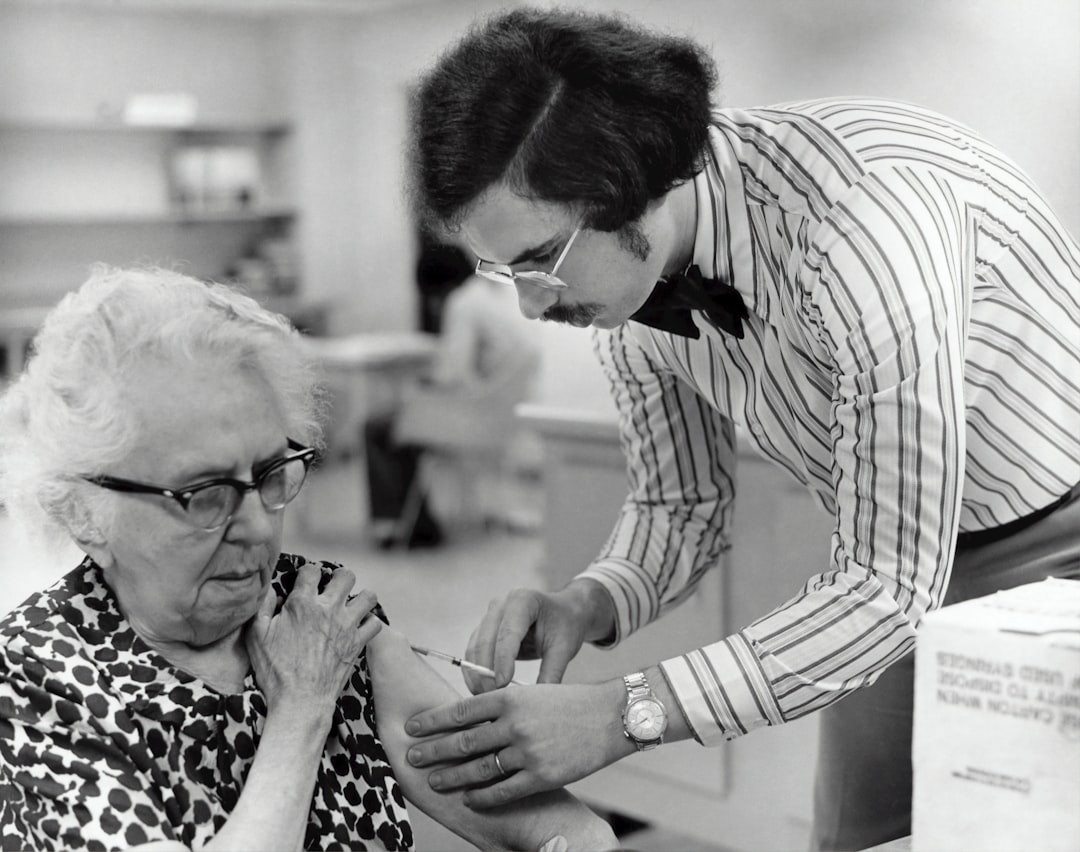
Senior care professionals are trained specialists who provide compassionate, hands-on support to help older adults live safely and independently at home. They assist with daily activities, offer companionship, monitor health conditions, and coordinate care—giving families peace of mind while preserving their loved one's dignity and quality of life.
Quick Overview: What Senior Care Professionals Do
Over 8 million Canadians currently care for someone they know, and this number is expected to increase as the population ages. Many families reach a point where they need professional help—not because they don't care enough, but because caring for an aging parent with complex needs requires expertise, time, and energy that can overwhelm even the most devoted family members.
The decision to bring in professional support isn't easy. You may worry about trust, whether your loved one will accept help from a stranger, or if the quality of care will meet your standards. These concerns are valid and important.
Professional senior care providers bridge the gap between what families can realistically manage and what their loved ones truly need. They bring specialized training, compassionate support, and practical experience—allowing seniors to age gracefully in the comfort of their own homes while maintaining independence and dignity.
Whether your parent needs a few hours of companionship each week or round-the-clock care for advanced dementia, understanding the role of senior care professionals is the first step toward finding the right support for your family.
Basic Senior care professionals terms:
When we talk about senior care professionals, we're describing individuals and teams dedicated to supporting the well-being of older adults. Their role extends far beyond simple tasks; it encompasses a holistic approach to care, ensuring that all aspects of a senior's life—physical, emotional, and social—are nurtured. We aim to empower seniors to live their best lives possible, right in the comfort of their own homes in the Greater Pittsburgh Area.
Our approach is always client-centered, meaning that the senior's preferences, needs, and goals are at the heart of every care plan. This involves acting as advocates for our clients, ensuring their voices are heard in healthcare decisions, and managing their overall health in collaboration with their medical team. For instance, ensuring a safe home environment is paramount, and resources like The Safe Living Guide—A Guide to Home Safety for Seniors can help families identify potential hazards.
A truly holistic approach to senior care recognizes that an individual is more than just their medical conditions. It means addressing not only physical health but also mental and emotional well-being. Senior care professionals often engage in what's known as geriatric care management, which is a comprehensive and coordinated effort to meet the complex needs of older adults.
This can involve everything from coordinating medical appointments and managing medications to providing crisis intervention during unexpected health events. We focus heavily on emotional well-being, understanding that social connection and meaningful engagement are just as vital as physical care. Our companionship services are designed to combat loneliness and foster a sense of belonging, which is crucial for overall happiness and health. You can find More info about companionship services on our website. This holistic approach ensures that seniors receive comprehensive support that adapts as their needs evolve, promoting not just longevity but a high quality of life.
The quality of care a senior receives is directly tied to the qualifications and training of their caregivers. We don't rely on luck to find exceptional staff; we develop them. When you entrust us with the care of your loved one, you can rest assured that our senior care professionals are rigorously screened and extensively trained.
Our process begins with thorough background checks and rigorous screening to ensure trustworthiness and suitability. This is followed by an initial comprehensive training program. For example, our caregivers undergo a rigorous pre-hire screening and an initial 2-week comprehensive training process. But learning doesn't stop there. We believe in continuous improvement, which is why our team receives 20 to 25 hours of ongoing training annually thereafter. This continuous education keeps our caregivers up-to-date with the latest best practices in senior care, especially in specialized areas like dementia support. We are always looking for dedicated individuals to join our team, and you can learn more about Direct Care Worker positions on our careers page. This commitment to training means your loved one receives the best possible care from compassionate, skilled, and professional individuals.
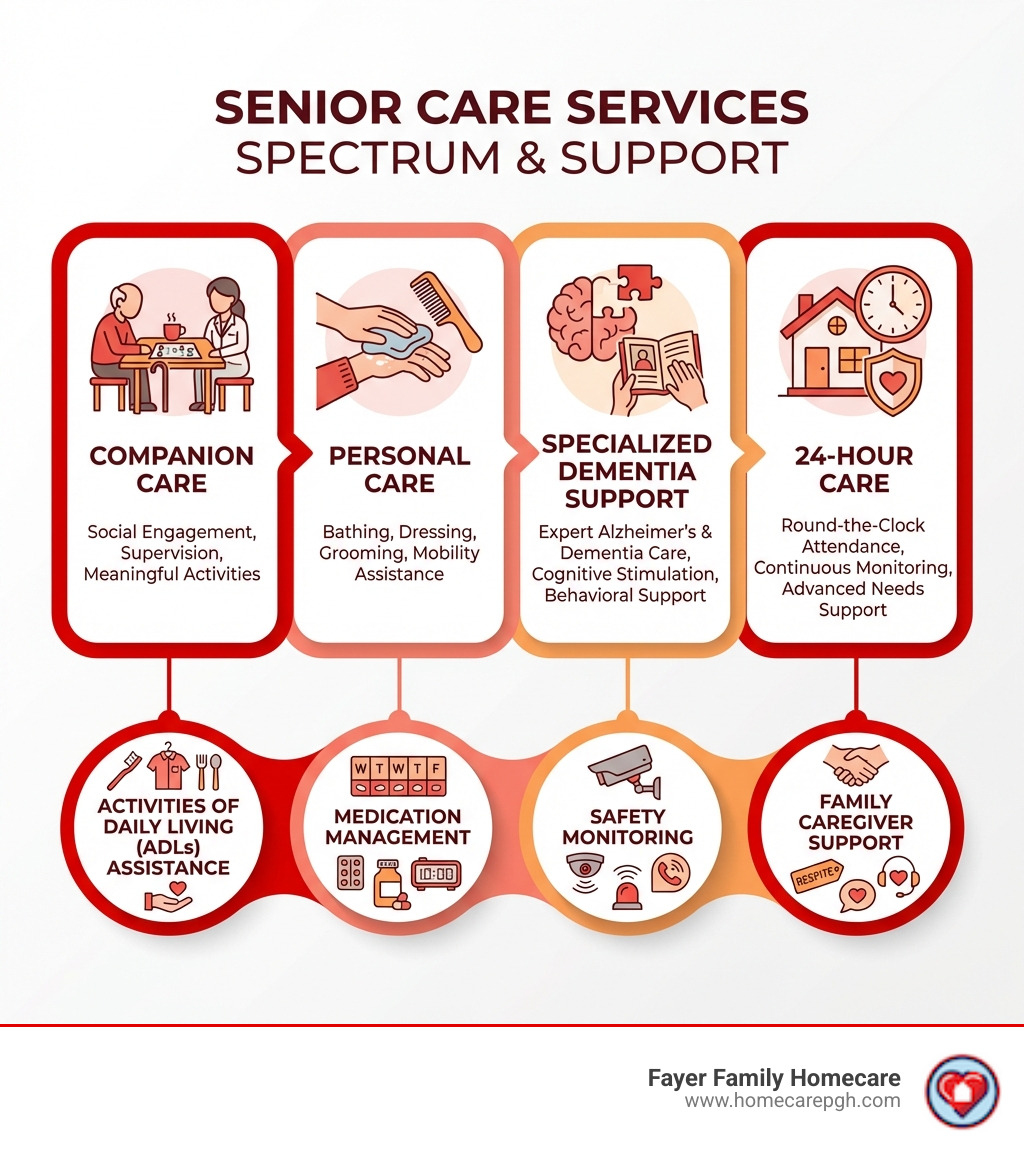
When exploring professional senior care, it's important to understand the various types of support available. These services are designed to meet a spectrum of needs, from basic daily assistance to more specialized medical or cognitive care. Our goal is to match your loved one with the right level of care to ensure their comfort, safety, and independence at home.
Generally, we categorize services into home care aides, personal care, and companion care. Home care aides often encompass both personal and companion care, providing a blend of practical assistance and social engagement. Understanding the nuances between these services is key to making an informed decision for your family.
| Feature | Personal Care | Companion Care |
|---|---|---|
| Focus | Physical assistance with daily tasks | Social engagement, emotional support |
| Services | Bathing, dressing, grooming, toileting, mobility | Conversation, hobbies, errands, light housekeeping |
| Independence | Supports physical independence | Supports emotional and social independence |
| Goal | Maintain hygiene and physical well-being | Reduce isolation, improve mood, cognitive health |
The distinction between personal care and companion care is crucial for tailoring the right support. Personal care focuses on assistance with Activities of Daily Living (ADLs), which are the fundamental tasks people need to perform to live independently. This includes support with hygiene, such as bathing and grooming, as well as assistance with dressing, toileting, and mobility. Our senior care professionals also help with medication reminders, ensuring that prescriptions are taken correctly and on time. These services are delivered with the utmost respect for your loved one's dignity and privacy. You can explore more about Assistance with ADLs on our website.
Companion care, on the other hand, prioritizes social engagement and emotional well-being. It's about providing meaningful companionship, engaging in hobbies, accompanying seniors on outings, and simply being there to share a laugh or a story. While companion care may include light housekeeping and meal preparation, its primary benefit is combating loneliness and fostering a vibrant social life. Both personal care and companion care are vital components of maintaining a senior's independence and quality of life in their own home.
Caring for individuals with Dementia or Alzheimer’s disease requires a unique blend of expertise, patience, and compassion. We understand the complexities of these conditions and offer specialized support designed to meet the evolving needs of our clients. Our senior care professionals are trained to provide person-centered care that focuses on the individual, not just the disease.
This specialized support includes cognitive stimulation through engaging activities, rigorous safety monitoring to prevent wandering or accidents, and skilled behavioral support to manage challenging symptoms with empathy and understanding. We create a structured yet flexible environment that promotes comfort and reduces anxiety, helping your loved one maintain as much routine and familiarity as possible. Our services ensure cleanliness and comfort for our clients, creating a serene and safe living space. You can learn more about our dedicated Alzheimer's & Dementia Care programs, which are custom to each individual's unique situation.
One of the most significant advantages of professional senior care is its ability to help seniors maintain their independence and a high quality of life. Our senior care professionals are not there to take over, but to provide the support that allows seniors to continue making their own choices and living life on their own terms. We believe that seniors are often happier, healthier, and recover faster from illness or injury when they can remain in their own homes.
This assistance often includes mobility support, helping seniors move safely around their homes or get out for appointments and social engagements. We also focus on medication management, ensuring adherence to treatment plans, and using resources like a Medication safety checklist to prevent errors. By supporting these daily activities, we help preserve our clients' autonomy and foster vital social connections, which are crucial for overall well-being.
For seniors living alone in the Greater Pittsburgh Area, the benefits of hiring a senior care professional are profound. The primary advantage is the safety reassurance that comes from having a trained individual regularly checking in on your loved one. This can significantly reduce worry for family members, especially those who live far away.
Beyond safety, our caregivers provide meaningful companionship, combating the isolation that can often accompany living alone. We assist with nutritional support by helping with meal planning and preparation, ensuring seniors maintain a healthy diet. This consistent presence and support can reduce feelings of loneliness and depression, contributing to a much higher quality of life. Many seniors prefer to 'age in place,' and our services make this desire a safe and joyful reality. Find more about 5 Ways Home Care Helps Seniors Stay Independent.
Maintaining a safe environment is paramount for seniors, particularly those wishing to remain in their homes. Our senior care professionals are trained to identify and mitigate risks, contributing significantly to fall prevention. We can suggest home modifications and ensure that the living space is free from hazards.
Emergency preparedness is another critical aspect of our care. We help families develop plans and ensure that emergency contacts and procedures are readily accessible. For instance, technologies like a Personal Emergency Response System or balance tracking systems can be integrated into a comprehensive safety plan. Beyond safety, we actively promote a high quality of life through engaging recreational activities and social interaction. Our caregivers provide companionship and supervision, engaging clients in activities they enjoy, fostering a sense of purpose and joy. For more peace of mind, consider these 6 Tips for Ensuring Safety at Home.
Understanding the financial aspects of senior care can feel like navigating a maze, but we're here to help you find your way. The costs associated with senior care professional services can vary depending on the level and frequency of care required, but there are several funding options and insurance possibilities to consider.
Many families in the Pittsburgh area use private pay, but we also work with various other payment methods. For example, some long-term care insurance policies may cover a portion of in-home care services. Additionally, there are specific programs and waivers, such as those from the Pennsylvania Department of Human Services (like ODP Waiver, Act 150/Attendant Care Waiver), and services for veterans through VA benefits. We also participate in the PA Office of Long Term Living’s Community Health Choices Program and work with the SW-PA Area Agency on Aging for Options In-Home services. We can help you understand these complex options. Learn more about Understanding the Costs and Options in Private Home Care.
When it comes to funding senior care, a multi-faceted approach is often necessary. We understand that deciphering insurance policies and government programs can be challenging. Besides private pay and long-term care insurance, other options exist.
Some government programs, often referred to as Medicaid waivers in the US, can provide financial assistance for eligible individuals. These programs typically require financial assessments to determine eligibility and the amount of subsidy available. It's also worth investigating potential tax credits, which can help offset caregiving expenses. While specific benefits vary by location, the general concept of tax relief for caregivers is valuable. For example, some countries offer a Family Caregiver Amount tax credit to support those caring for loved ones. We encourage families to speak with a financial advisor to explore all available options, including employee benefits that might offer caregiving support or assistance.
Selecting the right senior care professional or agency for your loved one is a significant decision. It requires careful consideration and a thorough vetting process to ensure the best possible match. We believe that finding the perfect fit involves more than just checking off a list of services; it's about personality compatibility and a shared understanding of your loved one's unique needs and preferences.
Our process begins with an initial, free in-home assessment. This crucial step allows us to understand your loved one's specific circumstances, health conditions, and personal interests. Based on this assessment, we develop a personalized care plan and work to match your loved one with a caregiver whose experience, skills, and personality are well-suited to them. We strive for a seamless transition, ensuring that both the senior and their family feel comfortable and confident with the chosen professional. You can start this process by scheduling an In-Home Care Assessment with us.
We understand that caring for an aging loved one can be incredibly rewarding, but it can also be demanding and lead to caregiver burnout. This is where senior care professionals truly shine in supporting families and primary caregivers. Our services are designed to provide much-needed respite care, allowing family members to take a break, recharge, and attend to their own needs without guilt or worry.
The peace of mind that comes from knowing your loved one is in capable and compassionate hands is invaluable. We also offer coaching and guidance, providing families with answers during times of uncertainty and helping them steer the complexities of senior care. By supporting the family, we indirectly support the senior, creating a healthier, happier care environment for everyone involved. You're not alone in this journey, and it's okay to ask for help. We even have resources on Caring for the Caregiver: Tips for Self-Care.
Navigating senior care often brings up many questions. Here are some of the most common inquiries we receive from families in the Pittsburgh area:
The terms "companion" and "home care aide" are often used interchangeably, but there's a subtle yet important distinction in the scope of their services. A companion primarily focuses on social engagement, emotional support, and supervision. They might run errands, engage in hobbies, provide transportation to appointments, and offer light housekeeping, but their main role is to provide companionship and combat loneliness.
A home care aide, also known as a personal care aide, provides hands-on assistance with Activities of Daily Living (ADLs). This includes personal hygiene tasks like bathing, dressing, grooming, toileting, and mobility support. While a home care aide will also offer companionship, their core responsibility involves direct physical assistance. Many of our senior care professionals are skilled in both, offering a flexible blend of services to meet your loved one's specific needs.
The timeline for initiating professional senior care services can vary depending on the urgency of your loved one's needs. We understand that sometimes care is needed immediately due to an unexpected event, while other times it's a planned transition.
For urgent situations, care can often begin within hours or a few days of an initial assessment. For planned care, it might take a week or two to complete assessments, develop a personalized care plan, and ensure the perfect caregiver match. We work diligently to accommodate your family's timeline, prioritizing the well-being and comfort of your loved one in the Greater Pittsburgh Area.
Yes, absolutely. We offer a range of scheduling options to meet diverse needs, including part-time, full-time, and 24-hour personal care services. For seniors who require continuous supervision or assistance throughout the day and night, 24/7 live-in care can be an invaluable solution. This provides constant peace of mind, knowing that a dedicated senior care professional is always present to assist with any needs that may arise, from personal care to emergency situations. This comprehensive coverage ensures safety, comfort, and consistent support, allowing your loved one to remain safely in their familiar home environment.
The journey of aging is a profound one, and we believe it should be approached with grace, dignity, and unwavering support. Senior care professionals play an indispensable role in making this possible, not just for the elderly individuals they serve, but for their families as well. We, Fayer Family Homecare, are proud to be a part of the Pittsburgh senior services community, offering specialized, compassionate care that truly makes a difference.
Our commitment is to providing personalized care plans that cater to the unique needs of each client, ensuring they can age gracefully in the comfort and familiarity of their own homes. Whether it's companionship, assistance with daily living, or specialized Dementia and Alzheimer's care, our experienced home caregivers are here to offer peace of mind and improve the quality of life for your loved ones.
If you're considering professional support for an aging family member in the Greater Pittsburgh Area, we invite you to reach out. Let us show you how our dedicated senior care professionals can become an invaluable extension of your family, providing the expert care and companionship your loved one deserves.
Schedule a consultation for companionship services today and find the Fayer Family Homecare difference.

September 1, 2025
Your Guide to Personal Care: Supporting Daily Living with DignityUnlock independence with compassionate Personal care services. Support daily living, dignity, and quality of life for your loved ones.
Read Article
October 16, 2026
Navigating Parkinson's Home Care and Caregiver Support in PittsburghLearn how specialized Parkinson's home care Pittsburgh helps seniors age safely with cueing techniques, medication management, and local caregiver support.
Read Article
May 16, 2025
The Ultimate Guide to Home Cleaning Services for SeniorsDiscover home cleaning for seniors: boost safety, independence, and comfort with expert tips, service options, and family-friendly solutions.
Read Article