
February 1, 2024
The Essential Role of Caregivers in Home Health CareAt the heart of caregiving are the caregivers - the unsung heroes who bring skills, knowledge, and a deep sense of compassion and dedication to every home they enter.
Read Article
.svg)


Aging parent care is one of the most challenging responsibilities a middle-aged adult can face — and most families aren't prepared for it.
Quick answers for families navigating this right now:
Almost 18 million American adults are currently caring for an aging parent or relative over 65. Many of them didn't see it coming.
It often starts small. A missed medication. A fridge with expired food. A parent who stops calling as often. Then one day, you realize the person who once took care of you now needs you to take care of them.
That shift — from child to caregiver — is one of the most emotionally complex transitions a person can go through. It brings love, grief, guilt, and exhaustion, sometimes all at once. And for the 2.4 million people in the "sandwich generation" — raising kids, holding down jobs, and caring for aging parents — the pressure can feel impossible.
You don't have to figure this out alone. This guide walks you through everything: recognizing warning signs, understanding your care options, protecting your parent legally and financially, and taking care of yourself in the process.
Common aging parent care vocab:
We often want to believe our parents are invincible. They’re the ones who taught us how to tie our shoes and navigate the world; admitting they need help feels like a betrayal of that strength. However, waiting for a crisis—like a broken hip or a major car accident—is the most stressful way to begin the journey of aging parent care.
Expert geriatricians suggest looking at what the National Institutes of Health defines as Instrumental Activities of Daily Living (IADLs). These are the skills needed to live independently in the community. If your parent is struggling with these, it’s a signal that the current living situation needs a reboot.

Keep an eye out for these subtle (and not-so-subtle) changes:
If you notice these shifts, it’s time to look into Assistance with Daily Living to ensure they stay safe and nourished.
Cognitive changes are often the hardest to face. We all forget where we put our keys sometimes, but if your parent is forgetting what the keys are for, that’s a different story.
In the context of Alzheimer Patient Care, we look for:
Recognizing the Signs of Dementia early allows you to put protections in place before a dangerous situation occurs.
Fall prevention is the cornerstone of aging parent care. Statistics show that falls are the leading cause of injury for seniors. A simple trip over a rug can lead to a hospital stay that changes everything.
Take a walk through their home. Are there loose railings? Is the lighting dim? Are there "clutter traps" in the hallways? Utilizing resources like the Eldercare Locator for home safety resources can help you identify what needs to be fixed. Simple modifications like grab bars in the bathroom and non-skid strips on the stairs can buy a parent years of independence.
Let’s be honest: caregiving is an emotional rollercoaster that no one buys a ticket for. You might feel a profound sense of "role reversal." Suddenly, you are the one reminding your father to eat his vegetables or telling your mother she shouldn't be driving at night.
This can lead to "parenting your parents" syndrome, which often causes resentment on both sides. Your parent may feel they are losing their autonomy, while you feel "consumed" by the responsibility. It is vital to allow yourself to mourn the loss of the relationship you used to have. You are grieving for the parent who used to be your rock, even while they are sitting right in front of you.
If you feel like you're drowning, you probably are. The "sandwich generation" faces a unique pressure—trying to be a "perfect" parent to children while being a "perfect" child to aging parents, all while working full-time.
The AARP survey on caregiver out-of-pocket expenses found that caregivers spend an average of $7,200 annually on care-related costs. That financial hit, combined with the physical exhaustion of 24/7 "on-call" status, is a recipe for caregiver burnout.
To survive this, you must:
For more deep dives on staying sane, check out our Caring for the Caregiver: Tips for Self-Care and our resources on Family Caregiver support.
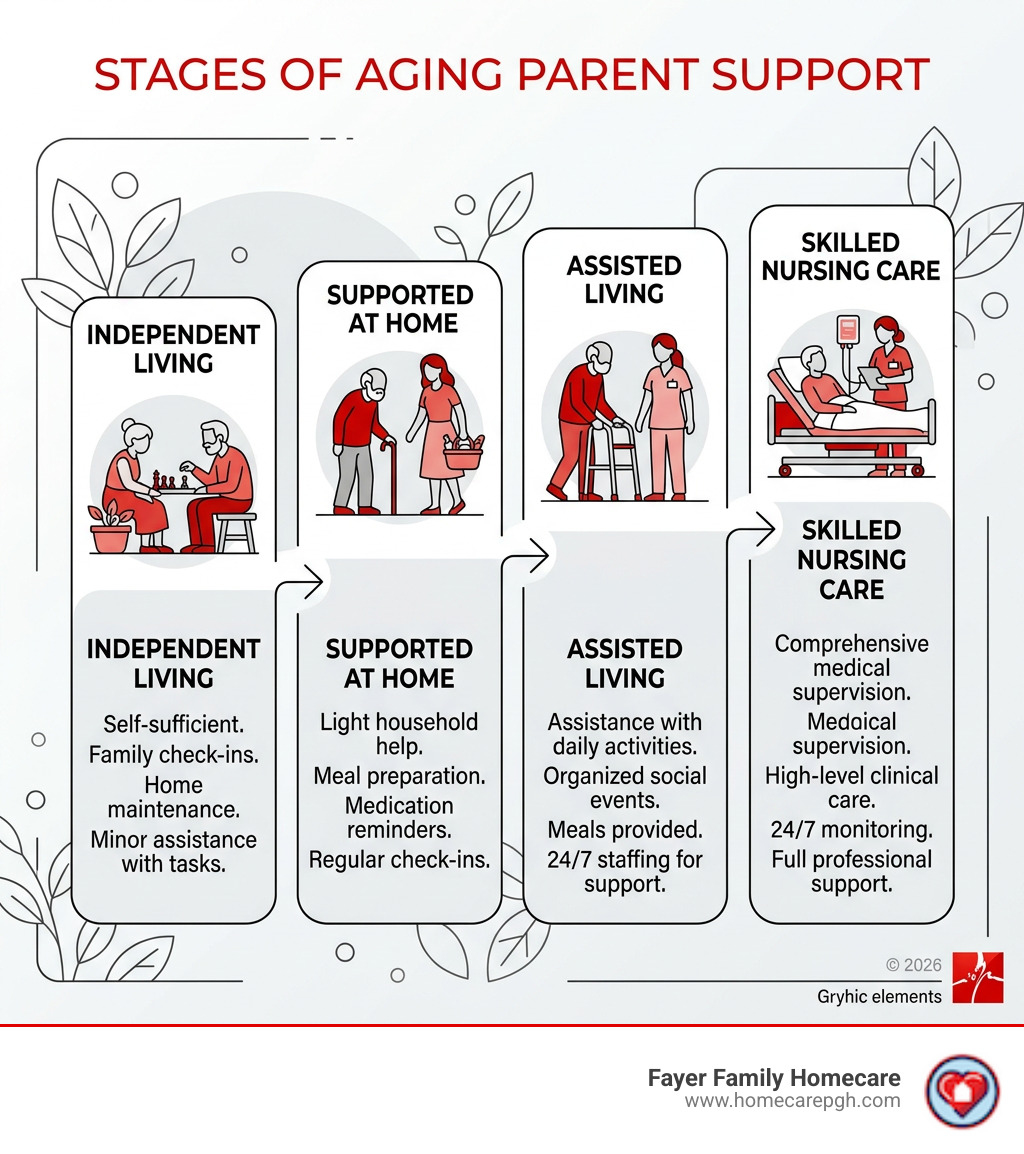
When the realization hits that your parent needs more help than you can provide, the first thought is often, "Do they need a nursing home?"
In many cases, the answer is no. Most seniors—upwards of 90%—prefer to "age in place." This means staying in their own home while bringing in the support they need. This is where In-Home Care in Pittsburgh, PA becomes a lifesaver.
For those in our area, Pittsburgh Senior Services offer a variety of ways to keep your loved one integrated into the community while receiving professional help.
Bringing a professional into the home isn't just about "hiring help." It's about restoring the relationship between you and your parent. When you aren't spending your entire visit scrubbing the floors or arguing about a bath, you can go back to being a son or daughter.
Professional Personal Care Services provide:
Nothing creates a crisis faster than a medical emergency where no one has the legal authority to make a decision. In aging parent care, "getting your ducks in a row" isn't just a cliché; it’s a necessity.
You should sit down with your parents (ideally while they are still healthy and clear-minded) to ensure the following are in place:
Understanding the Alzheimer's Care Costs: Complete Guide can help you plan for the long-term financial impact of these conditions.
We recommend creating a "Caregiver Binder" or a secure digital folder. This should include:
To get a clear picture of what level of help is actually needed, we suggest an In-Home Care Assessment to evaluate both the physical environment and the parent's functional abilities.
Safety is a combination of physical ability and cognitive awareness. Ask yourself:
If the answer to these is "no" or "I'm not sure," they likely need at least part-time supervision.
This is a common point of confusion. Medicare (Parts A and B) generally does not pay for long-term "custodial care" (help with bathing, dressing, or meal prep) if that is the only care needed.
However, Medicare does pay for part-time or intermittent home health services if:
For long-term daily help, families often look to Medicaid waivers (like the HCBS waiver in Pennsylvania) or VA benefits for veterans and their spouses.
Start slow. Don't come in with a list of "things you're doing wrong." Instead, use "I" statements. "I’m worried about you being in this big house alone," or "I noticed the stairs seem to be getting harder for you."
Resources like The Conversation Project offer great scripts for these tough talks. If the conversation stalls, consider involving a neutral third party, like a doctor or a social worker from a local agency specializing in Elder Care Pittsburgh.
Caring for an aging parent is a marathon, not a sprint. It is a journey of profound love, but it is also one that can leave you depleted if you try to carry the entire burden yourself.
At Fayer Family Homecare, we understand the unique challenges facing families in the Greater Pittsburgh Area. We specialize in providing the high-quality, compassionate support that allows your loved one to stay in the home they love while giving you the peace of mind you deserve.
Whether you need specialized dementia and Alzheimer's support, professional companionship to combat loneliness, or help with the daily tasks of living, we are here to help. We ensure cleanliness, comfort, and a customized care plan that respects your parent's dignity and your family's needs.
If you’re ready to explore how professional support can change your family's life, learn more about our Home Care Services in Pittsburgh, PA. Let us help you transition from being an exhausted caregiver back to being a loving son or daughter.

February 1, 2024
The Essential Role of Caregivers in Home Health CareAt the heart of caregiving are the caregivers - the unsung heroes who bring skills, knowledge, and a deep sense of compassion and dedication to every home they enter.
Read Article
March 6, 2025
Housekeeping Services: The Ultimate Guide to Choosing the Right OneDiscover the best housekeeping services for your needs. Learn about types, costs, and choosing the right service for your home.
Read Article.avif)
March 20, 2023
What is Companion Care and How Does It Differ from Caregiving?As we age, we often require assistance with daily activities and medical needs. For seniors and those with disabilities or medical issues at any age, there are two primary types of care available: companion care and caregiving.
Read Article