Why Senior Companion Programs Matter for Aging Loved Ones
A senior companion program connects older adults who need social support with trained volunteers — typically other seniors — who visit regularly to provide friendship, help with errands, and give family caregivers a much-needed break.
Here is a quick overview of what the program offers:
- What it is: A volunteer-based program, funded by AmeriCorps, that pairs active seniors (55+) with homebound older adults
- Who it serves: Adults aged 60+ who are homebound or have difficulty with daily living tasks
- What companions do: Provide conversation, accompany to appointments, assist with light errands, and offer respite to family caregivers
- Cost to recipients: Free — funded by federal grants and local donations
- How to access it: Contact your local AmeriCorps Seniors program or a local sponsor agency
If your aging parent is spending too much time alone, or you are stretched thin trying to balance caregiving with everything else in your life, you are not alone. Studies show that 40% of seniors ages 65 and up already need some day-to-day assistance — and that number will rise to 70% in the future.
The good news? Senior companion programs were built exactly for this situation. They offer a simple but powerful idea: that an active, caring senior can make a real difference in the life of a homebound peer — and in the life of the family supporting them.
What is the Senior Companion Program?
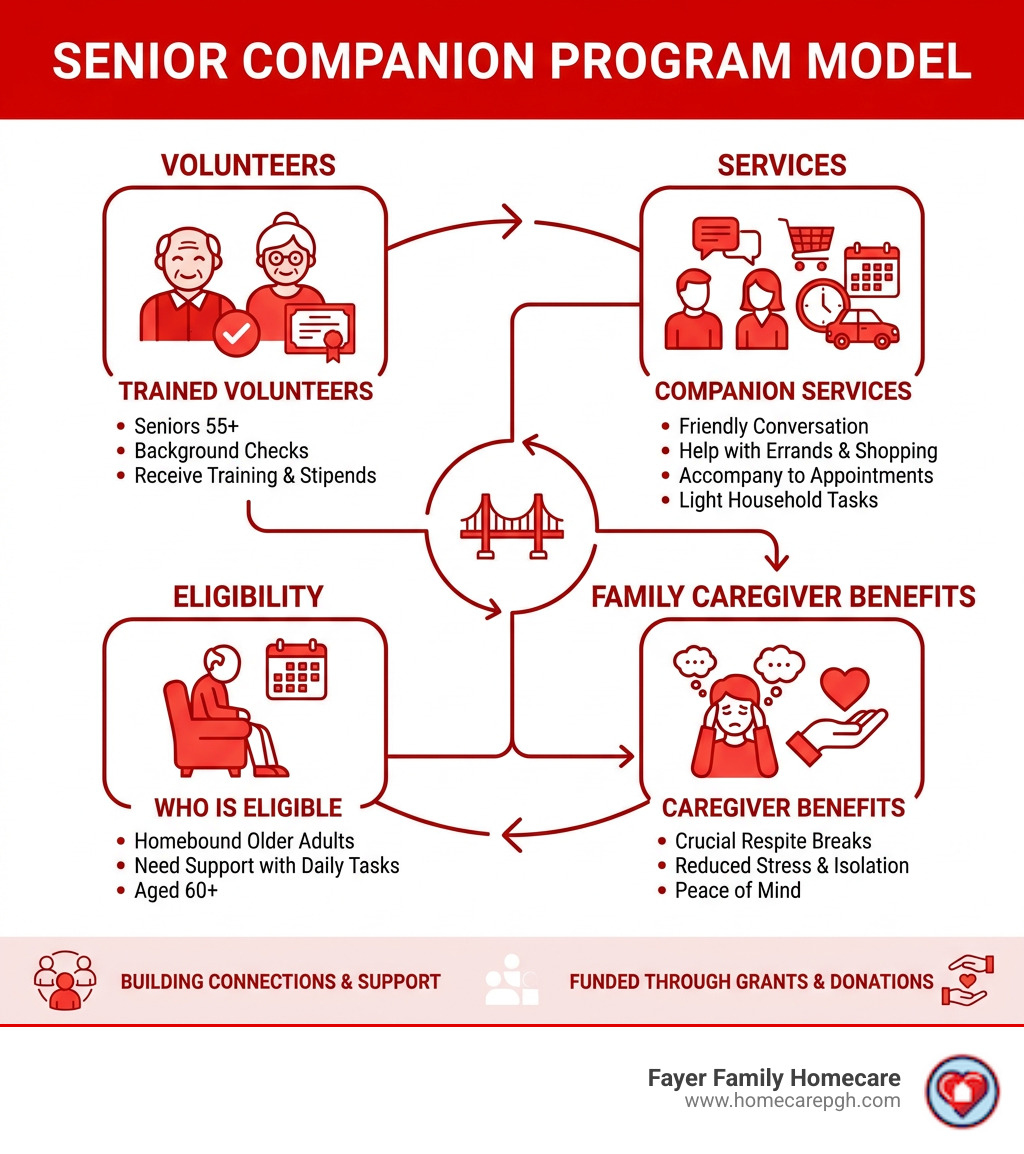
At its heart, a senior companion program is a unique bridge between two generations of seniors. It is a national service initiative that utilizes the wisdom, patience, and lived experience of active older adults to support their peers who may be struggling with the challenges of aging.
While many people think of senior care as a clinical or medical service, this program focuses on the "human" side of aging. It is built on a peer-to-peer support model. Instead of a young medical assistant rushing through a checklist, a Senior Companion is someone who understands the cultural references, the history, and the pace of life that your loved one enjoys. They do what friends do for friends: they show up, they listen, and they help out with the small things that make a big difference in maintaining independence.
For many families in the Greater Pittsburgh Area, this program serves as a vital tool for senior citizen companionship. It addresses the growing "loneliness epidemic" among the elderly, which can be just as damaging to health as physical ailments. By bringing a consistent, friendly face into the home, the program helps homebound seniors feel connected to their community again.
The Role of AmeriCorps in the Senior Companion Program
You might recognize the name AmeriCorps from programs involving young adults building trails or tutoring students, but they also manage a massive network known as AmeriCorps Seniors. The senior companion program is a flagship part of this network, and it has a long, proud history in the United States.
The program was formally incorporated in 1973 and received its first model funding in 1974. Since then, it has grown into a federally supported powerhouse of community service. While the funding comes from the federal government (specifically the Corporation for National and Community Service), the programs are managed by local sponsor agencies right here in our communities.
These local sponsors ensure that the volunteers are properly vetted and that the needs of the local senior population are being met. In Pennsylvania, these programs have a tangible impact. For example, in nearby regions, dozens of companions assist nearly a hundred homebound residents annually, providing thousands of hours of service that would otherwise be unavailable to those on a fixed income. You can learn more about the Senior Companion Program history to see how this mission has evolved over the decades.
Who Qualifies to Receive Senior Companion Services?
Not every senior requires the same level of help, and the senior companion program is specifically designed for a certain "middle ground" of care. It is generally intended for:
- Age: Adults who are typically 60 years of age or older.
- Living Situation: Those who are living independently in their own homes or apartments (not in long-term care facilities or nursing homes).
- Physical/Social Status: Individuals who are considered "homebound" or have difficulty performing daily tasks like shopping or getting to the doctor.
- Cognitive Health: The program is often a great fit for those with intact cognition or those experiencing mild to moderate dementia.
It is important to note that the program is person-to-person. This means the recipient must be able to socialize and participate in the companionship. It isn't just about someone sitting in the room; it’s about building a relationship. If you are looking for a more comprehensive care and companions guide, you’ll find that these volunteer services are often the first step families take before moving into more intensive professional care.
Services Provided: How Senior Companions Support Independence
What does a typical visit look like? It’s less about "nursing" and more about "living." Senior Companions are there to bridge the gap between total independence and the need for a nursing home.

The services provided are non-medical but essential for a high quality of life. They include:
- Socialization and Conversation: This is the core of the program. Whether it's playing cards, discussing the news, or just reminiscing over a cup of tea, this interaction keeps the mind sharp and the spirit high.
- Transportation Assistance: Many seniors stop driving for safety reasons, which can lead to isolation. Companions can accompany seniors to medical appointments, the grocery store, or local social events.
- Light Meal Preparation: While they aren't gourmet chefs, companions can help prepare a simple, nutritious lunch or snack, ensuring your loved one is eating well.
- Errands and Shopping: Picking up prescriptions or getting a few items from the market becomes a shared activity rather than a stressful chore.
- Community Connection: Companions often help their peers access other community resources, like senior centers or local events they might have otherwise missed.
To help you decide what level of help your family needs, consider this comparison:
| Feature | Volunteer Senior Companion | Professional Home Care |
|---|
| Cost | Free for eligible clients | Hourly or daily fee |
| Primary Focus | Friendship and socialization | Personal care, safety, and ADLs |
| Medical Tasks | None | Limited (depending on license) |
| Hours | Limited (usually 5–20 hours/week) | Flexible (up to 24/7 care) |
| Housekeeping | Very light (meal prep, tidying) | Detailed cleaning and laundry |
If you find that your loved one needs more consistent or specialized help, you might begin searching for a companion for elderly near me to find professional options that supplement volunteer programs.
Respite for Family Caregivers
One of the most overlooked benefits of the senior companion program is what it does for you, the family caregiver. We know that being a "sandwich generation" adult—caring for both children and aging parents—is exhausting.
According to research, 40% of seniors over 65 need help today, and that number is only going up. This puts an incredible strain on families. Senior Companions provide "respite care," which is just a fancy way of saying they give you a break. When a companion is at the house, you can:
- Go to your own doctor's appointments.
- Run errands without worrying about a fall at home.
- Take a nap or simply have a quiet hour to yourself.
- Go to work with the peace of mind that someone is there to chat with your parent.
This short-term relief is a proven way to prevent caregiver burnout. For a deeper dive into how to balance these responsibilities, check out our caregivers and companions ultimate guide.
Limitations of the Program
While these programs are wonderful, it is important to have realistic expectations. Because the companions are volunteers (even if they receive a small stipend), there are strict limits on what they can do.
- No Personal Care: They cannot assist with bathing, dressing, toileting, or "hands-on" physical transfers.
- No Heavy Housekeeping: They are there for companionship, not to scrub floors, move furniture, or do heavy yard work.
- No Clinical Tasks: They cannot administer medications, change bandages, or perform any medical procedures.
- Limited Availability: Most programs operate during standard weekday hours (e.g., 8:30 AM to 4:30 PM). They are generally not available for overnight care or weekend emergencies.
Understanding what is companion care and how does it differ from caregiving will help you determine if a volunteer program is enough, or if your loved one’s needs have progressed to the point where professional intervention is required.
Understanding the Senior Companion Role
Who are these volunteers? They aren't just random people off the street. To become a Senior Companion, individuals must go through a rigorous process.
To ensure the safety and quality of the program, volunteers must meet several requirements:
- Age: They must be 55 years of age or older.
- Background Checks: Every volunteer undergoes a thorough criminal background check and sex offender registry screening.
- Training: New volunteers typically complete 20 hours of initial pre-service training, followed by monthly ongoing training sessions.
- Commitment: Many programs require volunteers to commit to a certain number of hours per week (often between 5 and 20 hours) to ensure consistency for the senior they are visiting.
- Health Screening: Volunteers often need a physical exam to ensure they are healthy enough to provide the required assistance.
Interestingly, the program is a "win-win." While the recipient gets help, the volunteer also benefits. Statistics show that 84% of AmeriCorps Seniors volunteers report improvements in their own health and wellbeing after just one year of service. Furthermore, 88% of volunteers who previously felt a lack of companionship reported feeling less isolated themselves. You can read more about the personal growth involved in being a companion to the elderly.
Frequently Asked Questions about Senior Companion Programs
Is the program free for clients and how is it funded?
Yes! One of the best things about the senior companion program is that there is no fee for the senior receiving the services. This makes it an incredibly accessible option for families regardless of their socioeconomic background.
The program is primarily funded through federal grants from AmeriCorps. However, it also relies on state funding and local donations to bridge the gaps. Because it is a volunteer-based model, the "cost" is kept low. For the volunteers themselves, those who meet certain low-income guidelines may receive a small, tax-free hourly stipend (often around $4.00 per hour) and reimbursement for travel and meals. This ensures that the volunteers don't have to pay out of pocket to serve their community.
How do I inquire about receiving companion services?
If you live in the Greater Pittsburgh Area and think your loved one could benefit, the first step is to find your local sponsor agency. You can use the AmeriCorps Seniors "Pathfinder" tool on their website to search by zip code.
When you contact a local program, they will typically:
- Assess Eligibility: Ask questions about your loved one’s age, living situation, and specific needs.
- Conduct a Home Visit: A coordinator may visit to meet the senior and ensure the home environment is safe for a volunteer.
- Matchmaking: They look for a volunteer whose personality and interests align with your loved one’s. A "mutually agreeable match" is the goal for a long-lasting friendship.
For those looking for immediate or more specialized support, searching for companion care for seniors near me can help you find local agencies that provide both volunteer information and professional care options.
Conclusion
The senior companion program is a beautiful testament to the power of community. It proves that aging doesn't have to mean disappearing from society. By pairing active seniors with those who need a hand, we create a network of support that benefits everyone involved—the volunteer, the senior, and the family caregiver.
At Fayer Family Homecare, we see the impact of companionship every day in the Greater Pittsburgh Area. While volunteer programs are a fantastic resource for social needs, we also know that some families require a higher level of specialized care. Whether your loved one is dealing with the complexities of Alzheimer’s or Dementia, or simply needs more consistent supervision than a volunteer can provide, we are here to help. Our experienced caregivers focus on ensuring cleanliness, comfort, and engagement through recreational activities tailored to your family's needs.
If you’re ready to explore how professional companionship can enhance your loved one’s life and give you the peace of mind you deserve, we invite you to schedule companionship services with our team today. Let’s work together to ensure your loved one ages with dignity, safety, and a friend by their side.

.svg)