

May 11, 2026
Pittsburgh Home Care: Comfort, Compassion, and Convenience DeliveredDiscover compassionate home care in Pittsburgh for seniors. Learn about services, benefits, and how to choose the right provider for aging in place.
Read Article
.svg)

If you're searching for caregiver stress signs in Pittsburgh, here's a quick summary of what to watch for:
Common caregiver stress signs:
You wake up tired. You go to bed worried. Somewhere between your parent's house, your job, and your own family, you stopped taking care of yourself. Every time the phone rings, your heart jumps.
If that sounds familiar, you're not alone.
Roughly one in four adults in Pennsylvania is an unpaid family caregiver. That's a staggering number — and it reflects a reality that many Pittsburgh families know firsthand. You stepped up because you love someone. But months or years of managing medications, doctor visits, hygiene care, and daily supervision take a real toll.
More than 60% of family caregivers show signs of burnout. About 40% report high emotional stress. And 20% develop clinical depression — a rate more than double that of the general population.
The hard truth? Most caregivers don't notice it happening to themselves. Friends and family often spot the warning signs first.
This guide is for family members caring for an aging parent — especially those managing complex needs like dementia or Alzheimer's. It will help you recognize the signs early, understand what's driving them, and find real support right here in the Pittsburgh area.
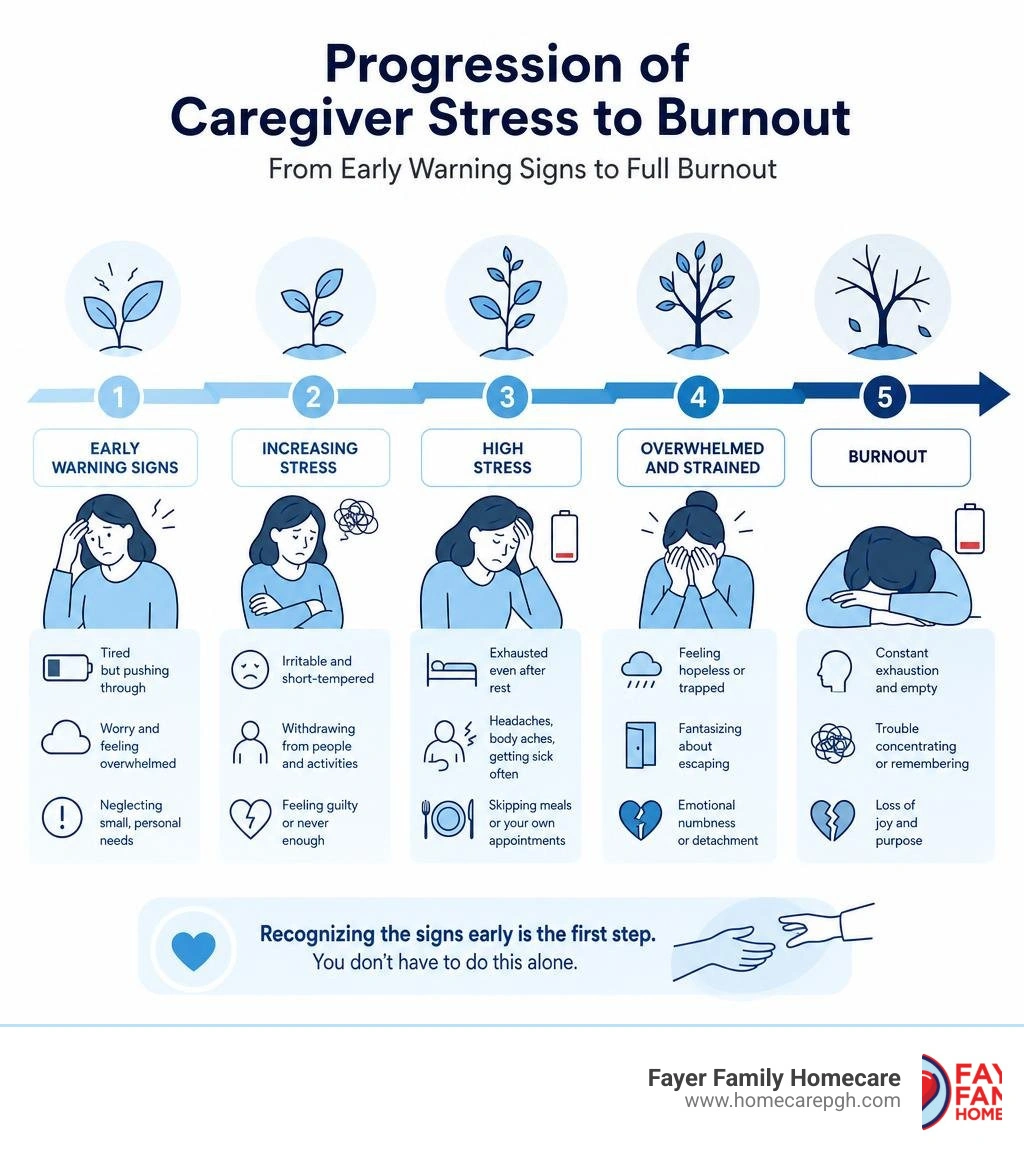
Caregiving rarely starts all at once. It usually creeps up on you. It begins with helping your elderly parent with grocery shopping on weekends, then transitions to managing their medications, and eventually evolves into round-the-clock supervision.
Because the transition is gradual, many family members in Western Pennsylvania don’t realize they are carrying an unsustainable burden until they are already in crisis. It is vital to understand the progression from normal, everyday caregiving stress to full-blown burnout.
According to the Cleveland Clinic's guide on caregiver burnout, burnout is a state of physical, emotional, and mental exhaustion. It occurs when you spend months or years caring for someone else without adequate support, rest, or self-care.
When you ignore the early warning signs, chronic stress fundamentally changes your behavior, your health, and your relationship with your loved one. Identifying these common signs of caregiver burnout is the first step toward reclaiming your life and protecting your health.
The human body is highly sensitive to prolonged stress. When you are constantly on high alert—waiting for a fall, managing a complex medication schedule, or waking up multiple times a night to assist your parent—your body produces a continuous stream of stress hormones. Over time, this biological load manifests as physical ailments:
To prevent these physical symptoms from turning into long-term medical issues, practicing early intervention is crucial. You can explore practical ways to protect your physical health in our guide on tips for self-care in senior home care.
The emotional toll of caregiving is often heavier than the physical labor. When you are the primary support system for an aging senior, emotional exhaustion can distort your perspective and your feelings.
If you are struggling to process these feelings, you don't have to carry them alone. Professional therapy can help you unpack the complex emotions of caregiving. Consider looking into specialized caregiver stress therapy options to find a safe space to talk through your struggles.
Caregiving in the Pittsburgh metro area is shaped by our unique local demographics and deep-rooted cultural values. In July 2026, Pennsylvania continues to navigate a significant demographic shift: our state has a larger population of older adults than individuals under the age of 18.
As a result, local families are feeling the squeeze more than those in many other parts of the country. According to a landmark Post-Gazette report on PA caregiver resources, state and local agencies are actively racing to build a stronger infrastructure to support the growing army of unpaid family caregivers who form the backbone of our senior care system.
Pittsburgh is a city built on hard work, family loyalty, and community pride. In many of our historic neighborhoods—from Brookline and Squirrel Hill to the North Side and the Mon Valley—multi-generational households are common. There is a deeply ingrained belief that "we take care of our own."
While this cultural self-reliance is beautiful, it can also be a double-edged sword. Many adult children in Western Pennsylvania view asking for outside help as a sign of weakness or a failure of family loyalty. They push through the exhaustion, trying to balance a full-time job, their own children, and their parents' care without a single break.
This cultural pressure was a key topic at a recent community event, highlighted in the WESA Mind Matters town hall insights, which focused on breaking the silence around caregiver burnout and encouraging local families to utilize community resources.
Because of Pennsylvania's rapidly aging population, our local caregiving landscape looks slightly different than national averages. Below is a comparison of national caregiving statistics against the realities of caring for a loved one in Pennsylvania:
| Caregiving Metric | National Average | Pennsylvania Realities |
|---|---|---|
| Unpaid Caregiver Ratio | ~16% of adults provide care to an adult | ~25% (1 in 4) of PA adults are unpaid caregivers |
| High Emotional Stress | ~40% of family caregivers | Elevated due to high rates of multi-generational care |
| Clinical Depression Rate | 20% to 60% (depending on severity) | Highly prevalent in historic, close-knit PA communities |
| Seniors vs. Youth | Balanced demographic split | More older adults than individuals under 18 |
These statistics show that if you are feeling overwhelmed in Pittsburgh, your experience is part of a larger regional trend. Recognizing that you need help is not a personal failure; it is a statistical reality of living in an aging region. To learn more about how local families cope, read our guide on support for caregivers.

Many dedicated family caregivers believe that they can simply "tough it out" until their caregiving journey ends. However, treating your own health as an afterthought can have severe, long-term biological consequences.
When you ignore chronic caregiver stress, you are not just risking a bad mood or a sleepless night—you are actively damaging your body's physiological systems.
In the scientific community, family caregiving is so notoriously difficult that researchers actually use it as a primary biological model to study the physical effects of chronic stress on the human body.
Local studies, including University of Pittsburgh research, have shown that the constant vigilance required of caregivers—especially those caring for spouses or parents with cognitive decline—leads to permanent physiological changes:
If you are experiencing these physical symptoms, seeking professional mental health support is a crucial step. Specialized therapy for caregivers in Pittsburgh can provide you with targeted coping mechanisms, such as Cognitive Behavioral Therapy (CBT) or Eye Movement Desensitization and Reprocessing (EMDR), to help process the trauma of watching a loved one decline.
When a caregiver is burnt out, they are no longer able to provide safe, attentive care. It is a simple equation: you cannot pour from an empty cup.
As your exhaustion grows, the quality of care you provide your loved one naturally declines. This is not because you don't love them, but because your brain and body are depleted. Burnout leads to:
To ensure your parent remains safe and comfortable, it is often necessary to bring in trained senior care professionals who have the energy and expertise to manage daily care needs safely.
Respite care is not a permanent replacement for your love and care; rather, it is a flexible, short-term support system. It is designed to give you a temporary break—whether for a few hours a week to run errands or a few days to travel—while ensuring your parent remains safe in their own home.
If you are feeling overwhelmed, researching reputable home care agencies in Pittsburgh PA is an excellent way to explore your options.
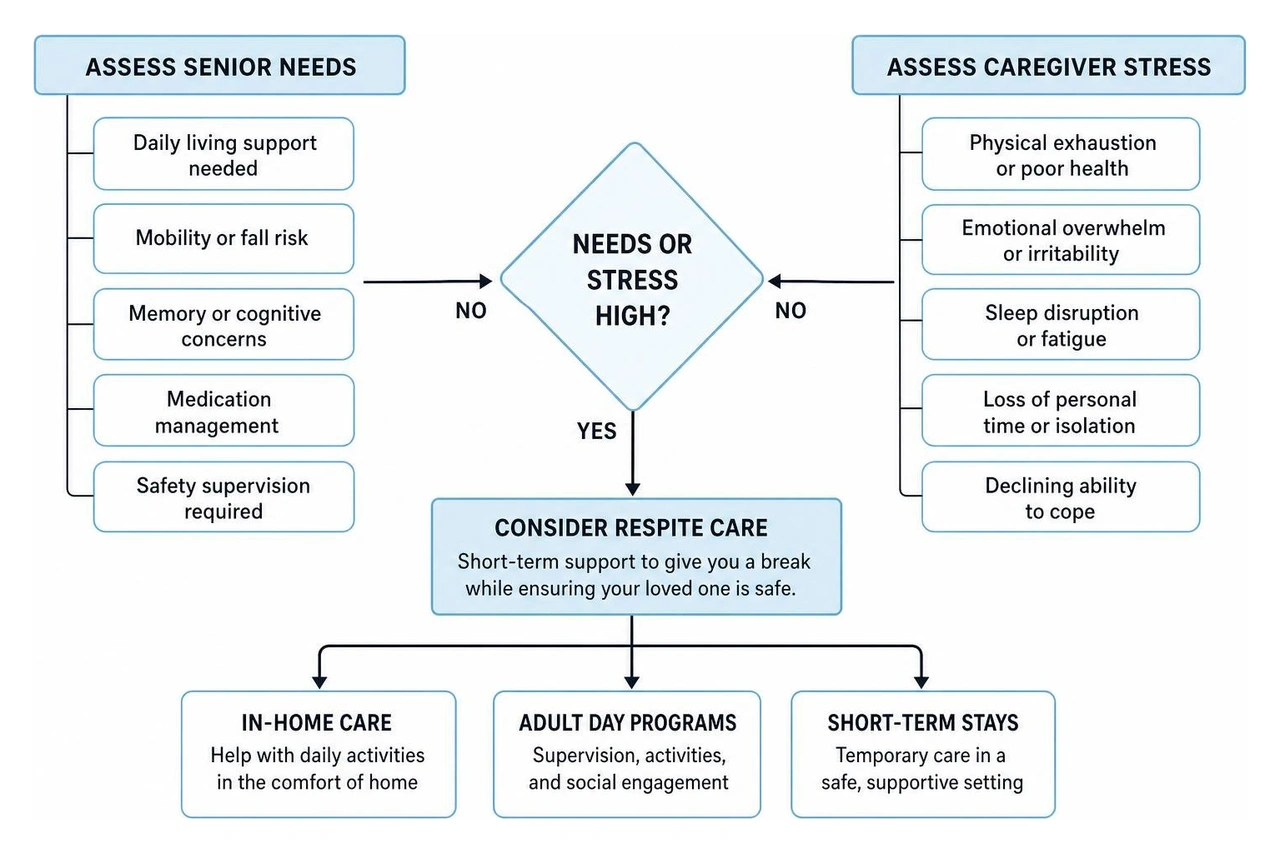
How do you know when it is time to transition from doing everything yourself to hiring professional help? Look for these clear, objective signs in your parent's daily life:
If you notice these changes, it may be time to consult with local Pittsburgh home care agencies to discuss a personalized care plan.
One of the greatest benefits of hiring a professional caregiver is that it changes your relationship with your parent.
When you are responsible for bathing, toileting, feeding, and administering medications, you lose the emotional connection that makes your relationship special. You stop being a son or daughter and instead become a taskmaster.
By delegating these daily physical tasks to a compassionate professional, you can step back into your true role. You can visit your parent simply to enjoy their company, share memories, and provide emotional support, while leaving the heavy lifting to experienced hands.
Preventing caregiver burnout requires a proactive approach. Fortunately, Pittsburgh caregivers have access to several excellent local resources and state-funded programs designed to ease the burden.
Pennsylvania offers several structured programs to assist family caregivers, though they can sometimes feel complicated to navigate:
You don't need hours of free time to practice self-care. Small, daily habits can significantly lower your stress levels:
Caregiver stress is the normal, day-to-day pressure of managing a loved one's care. It is characterized by feeling tired or worried, but you still feel motivated and capable.
Caregiver burnout is a cumulative, long-term state of complete physical, emotional, and mental exhaustion. When you are burnt out, you feel completely hopeless, trapped, and detached from your caregiving duties.
Payment for respite care in Pennsylvania can come from several sources. Many families utilize private pay or long-term care insurance.
Additionally, Pennsylvania's Medicaid Community HealthChoices program covers respite care services for eligible seniors under specific billing codes, such as Procedure Code 512 (the code associated with standard respite services).
Because primary caregivers are often too busy to notice their own decline, other family members must act as "diagnostic mirrors."
Look for behavioral changes like withdrawal from family events, frequent crying, a short temper, or physical changes like rapid weight loss. The best way to help is to offer specific, actionable assistance—such as taking over care for an afternoon—rather than asking open-ended questions like, "How can I help?"
Caring for an aging parent is a profound act of love, but it should never come at the cost of your own health and well-being. Recognizing the caregiver stress signs in Pittsburgh early can help you make informed decisions before you experience complete burnout.
At Fayer Family Homecare, we understand the unique challenges that Western Pennsylvania families face. We provide specialized care for seniors, including dedicated Dementia and Alzheimer’s support. Our experienced caregivers offer compassionate companionship, supervision, and engaging recreational activities, while ensuring cleanliness and comfort for your loved one in the Greater Pittsburgh Area.
Let us help you carry the load so you can focus on being a family again. To learn more about how we can support your family, explore our professional home care services or contact us today to schedule a free, no-obligation consultation.

May 11, 2026
Pittsburgh Home Care: Comfort, Compassion, and Convenience DeliveredDiscover compassionate home care in Pittsburgh for seniors. Learn about services, benefits, and how to choose the right provider for aging in place.
Read Article
January 5, 2026
Senior Fun: Finding the Right Activity Programs for Older AdultsBoost health & happiness! Discover engaging elderly activity programs for physical, mental, and social well-being. Find resources.
Read Article
February 9, 2026
Finding the Right Fit: Estimating Live-In Companion Costs for SeniorsDiscover live in companion for elderly cost, services, and payment options. Find expert tips for choosing the best care for your loved one.
Read Article