
January 26, 2026
Navigating Homemaker and Companion Services: A Complete OverviewUnderstand homemaker and companion services for seniors. Learn benefits, costs, and how to choose the right agency for quality home care.
Read Article
.svg)

Non-medical home health is a type of in-home support that helps seniors with everyday tasks — like bathing, dressing, meals, and companionship — without requiring a doctor's order or medical professional on staff.
Here's a quick overview of what it includes and who it's for:
| Non-Medical Home Health | Medical Home Health | |
|---|---|---|
| Services | Bathing, dressing, meals, housekeeping, companionship | Wound care, injections, vitals monitoring, therapy |
| Who provides it | Trained caregivers, home health aides | Nurses, physical/occupational therapists |
| Requires doctor's order? | No | Yes |
| Paid by Medicare? | Generally no | Often yes, if criteria are met |
| Best for | Seniors needing daily living support | Seniors with acute medical needs |
If your parent is aging at home and struggling with basic daily routines — but doesn't need a nurse or doctor on every visit — you're likely looking at non-medical home health services.
This is one of the most common situations families face. A loved one isn't sick enough for a hospital or nursing facility, but they're no longer fully safe or comfortable managing on their own.
More than 26% of adults over 60 experience difficulty with activities like bathing, dressing, or grooming. And for family members juggling work, kids, and their own responsibilities, the question quickly becomes: Who is going to be there to help?
That's exactly the gap non-medical home health fills — consistent, dignified, day-to-day support that lets seniors stay home safely, while giving families genuine peace of mind.
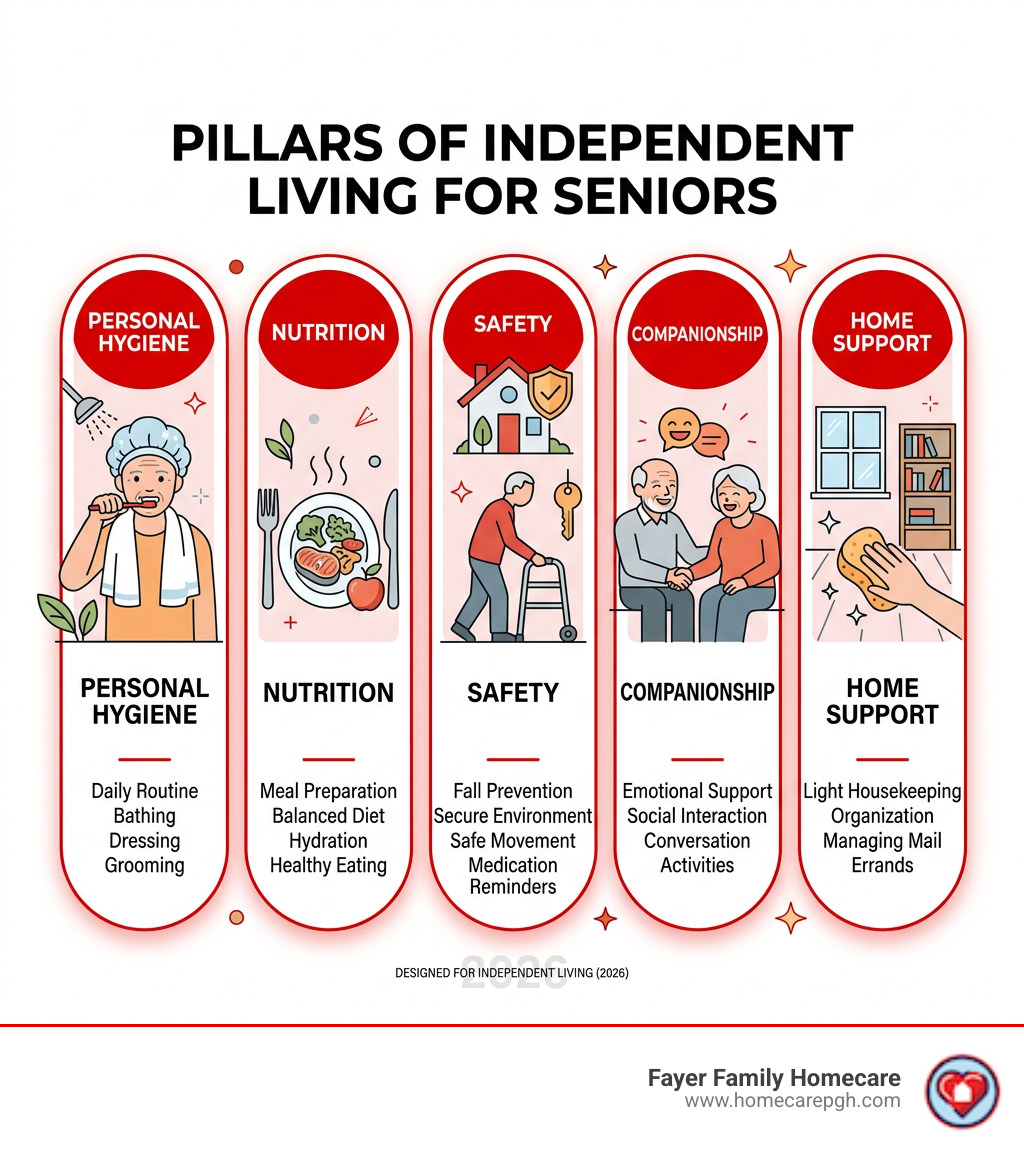
Non-medical home health glossary:
When we start looking into care for a parent or grandparent, the terminology can feel like a maze. You might hear "home health," "home care," "skilled care," and "private duty" tossed around as if they mean the same thing. They don't! In the Greater Pittsburgh Area, understanding these distinctions is the first step toward getting the right level of support.

Home care is often the most ideal solution when family members have busy lives or demanding commitments and simply can’t be there every hour of the day. It’s about the "how-to" of daily life. On the other hand, medical service providers focus on clinical needs. These caregivers have professional medical expertise to handle injections, manage complex medications, or dress surgical wounds.
Think of it this way: Medical home health is about treating a condition. Non-medical home health is about living with dignity despite that condition.
At its core, non-medical home health focuses on two main categories: Activities of Daily Living (ADLs) and Instrumental Activities of Daily Living (IADLs).
ADLs are the basic self-care tasks we’ve done since we were toddlers: eating, bathing, getting dressed, and moving from a bed to a chair. When these become difficult, it’s not just a physical challenge; it’s an emotional one. Our Personal Care services are designed to step in here, providing a helping hand that preserves the senior's dignity.
IADLs are slightly more complex tasks that allow a person to live independently in a community. This includes things like grocery shopping, managing finances, light Housekeeping, and Food Preparation. While these aren't "medical," they are essential. If a senior can't cook a healthy meal or keep their home clean, their health will eventually suffer.
We often see families reach out when they notice "the little things" starting to slip. Maybe Mom’s hair looks unwashed, or Dad has been wearing the same shirt for three days. These are classic signs that a senior is an ideal candidate for non-medical support.
Specific candidates include:
Every senior is different, which is why we emphasize Customized Care that adapts to the specific rhythm of their life.
The goal of non-medical home health isn't to take over a senior’s life; it’s to provide the support necessary so they can keep living it. Maintaining a clean, organized home is about more than just aesthetics—it’s about health.
According to studies, more than 26% of people over age 60 experience some degree of difficulty completing activities of daily living. When these tasks become hard, seniors often skip them to avoid the risk of falling or the frustration of the struggle. This is where a caregiver becomes a "way maker," helping the senior navigate their day safely.
Hygiene is often the most sensitive area of care. Most of us value our privacy in the bathroom above almost anything else. However, the bathroom is also the most dangerous room in the house for a senior.
Our Services include:
You’ve probably heard the phrase "you are what you eat." For seniors, eating the right foods can decrease the risk of osteoporosis, heart disease, and high blood pressure. But if standing at a stove is painful or driving to the Giant Eagle in Pittsburgh is too stressful, nutrition often takes a backseat to convenience (like tea and toast for every meal).
A non-medical caregiver assists by:
The benefits of non-medical home health extend far beyond the senior receiving the care. We often find that the biggest transformation happens within the family. When a daughter no longer has to spend her entire Saturday cleaning her father's house and scrubbing his bathtub, she can go back to being "the daughter." She can sit down, have a cup of coffee, and actually talk to him.
This is the essence of Family Caregiver support. It prevents burnout and allows families to cherish the time they have left together without the constant stress of labor-intensive chores.
Falls are a silent epidemic among the elderly. More than one out of four older people experiences falls each year. In the hilly terrain of Pittsburgh, where homes often have steep stairs and older layouts, the risk can be even higher.
A caregiver acts as an extra set of eyes and ears. They help by:
Physical health is only half the battle. Isolation can cause real harm, including a higher risk for heart disease and depression. Many seniors in our community live alone, and their only social interaction might be the mail carrier.
Companionship is a core pillar of what we do. It’s about having someone to share a story with, play a game of cards, or go for a walk in the park.
And let’s not forget the furry family members! More than half of people 50 and older own a pet. Pet ownership provides a variety of benefits, from lowering blood pressure to reducing anxiety. If a senior can no longer walk the dog or change the litter box, a non-medical caregiver can step in to help with those tasks, ensuring the senior gets to keep their beloved companion.
One of the most common questions we get is, "How do we pay for this?" Unlike medical home health, which is often covered by Medicare for a short period following a hospital stay, non-medical home health is typically paid for out-of-pocket or through other private means.
In the Pittsburgh area, you can expect hourly rates to range depending on the level of care required. However, there are several options to help manage these costs:
Choosing someone to come into your home—or your parent’s home—is a massive leap of faith. You aren't just hiring a "service"; you are inviting a stranger into a private, vulnerable space.
When vetting an agency in Pennsylvania, look for the following:
You can also check the Care Quality Commission (CQC) or the Homecare Association for resources and inspection reports to see how agencies are rated.
Absolutely! In fact, this is often the best-case scenario. We frequently work alongside Medicare-funded home health nurses or physical therapists.
While the nurse is there for 30 minutes to check blood pressure and change a bandage, our caregiver might be there for four hours to make sure the senior eats a healthy lunch, takes a safe shower, and does the exercises the physical therapist prescribed. This coordinated approach ensures "wraparound" support that significantly reduces the risk of the senior ending up back in the hospital.
If you are unsure how to coordinate these different types of care, please Contact us. We can help you navigate the transition from hospital to home.
While they aren't nurses, professional non-medical caregivers undergo significant training. This usually includes instruction on safe lifting and transferring techniques, infection control, emergency procedures, and specialized care for conditions like dementia. Many are also Certified Nursing Assistants (CNAs) or Home Health Aides (HHAs) who have completed state-approved training programs.
It can be! If a physician certifies that a senior is "chronically ill" and requires help with at least two activities of daily living (ADLs), the expenses for that care may be tax-deductible as a medical expense. We recommend speaking with a tax professional in Pittsburgh to see if your situation qualifies under the 7.5% adjusted gross income threshold.
Consistency is king when it comes to memory loss. Having a regular caregiver provides a sense of routine that reduces "sundowning" and anxiety. Caregivers are trained in redirection techniques—instead of arguing with a senior who is confused, they gently shift the focus to a familiar activity or a favorite song. This specialized Alzheimer's & Dementia support allows seniors to stay in a familiar environment, which is often the best medicine for cognitive health.
Growing older shouldn't mean giving up the home you love or the independence you've worked your whole life to maintain. Whether it’s help with a buttons-and-zippers morning routine or someone to whip up a nutritious Sunday dinner, non-medical home health provides the bridge between "struggling to get by" and "thriving at home."
At Fayer Family Homecare, we understand the unique needs of families in the Greater Pittsburgh Area. We specialize in providing that extra layer of support—companionship, supervision, and recreational activities—that makes all the difference. Our focus is always on ensuring cleanliness, comfort, and safety for those aging in place or living with the challenges of Dementia and Alzheimer’s.
If you’re ready to see how a little extra help can bring a lot of peace of mind, we invite you to learn more about our About us page or dive into The Complete Guide to At-Home Services. You don't have to do this alone—we're here to help your family stay home, where you're happiest.

January 26, 2026
Navigating Homemaker and Companion Services: A Complete OverviewUnderstand homemaker and companion services for seniors. Learn benefits, costs, and how to choose the right agency for quality home care.
Read Article
September 6, 2024
Finding the Best Elder Care Services in PittsburghDiscover top elder care Pittsburgh services. Explore personalized in-home care options, top providers, and tips for choosing the right service.
Read Article
February 13, 2026
Finding the Right Fit: Specialized Care for Alzheimer's & DementiaFind the best specialized Alzheimer's care for your loved one. Explore options, understand costs, and get caregiver support.
Read Article