Comprehensive Parkinson's Daily Living Assistance for Aging Loved Ones
Caring for an aging parent or loved one with Parkinson's disease requires a careful balance between offering support and honoring their personal independence. As the condition advances, motor symptoms like muscle stiffness, tremors, and bradykinesia (slowed movement) make basic activities of daily living increasingly difficult. When a senior struggles to fasten buttons or brush their teeth, our natural instinct as family members is often to rush in and take over. However, preserving a senior's autonomy and dignity is essential for their mental and emotional well-being.
Providing effective assistance with daily living means adapting environments and techniques so older adults can participate safely in their routines. Occupational therapists often recommend breaking tasks down into manageable steps and scheduling demanding personal care routines around optimal medication times. By modifying the home environment with targeted tools, family caregivers can reduce physical strain, prevent accidental injuries, and help seniors maintain self-confidence.
Adapting Personal Hygiene: Parkinson's Daily Living Assistance in the Bathroom
Bathrooms present some of the highest fall risks in the home due to slippery tile surfaces, tight spaces, and wet fixtures. Integrating professional personal care services approaches into your loved one's morning routine can transform a stressful hygiene regimen into a safe, calm experience.
Consider implementing these bathroom safety modifications:
- Walk-In Showers and Shower Benches: Replace traditional tub access with step-in shower designs or install a sturdy transfer bench so your parent can slide into the bathing area while seated.
- Professional Grab Bars: Mount heavy-duty grab bars securely into wall studs next to the toilet, inside the shower stall, and beside the entry point. Never rely on towel bars or suction cups for weight-bearing support.
- Adaptive Bathing Tools: Supply long-handled sponges to wash hard-to-reach areas without bending, and place soap inside a cut pantyhose leg tied to a nearby bar to prevent dropped, slippery bars.
- Grooming Adaptations: Set up a seated grooming station at the sink. Provide an electric razor to minimize nick hazards caused by resting tremors, and choose lightweight electric toothbrushes with built-up grips.
- Toileting Support: Establish a consistent two-hour voiding schedule to manage urgency. Install an elevated toilet seat with side armrests, or place a 3-in-1 bedside commode near the senior's bed to prevent risky nighttime trips down dark hallways.
Dressing Solutions and Adaptive Clothing for Seniors
Fine motor challenges and muscle rigidity can make getting dressed frustrating. Simplifying clothing choices preserves dignity while speeding up daily routines.
- Smart Fasteners: Replace traditional buttons with Velcro closures or front-facing magnetic clasps. Safety Note: If your loved one has a Deep Brain Stimulation (DBS) implant, avoid magnetic closures, as strong magnets can interfere with the device settings—stick to Velcro instead.
- Pants and Undergarments: Opt for soft pants with wide elastic waistbands rather than stiff denim with tight zippers.
- Footwear and Fasteners: Choose supportive, non-skid shoes with elastic shoelaces or Velcro straps. Avoid backless slippers, which can easily slip off and trigger a fall.
- Dressing Aids: Equip your parent with long-handled shoehorns, dressing sticks, and specialized button hooks designed with thick foam grips.
- Seated Routines: Encourage your loved one to sit comfortably in a supportive armchair while dressing to conserve stamina and eliminate balance hazards.
Mealtime Adaptations and Parkinson's Daily Living Assistance for Swallowing Safety
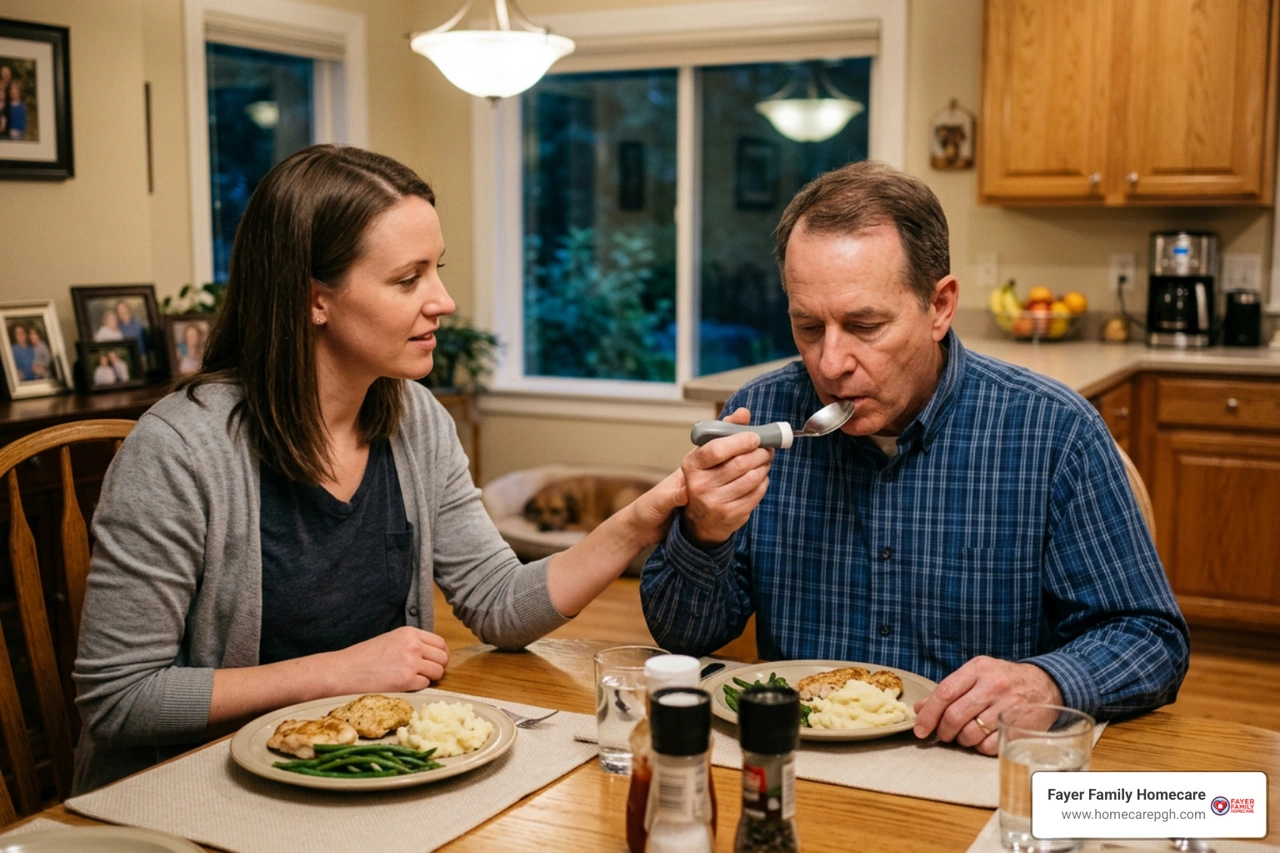
Dysphagia (difficulty swallowing) affects many seniors with Parkinson's, increasing the risk of choking and aspiration pneumonia. Adapting mealtime setups helps maintain proper nutrition while reducing fatigue. The Activities of Daily Living | Parkinson's Foundation guide highlights practical adjustments to support safe dining at home.
- Adaptive Utensils and Dishware: Use weighted silverware to dampen hand tremors, rocker knives for easy one-handed cutting, and high-rimmed scoop plates that allow seniors to push food onto forks without spilling.
- Drinking Aids: Provide weighted, double-handled mugs with lids or nosey cups (which have a cut-out section for the nose, eliminating the need to tilt the head back). Shorten drinking straws by cutting off the bottom inch; shorter straws limit the volume of liquid drawn in per sip, easing swallow control.
- High-Contrast Table Settings: Place dark food on white plates or bright food on dark dishware to compensate for visual and spatial perception changes common in Parkinson's.
- Positioning and Pace: Ensure your parent sits fully upright at a 90-degree angle during meals and remains upright for at least 30 minutes afterward to prevent reflux and aspiration.
- Combating Meal Fatigue: If lengthy meals lead to exhaustion and unintended weight loss, transition from three large meals to five or six nutrient-dense mini-meals throughout the day.
Safe Bed Mobility, Sleep Support, and Transfer Techniques
More than 75% of individuals with Parkinson's experience sleep disturbances, nighttime rigidity, or difficulty repositioning in bed. Morning stiffness and muscle freezing also make transitions between beds, chairs, and vehicles particularly hazardous.
Bed Mobility and Restful Sleep Strategies
Stiff muscles make rolling over or scooting to the edge of the mattress feel like moving through wet cement. Utilizing smart friction-reducing fabrics and supportive hardware makes nighttime adjustments much easier.
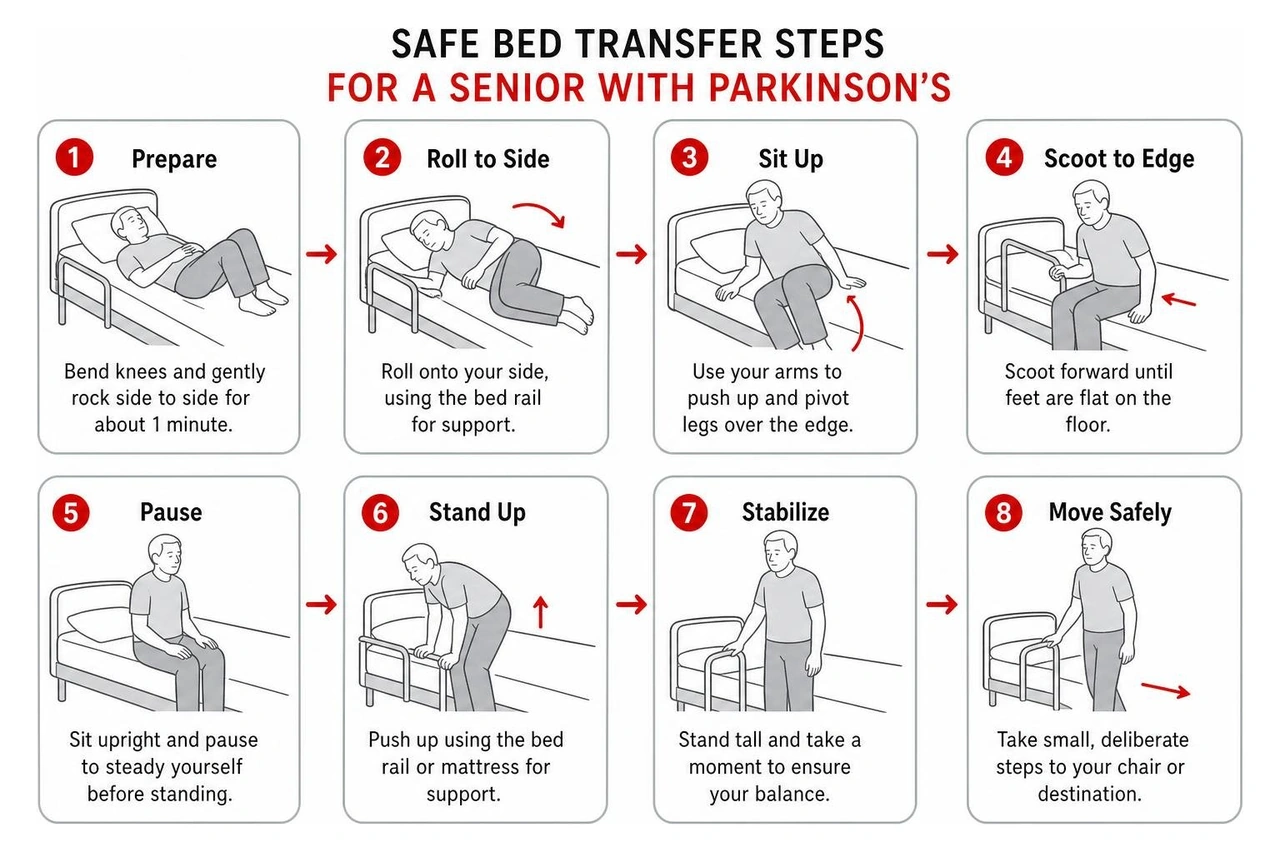
- Friction-Reducing Bedding: Fit the mattress with satin sheets or place a satin fabric runner across the middle third of the bed. Pairing satin sheets with silk pajamas creates a slick surface, allowing your loved one to roll and pivot with minimal effort.
- Sturdy Bed Rails: Install an adjustable bedside assist rail between the mattress and box spring to give the senior leverage when pulling themselves up or turning.
- Gentle Muscle Loosening: Before attempting to rise, guide your parent to bend their knees and gently rock them side to side for a minute to alleviate morning rigidity.
- Repositioning Schedules: For advanced stages where independent turning is limited, help reposition your loved one at least every two hours to protect skin integrity and prevent pressure sores.
- Nighttime Fluid Intake: Ensure adequate hydration earlier in the day (aiming for 48 to 64 ounces daily), but limit liquids two hours before bedtime to reduce nighttime bathroom trips.
Safe Transfers: Chairs, Commodes, and Vehicles
Improper transfer techniques can result in falls for seniors and back strain for family caregivers. Following structured biomechanical principles keeps everyone safe. Detailed insights on transfer mechanics can be found in the Practical Pointers for Parkinson's mobility guide.
- The "Nose Over Toes" Technique: When helping your parent stand up from a chair, instruct them to scoot their hips forward to the edge of the seat, place their feet flat and slightly behind the knees, and lean their upper body forward ("nose over toes") to build forward momentum.
- Armrest Leverage: Ensure chairs have firm cushions and sturdy, elevated armrests. Encourage your parent to push downward on the armrests rather than pulling up on an unstable table or walker.
- Caregiver Body Mechanics: Never pull an older adult up by their arms or underarms, which can cause shoulder subluxation or trigger a backward loss of balance. Use a secure gait transfer belt around their waist and support them from their hips or upper back.
- Car Transfers: Assist your parent into the car passenger seat by having them back up until the back of their legs touch the seat edge, sit down first, and then swing their legs into the vehicle. Using a portable door-latch handle ("car cane") provides extra leverage, while placing a smooth plastic bag or swivel cushion on the fabric seat allows for frictionless pivoting.
Practical Mobility Strategies and Freezing-of-Gait Management
Parkinson's alters the brain's automatic movement pathways, resulting in shuffling steps, reduced arm swing, and postural instability. Understanding which assistive devices work best and having a plan for home care for parkinsons patients helps families navigate mobility changes safely.
Selecting Safe Mobility Aids: Canes vs. Walkers
Choosing the right mobility device requires matching the aid to the specific gait characteristics of Parkinson's disease.
| Mobility Aid Type | Recommended for Parkinson's? | Pros & Cons for Parkinson's Care |
|---|
| Standard 4-Post Walker (Pick-Up) | ❌ No | High Hazard: Lifting the walker interrupts momentum and frequently triggers retropulsion (falling backward). |
| Standard Quad Cane | ❌ No | Not Recommended: The four-pronged base rarely makes level contact on uneven surfaces, increasing trip risks. |
| 4-Wheeled Rollator with Hand Brakes | ✅ Yes | Highly Recommended: Offers continuous rolling support, smooth movement, lockable brakes, and a fold-down seat for rest breaks. |
| Laser / Visual Cueing Canes | ✅ Yes | Recommended for Freezing: Projects a red laser line onto the floor to provide an external visual target that breaks motor blocks. |
| Ergonomic Walking Poles | ✅ Yes | Great for Early/Mid Stages: Promotes upright posture, wider arm swing, and dynamic balance during outdoor walking. |
Device Fitting Tip: When your parent stands tall with relaxed shoulders and arms at their sides, the handgrips of any walker, cane, or pole should align precisely with the crease of their inner wrist.
Managing Freezing Episodes and Movement Cueing
Freezing of gait (FOG) is a sudden, involuntary sensation where a senior feels as though their feet are glued to the floor. It frequently occurs in tight doorways, crowded spaces, or during pivot turns. Pulling or rushing an older adult during a freeze increases panic and fall risks. Instead, utilize external cueing techniques to bypass damaged automatic pathways in the brain.
- The 5:2:1 Protocol: When your parent freezes, cue them to take 5 deep breaths to reset anxiety, shift their body weight side-to-side 2 times, and take 1 long, deliberate marching step forward.
- Visual Floor Targets: Place strips of brightly colored contrast tape horizontally across problem doorways to give your parent a clear line to step over. If freezing occurs elsewhere, step slightly in front of them and ask them to step over your foot.
- Rhythmic Auditory Cues: Count cadence aloud ("One, two, three, step!"), snap fingers, or play upbeat marching music to establish an external rhythm for their feet to follow.
- Avoid Tight Pivots: Teach your loved one to make wide, U-shaped turns like a carousel rather than crossing their feet or pivoting sharply on their heels.
Home Safety Modifications and Medication Management
Creating a safe physical environment and maintaining an exact medication routine are the two most dependable ways to prevent falls and motor fluctuations at home.
Essential Home Safety Modifications for Fall Prevention
Environmental hazards that seem harmless to a healthy adult can present major risks for an aging parent with Parkinson's.
- Clear Pathways and Remove Rugs: Eliminate all decorative throw rugs, runner carpets, and low floor mats. Secure essential carpeting with double-sided rug tape.
- Eliminate Threshold Strips: Smooth out raised doorway transitions and replace steep interior thresholds with low-profile transition ramps.
- Optimize Lighting: Install high-lumen, glare-free LED lighting throughout hallways, stairwells, and entryways. Use automatic motion-sensor nightlights along the route from the bed to the bathroom.
- Stair and Handrail Safety: Install sturdy, continuous handrails on both sides of all staircases extending past the top and bottom steps.
- Safety Monitoring: Place two-way intercom monitors or fall-detection emergency pendants in living areas so your parent can call for help without having to reach for a distant phone.
Medication Routines to Prevent Off-Periods
Dopaminergic medications such as carbidopa/levodopa (Sinemet) manage motor symptoms, but their therapeutic window typically lasts only 3 to 5 hours. Delays as short as 30 minutes can cause medication levels to drop, leading to sudden "off" periods characterized by severe rigidity, tremor surges, and gait freezing.
- Strict Timing Adherence: Schedule doses at exact daily hours rather than tying them loosely to meal times (e.g., exactly at 8:00 AM, 12:00 PM, and 4:00 PM).
- Multi-Dose Pill Organizers: Use weekly or monthly pill boxes compartmentalized by morning, noon, afternoon, and evening to avoid missed or duplicate doses.
- Automated Medication Alarms: Set programmable alarms on smartphones, dedicated digital watches, or automated electronic dispensers that chime and flash until the compartment is opened.
- Track Motor Fluctuations: Maintain a simple daily log of when medication is taken and note any emerging tremors, dyskinesia (involuntary movements), or freezing spells. Bring this tracking log to your parent's neurologist to fine-tune their prescription schedule.
Supporting Communication, Cognition, and Care Partner Well-Being
Parkinson's disease affects more than just physical movement; it also influences speech volume, facial expression, and executive cognitive processing. Supporting an elderly loved one means addressing these non-motor changes while also taking care of your own health as a caregiver.
Overcoming Communication Hurdles and Facial Masking
Many aging seniors experience hypophonia (a quiet, muffled, or monotone voice) along with hypomimia (facial masking, where facial muscles lose automatic expression).
- Facial Masking Awareness: Understand that a flat or blank facial expression does not reflect your parent's actual mood, interest, or emotional state. Remind yourself not to assume they are sad or detached based on their facial tone alone.
- Speech Cueing Techniques: Encourage your parent to "take a deep breath and speak with intent." Therapies like LSVT LOUD or SPEAK OUT! teach seniors to recalibrate their vocal volume consciously.
- Reduce Background Noise: Turn off the television or radio before starting a conversation, and maintain direct eye contact in a quiet room to make listening easier.
- Allow Processing Time: Slower cognitive processing means older adults need extra time to formulate thoughts. Ask clear, direct questions and avoid interrupting or finishing their sentences prematurely.
Preventing Family Caregiver Burnout
Caring for an aging parent with progressive Parkinson's is rewarding, but it can also be physically and emotionally demanding. Caregiver strain builds gradually, often leading to exhaustion, sleep deprivation, and health complications for the caregiver. Exploring specialized home care services in pittsburgh pa provides practical daily support and essential respite.
- Accept Help Early: Don't wait for a crisis or a caregiver injury before seeking assistance. Professional home caregivers can manage high-demand morning routines, bathing, and mobility transfers.
- Utilize Adult Day Programs & Support Groups: Local Parkinson's support groups connect family caregivers with valuable community insights, while adult day programs provide enriching socialization for seniors.
- Protect Personal Rest: When nighttime sleep becomes interrupted by frequent caregiving duties, bring in scheduled overnight support so you can rest and maintain your own health.
Frequently Asked Questions About Parkinson's Care
The most reliable mealtime aids include weighted stainless-steel utensils to dampen tremors, high-sided scoop plates that prevent spills, rocker knives for simple cutting, and cups with dual handles or nose-cutout designs. Trimming drinking straws to reduce their length also helps seniors manage swallowing volume safely.
How do you safely help someone unfreeze during a Parkinson's walking freeze?
Avoid pulling or dragging your parent, as this can trigger panic and lead to a fall. Instead, use the 5:2:1 protocol (5 deep breaths, 2 weight shifts, 1 deliberate step), offer rhythmic counting ("one, two, step"), or place a visual target on the floor (like your foot or a piece of tape) for them to step across.
Why are standard four-post walkers discouraged for seniors with Parkinson's?
Standard four-post pick-up walkers require the user to lift the frame with every step. For an individual with Parkinson's, this lifting motion disrupts forward momentum and often triggers retropulsion—a dangerous backward loss of balance. A smooth-rolling four-wheeled rollator equipped with reliable hand brakes provides continuous ground support and safer posture.
Conclusion & Next Steps for Family Caregivers
Managing daily life with Parkinson's disease is an evolving journey that calls for patience, thoughtful adaptations, and a strong care team. By outfitting the home with targeted bathroom safety aids, simplifying clothing, practicing safe transfer biomechanics, and adhering to strict medication schedules, families can significantly improve daily comfort and reduce fall risks for their aging loved ones.
As your parent's care needs change over time, you don't have to navigate these responsibilities alone. Fayer Family Homecare offers compassionate, experienced caregiving support tailored to the unique needs of seniors living with neurodegenerative conditions across the Greater Pittsburgh area.
To learn more about developing a personalized support plan for your aging loved one, explore our customized care options or contact our local care team today to schedule an in-home consultation.

.svg)