When a Loved One Comes Home: What You Need to Know About Post Hospital Home Care in Pittsburgh
Post hospital home care in Pittsburgh is a structured support service that helps seniors recover safely at home after a hospital stay — instead of going to a nursing facility. Here is a quick overview of what it involves:
- Who it's for: Seniors discharged from the hospital who need help with bathing, dressing, mobility, meals, and supervision
- What it includes: Non-medical personal care, companionship, hygiene assistance, and safety monitoring
- Why it matters: Research shows Medicare patients who go home after hospitalization have significantly lower total healthcare costs in the following year compared to those discharged to institutional care
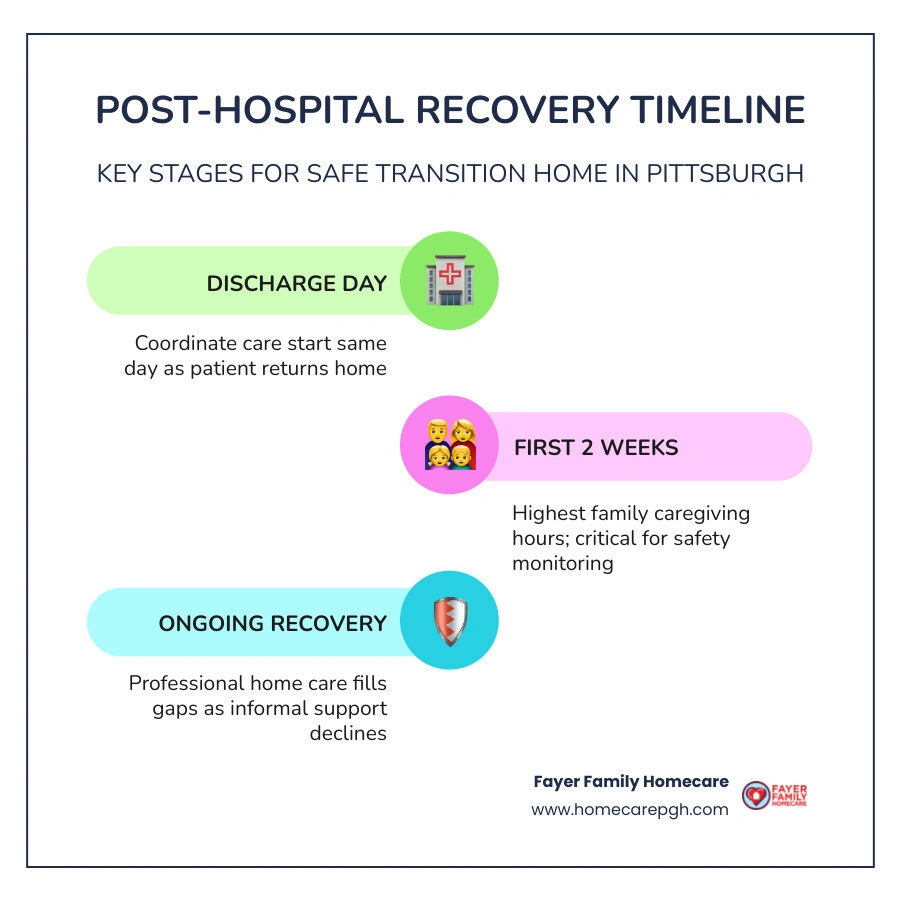
- When it starts: Care can begin the same day as discharge — early coordination is key
- Who provides it: Professional caregivers like those at Fayer Family Homecare, working alongside your family to fill gaps in support
Bringing an elderly parent home from the hospital can feel like a relief — and a worry — at the same time. You want them comfortable and safe. But the first weeks after discharge are often the most vulnerable.
Studies on Medicare patients in the Pittsburgh area found that informal family care is highest in the first two weeks after discharge. But that support tends to drop off over time. Without a plan in place, seniors can be left without the help they need — right when recovery is most critical.
The good news? With the right support at home, recovery is not only possible — it is often more effective and more affordable than institutional alternatives.
Here at Fayer Family Homecare, our team has guided many Pittsburgh families through exactly this transition, and we want to help you feel prepared and confident every step of the way.
Understanding Post Hospital Home Care in Pittsburgh: Key Predictors for a Safe Return
When we look at how seniors in western Pennsylvania transition from a hospital bed back to their living rooms, we see a complex web of healthcare patterns, local resources, and family dynamics. Deciding where a senior goes after discharge isn't random. It is heavily influenced by regional healthcare habits, hospital structures, and the patient's individual needs.
Historically, pioneering research on health systems has shown that where you live plays a massive role in your post-hospital journey. In studies comparing local discharge pathways to cities like Houston and the Twin Cities, Pittsburgh seniors faced unique regional trends. For example, for hip fracture patients, the single most significant characteristic that distinguished those who received home health care from those who did not was simply being from Pittsburgh (with an odds ratio of 5.08, p<0.05).
Local healthcare dynamics, such as hospital ownership of home health agencies, local supply of nursing home beds, and low historical HMO penetration (for instance, Pittsburgh historically had only 8% of its study sample enrolled in Medicare HMOs compared to 92% in the Twin Cities), have long shaped local utilization patterns. To understand how these regional factors impact your family's options today, you can explore our comprehensive guide on Home Care Services in Pittsburgh PA.
To dive deeper into the clinical data regarding how hospital systems influence these discharge pathways, you can read the classic NCBI Study on Post-Hospital Care.
Patient Characteristics and Discharge Pathways
While regional systems play a major role, a senior's personal health profile is the ultimate deciding factor in where they go. Some of the most critical patient characteristics that determine if a senior can return home include:
- Cognitive Status: Seniors dealing with advanced dementia or temporary post-hospital delirium require constant supervision to prevent wandering, medication errors, or falls.
- Prior Disability and ADL Limitations: A senior's baseline ability to handle Activities of Daily Living (ADLs) before their hospital stay strongly dictates their post-discharge success. Those who already struggled to bathe or dress independently will need immediate, structured support upon returning home.
- Living Arrangement: Seniors who live alone face a much higher risk of institutionalization unless a dedicated system of care is established before they cross their threshold.
For families trying to navigate these physical and cognitive limitations, setting up professional Assistance with Daily Living ensures that your loved one has eyes on them and hands-on help when they need it most.
The Impact of Home-Based Support on Post Hospital Home Care in Pittsburgh
Why does having a dedicated caregiver in the home make such a difference? It bridges the gap between clinical discharge instructions and daily reality.
When a hospital discharges a senior, they hand over a packet of instructions: new medications, physical therapy exercises, wound care guidelines, and follow-up appointments. For an elderly person recovering from a major illness, managing this list is overwhelming.
Professional post hospital home care in Pittsburgh provides the safety net that makes home-based recovery viable. Caregivers offer the physical and emotional supervision required to keep seniors safe, comfortable, and hydrated. By coordinating with family members, we make sure that the home environment is clean, meals are prepared, and mobility is supervised, turning a stressful transition into a manageable, structured recovery.
Functional Recovery and Benefits of Supported Home-Based Care
Recovering at home is not just about comfort; it is about physical progress. Research tracking functional outcomes at 6 weeks post-discharge shows that seniors who receive structured, supported care at home experience steady improvements in their daily functioning.
| Recovery Aspect | Supported Home Recovery (With Caregiver) | Unsupported Home Recovery (Alone/Family Only) |
|---|
| ADL Progress | Consistent daily help with bathing and dressing leads to faster physical rehabilitation. | High risk of self-neglect, skipped baths, and safety hazards during personal care. |
| Mobility & Falls | Constant supervision during transfers reduces fall risks and builds physical confidence. | High risk of re-injury or falling while attempting to move around the house unassisted. |
| Nutrition & Hydration | Freshly prepared meals and active encouragement to drink fluids support muscle recovery. | Seniors often rely on processed, easy-access foods or skip meals entirely due to fatigue. |
| Mental Well-being | Companionship reduces post-hospital depression and keeps the mind active. | Isolation and loneliness can lead to cognitive decline and slower physical recovery. |
To help your loved one achieve these positive outcomes without locking yourself into a rigid, stressful schedule, utilizing Flexible Home Care allows you to customize the hours and level of support as your loved one's physical strength improves.
Non-Medical Support Trajectories During Recovery
During the first six weeks post-discharge, a senior's needs change. Initially, they may require intensive, hands-on help with transferring from bed to chair, using the restroom, and maintaining basic hygiene.
As physical healing progresses, the focus of post hospital home care in Pittsburgh shifts toward encouraging independence while maintaining safety. Caregivers assist with daily routines, prepare nutritious meals to fuel recovery, and provide vital cognitive support. For seniors with Alzheimer's or dementia, having a familiar face guide them through their post-hospital routine prevents the confusion and agitation that often occur after a chaotic hospital stay.
Long-Term Benefits of Post Hospital Home Care in Pittsburgh
The benefits of bringing in professional support extend far beyond the immediate weeks after surgery or illness:
- Preventing Hospital Readmissions: The first 30 days post-discharge are a high-risk zone for readmission. Caregivers catch warning signs early—like dehydration, extreme fatigue, or sudden confusion—and alert family members before a crisis occurs.
- Reducing Family Caregiver Burnout: Trying to balance a job, your own household, and around-the-clock care for a recovering parent is a recipe for physical and emotional exhaustion. Professional caregivers step in so you can focus on being a supportive daughter, son, or spouse.
- Long-Term Financial Savings: By preventing costly nursing home placements and avoiding expensive hospital readmissions, home-based care is a highly cost-effective way to support a senior's long-term independence.
If your loved one is prone to nighttime confusion, waking up frequently, or trying to get out of bed unassisted, reading our Overnight Home Care Guide Pittsburgh can help you decide if nighttime supervision is the missing piece in your safety plan.
Improving Discharge Planning for Pittsburgh Seniors
Discharge planning in Pittsburgh hospitals can sometimes feel rushed. To ensure your loved one transitions smoothly, families must take an active role in the planning process. To prepare yourself for these conversations, review our Home Care Pittsburgh Complete Guide to understand the full landscape of local resources.
Addressing the Post-Surgery Discharge Gap
There is a well-documented "discharge gap" for certain surgeries in the Pittsburgh area. For example, historical data shows that among hip procedure patients, those in Pittsburgh were significantly less likely to be discharged directly home compared to seniors in areas like the Twin Cities (odds ratio 0.21, p<0.01). Furthermore, those hip procedure patients who did receive home health care were significantly less likely to be from Pittsburgh (odds ratio 14.18, p<0.01).
This means local hospital systems have historically leaned heavily on institutional rehab facilities for post-surgical recovery. However, with modern non-medical home care, many seniors who are medically stable can safely bypass institutional stays and recover in the comfort of their own homes, surrounded by their personal belongings and loved ones.
When a senior first comes home, family members often rally together, taking time off work and rearranging schedules to provide around-the-clock care.
However, academic studies show that while informal care by relatives is highest in the first two weeks, it steadily declines over the following months. Meanwhile, the senior's need for assistance often remains or even increases as the initial adrenaline of recovery wears off. Transitioning from informal family care to professional, non-medical caregivers ensures a seamless continuum of support, protecting family members from burnout while maintaining a high standard of care for the senior.
Frequently Asked Questions about Post-Hospital Transitions
What factors determine whether a senior in Pittsburgh can safely transition back home after a hospital stay?
A safe transition depends on three main factors:
- Physical and Cognitive Capability: Can the senior perform basic tasks, or do they have severe mobility or cognitive impairments?
- Home Safety: Is the home environment free of tripping hazards, and are basic necessities accessible on a single floor if stairs are a challenge?
- Support Network: Is there a reliable caregiver (family or professional) available to assist with daily living tasks, meal preparation, and safety supervision?
How does professional home care support a senior's recovery compared to going home without assistance?
Seniors who return home without assistance face a much higher risk of accidental falls, medication mistakes, dehydration, and poor nutrition. A professional caregiver provides dedicated, personalized supervision, assists with transfer and mobility, prepares fresh meals, and maintains a clean, hygienic environment. This consistent support greatly reduces the likelihood of a hospital readmission.
How do functional outcomes of patients recovering at home change over time?
With proper support, most seniors experience a significant upward trajectory in their functional abilities within the first 6 weeks of returning home. While the first two weeks are focused on rest and basic safety, weeks 3 through 6 typically show marked improvements in mobility, strength, and confidence, helping the senior regain their long-term independence.
Conclusion
Transitioning home after a hospital stay is a major milestone, but it requires careful preparation and the right team in your corner. By choosing post hospital home care in Pittsburgh, you are giving your loved one the best opportunity to recover in a comfortable, familiar environment while ensuring their safety and your peace of mind.
At Fayer Family Homecare, we specialize in providing compassionate, experienced caregivers who understand the unique needs of seniors recovering from surgery, illness, or managing cognitive conditions like dementia and Alzheimer's. We focus on cleanliness, comfort, companionship, and daily supervision to make the transition back home as smooth as possible.
If you or a loved one are preparing for an upcoming hospital discharge in the Greater Pittsburgh Area, contact us today to learn how we can support a safe, comfortable, and successful recovery. Explore our services at Fayer Family Homecare Services to find the perfect care plan for your family.

.svg)


.avif)