
May 11, 2026
Pittsburgh Home Care: Comfort, Compassion, and Convenience DeliveredDiscover compassionate home care in Pittsburgh for seniors. Learn about services, benefits, and how to choose the right provider for aging in place.
Read Article

Start with the kind of help your parent needs. For companionship, bathing, meals, or supervision, look for non-medical home care. For wound care, nursing, or prescribed therapy, ask their clinician about home health care. Some families need both.
When comparing agencies, ask how they screen and train caregivers, match them with clients, handle missed visits, and keep families informed. Share your parent's daily routine and any memory or safety concerns before care begins. A clear care plan can help you judge whether the support is a good fit.
We're the Fayer Family Homecare Staff, and this guide will help you weigh your options with confidence.
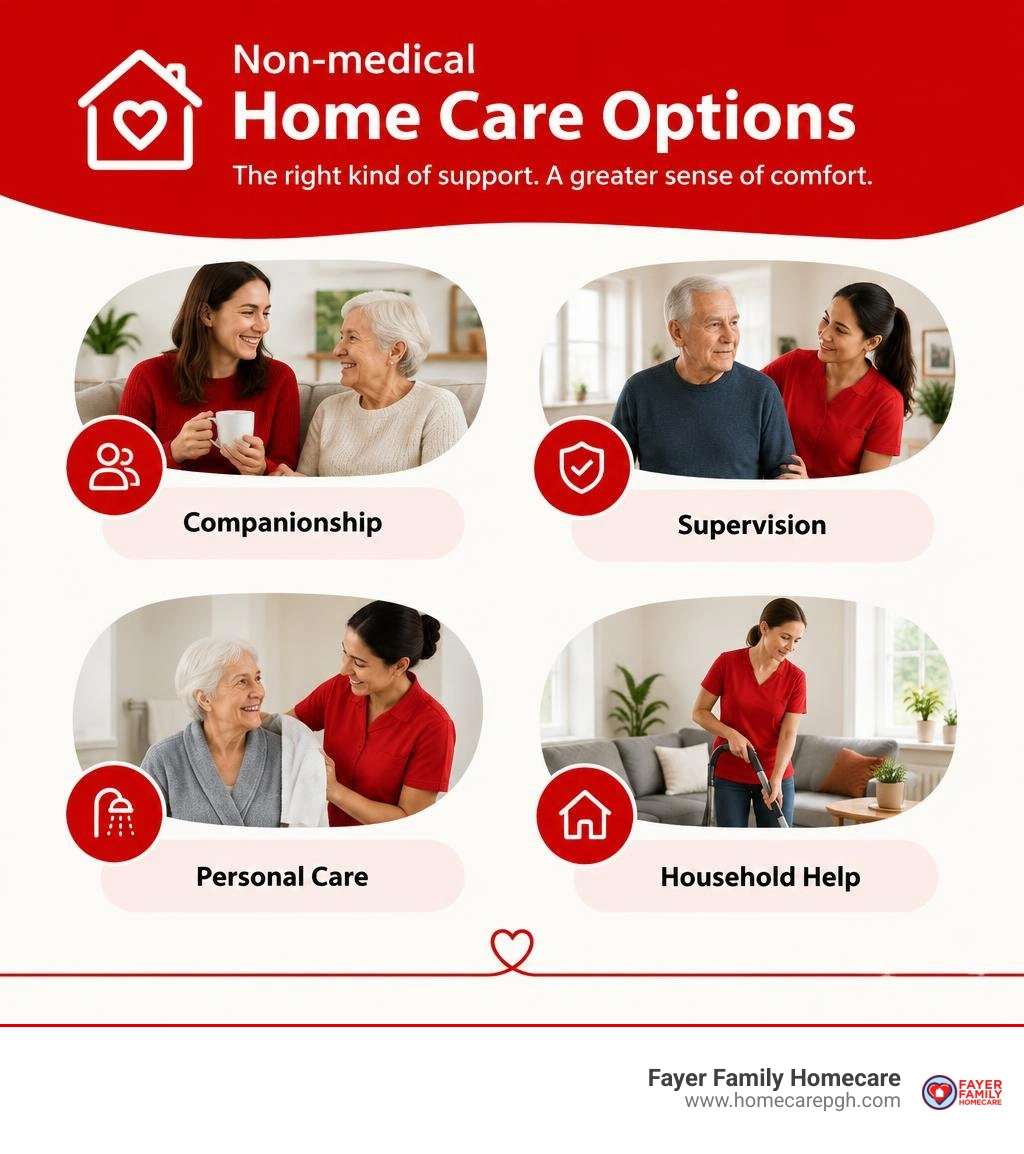
Professional home care terminology:
When an aging parent begins to slow down, family members often step in to fill the gaps. At first, it might just be picking up groceries or dropping by on weekends. Over time, however, balancing work, personal life, and your loved one's needs can become overwhelming. That is where non-medical home care provides vital support, giving older adults the dedicated assistance they need while offering adult children peace of mind.
Understanding what non-medical care covers helps you make informed choices without feeling lost in industry jargon. Non-medical support focuses on daily living, physical comfort, safety, and social engagement. It is distinct from home health care, which involves clinical interventions like IV therapy, wound care, or occupational and physical therapy prescribed by a physician.
| Care Category | Primary Focus | Common Tasks & Activities | Typical Goal |
|---|---|---|---|
| Companionship | Emotional wellness & social interaction | Conversation, board games, walks, reading, sharing hobbies | Reduce isolation, boost mood, maintain cognitive sharpness |
| Supervision | Safety & routine guidance | Monitoring mobility, wandering prevention, gentle reminders | Prevent accidents, ensure safe navigation of the home |
| Personal Care | Hands-on physical assistance | Bathing, dressing, grooming, toileting, hygiene support | Preserve dignity, ensure comfort, maintain skin health |
At its core, non-medical home care provides essential assistance with daily living activities. Our goal is to empower seniors to live comfortably in the surroundings they know best.
Every senior's daily routine is unique. Some individuals simply need recreational companionship and light conversation, while others require continuous supervision due to cognitive changes. Whether helping with gentle morning exercises, assisting during mealtimes, or creating a tidy, hazard-free living space, non-medical support bridges the gap between total independence and institutional care. Maintaining cleanliness and comfort directly influences a senior's physical well-being, mood, and sense of self-worth.
Caregivers are the heart of in-home support. The Essential Role of Caregivers in Home Health Care and personal care extends far beyond a simple checklist.
Caregiver responsibilities generally encompass:
Caregivers offer calm reassurance during challenging moments, creating an environment where seniors feel valued, respected, and safe.

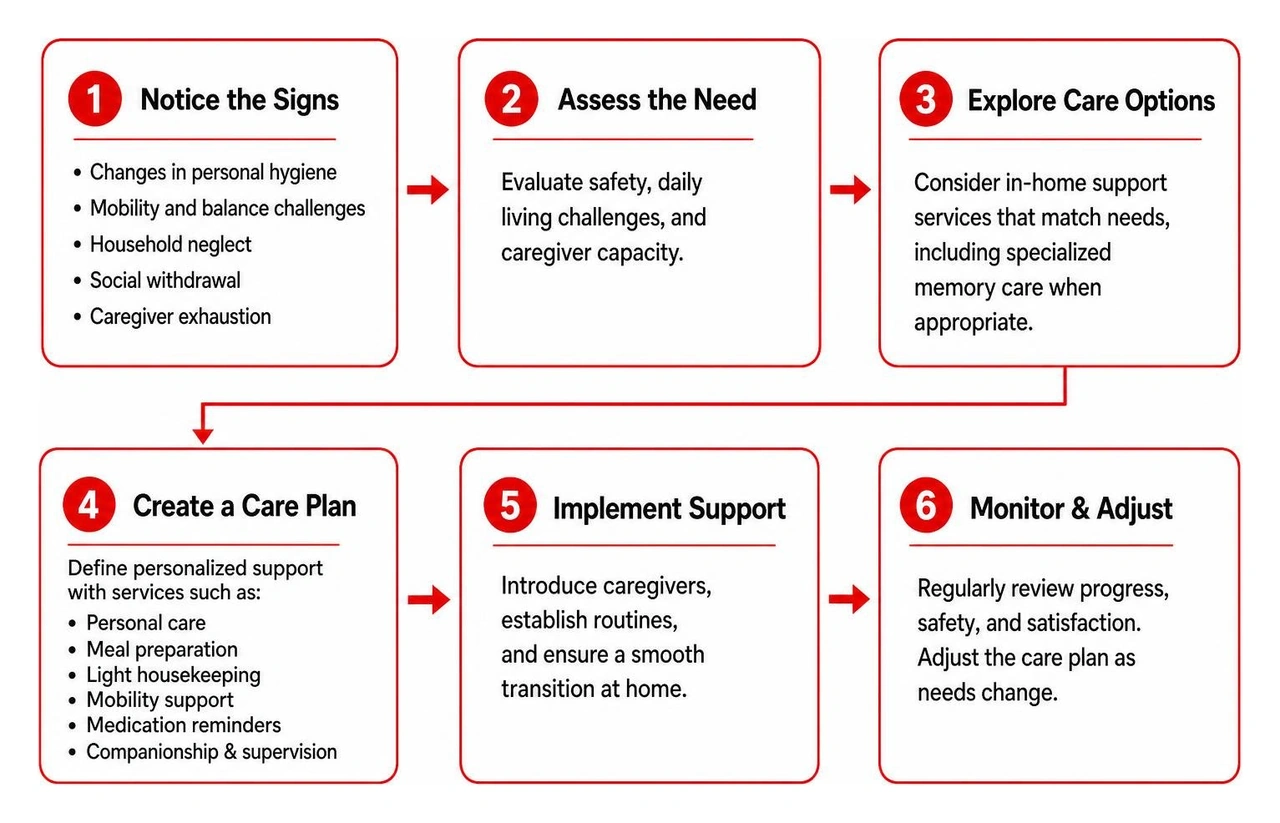
Determining when to introduce outside care is one of the most critical decisions a family will make. As care needs shift, identifying subtle changes early prevents crises like accidental falls, missed medications, or severe caregiver burnout.
Recognizing the signs that an elderly parent needs help at home allows families to be proactive rather than reactive.
Look out for these common indicators:
For families navigating cognitive decline, specialized Alzheimer's care is essential. Caring for a parent with Alzheimer's disease or other forms of dementia requires structured routines, patience, and trained behavioral redirection.
Memory loss introduces unique safety concerns. Seniors may wander, leave stove burners on, or become agitated when confused about their surroundings. Implementing effective dementia safety at home involves:
Compassionate supervision ensures your loved one stays safe while retaining their dignity at home.

Beginning home care does not have to be intimidating. By understanding the evaluation process and financial landscape upfront, you can build a stable, long-term support system for your parent.
The first step in setting up care is a thorough in-home care assessment. During this consultation, a care coordinator meets with the senior and their family to evaluate daily routines, physical abilities, cognitive health, and home safety.
During this visit, the coordinator will:
This collaborative assessment allows the agency to craft a personalized care plan and match your parent with a caregiver whose personality and skills fit their needs.
Understanding how care is funded helps families plan effectively. When understanding the costs and options in private home care, keep in mind the differences between medical coverage and non-medical home care:
Selecting the right partner to care for an aging parent requires careful vetting. You want to ensure that the individuals entering your loved one’s home are trustworthy, well-trained, and supported by a dedicated administrative team. Using a structured approach to choosing the right personal care provider ensures high standards of care.
When reviewing home care agencies, look for indicators of quality, accountability, and professionalism:
A high-performing agency prioritizes caregiver compatibility and care continuity. When speaking with agency representatives, ask these practical questions:
A dependable agency works closely with you to establish a predictable schedule, match caregivers thoughtfully, and keep you informed every step of the way.
Yes. Whether you are transitioning a parent home from a hospital stay, coordinating through a physician, or seeking private support, you have the legal right to choose your preferred home care or home health provider. Simply inform your discharge planner, case manager, or physician of the agency you have selected.
Depending on caregiver availability and the family's scheduling preferences, non-medical home care can often begin within 24 to 48 hours following the initial assessment. For urgent situations, many agencies accommodate accelerated start dates to ensure safe transitions.
Traditional Medicare does not pay for non-medical companion care, meal preparation, or custodial personal care when it is the only service needed. However, long-term care insurance, Medicaid home and community-based waivers, VA benefits, and private payment options are widely used to cover these services.
Supporting an aging parent while balancing your own daily commitments is a meaningful yet challenging journey. Professional in-home care offers a balanced approach, allowing your loved one to enjoy the comfort, familiarity, and dignity of home while receiving the dedicated assistance they need.
At Fayer Family Homecare, our experienced caregivers provide personalized companionship, attentive supervision, memory care support, and help with daily routines throughout the Greater Pittsburgh Area. Whether you need a few hours of support each week or dedicated assistance with daily routines and housekeeping services, we work alongside your family to build a plan that brings comfort to your parent and peace of mind to you.
Contact our team today to schedule an initial consultation and take the first step toward personalized in-home support.

May 11, 2026
Pittsburgh Home Care: Comfort, Compassion, and Convenience DeliveredDiscover compassionate home care in Pittsburgh for seniors. Learn about services, benefits, and how to choose the right provider for aging in place.
Read Article
October 19, 2026
Area Agency on Aging: What It Is and What Services It ProvidesLearn what services the Area Agency on Aging provides for seniors, from in-home care to caregiver support and Medicare guidance.
Read Article
October 20, 2025
Home Care Assessment: Your Path to Personalized SupportDiscover what an in home care assessment entails. Get personalized support, ensure safety, and prepare for a successful care journey.
Read Article