

June 1, 2026
From Family to Professional: Exploring Senior Caregiving SolutionsDiscover senior caregiving solutions: from family support to professional in-home care, burnout prevention, and safety tips.
Read Article

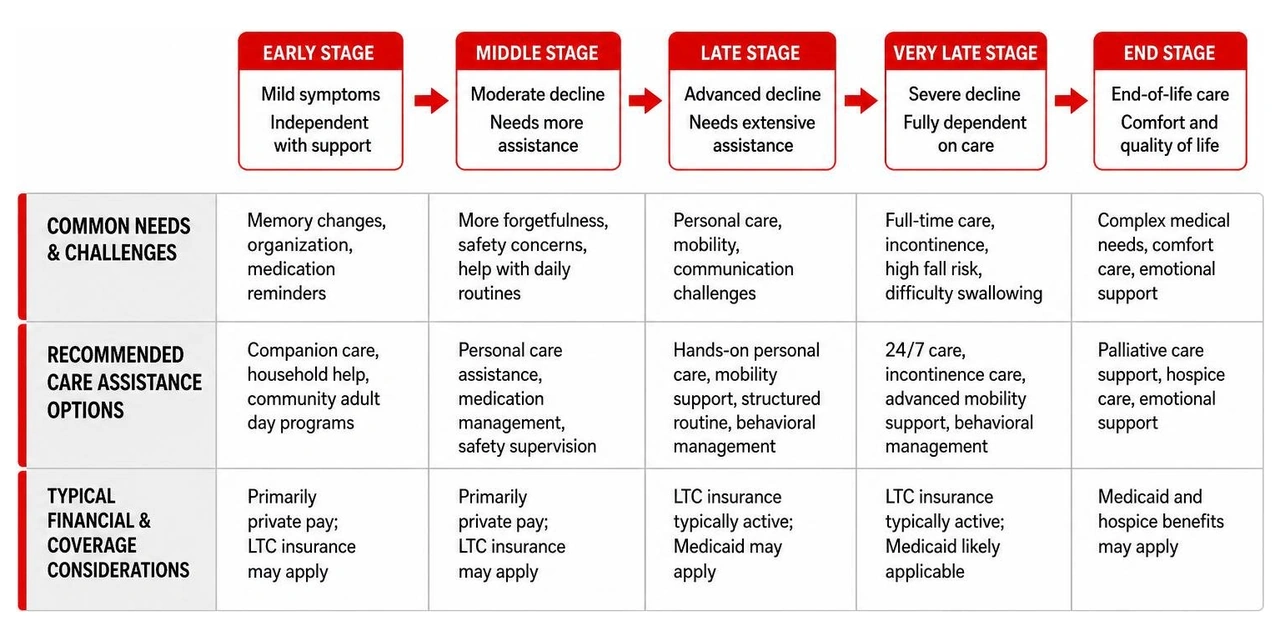
When a loved one receives a dementia diagnosis, understanding how their care needs will evolve is critical. At Fayer Family Homecare, we know that Alzheimer's progresses through distinct phases, and matching the right type of support to each stage ensures your parent remains comfortable and safe without feeling overwhelmed.
In the initial stages, alzheimer's care assistance often centers on companion services, daily organization, and light supervision. As cognitive decline advances into the middle and late stages, care transitions toward hands-on assistance with personal hygiene, mobility, and comprehensive behavioral management.
| Stage | Common Needs & Challenges | Recommended Care Assistance Options | Typical Financial & Coverage Considerations |
|---|---|---|---|
| Early Stage | Mild memory loss, medication reminders, meal preparation, appointment tracking | Companion care, household help, community adult day programs | Primarily private pay; long-term care insurance (LTCI) may apply |
| Middle Stage | Confusion, hygiene assistance, wandering risk, sundowning, behavioral changes | Non-medical in-home personal care, daily adult day care, respite care | Private pay, LTCI, Medicaid waivers (like PA Community HealthChoices) |
| Late Stage | Severe mobility decline, difficulty swallowing, 24/7 personal care needs | Intensive in-home personal care, skilled home health, residential memory care, hospice | Private pay, Medicaid for nursing homes, Medicare for hospice |
During early-stage Alzheimer's, your parent may maintain significant independence but struggle with complex tasks like managing finances, keeping track of prescription medications, or planning meals. Introducing non-medical companion care early helps establish a comforting daily routine and builds trust between your parent and their caregiver.
As your parent enters the middle stage, cognitive decline becomes more pronounced. Daily supervision becomes vital to manage personal care tasks like bathing, dressing, and grooming. In the late stage, severe memory loss and physical impairments require constant supervision, specialized transfers, and coordinated medical oversight.
Deciding between keeping your parent at home or moving them to a dedicated care facility is one of the most emotional choices family members face. Exploring In-Home Care | Alzheimer's Association services reveals that staying in familiar surroundings often minimizes confusion and agitation for seniors living with dementia.
In-home care allows your parent to remain in the comfort of their home while receiving tailored assistance. Residential memory care facilities provide structured 24-hour locked environments, which may become necessary if intensive medical intervention or high-level wandering prevention exceeds what can be safely managed at home.
Understanding how to finance long-term support can feel daunting. We encourage families to review our comprehensive guide on Alzheimer's Care Costs: Complete Guide to better navigate their budget and explore public financial aid options.
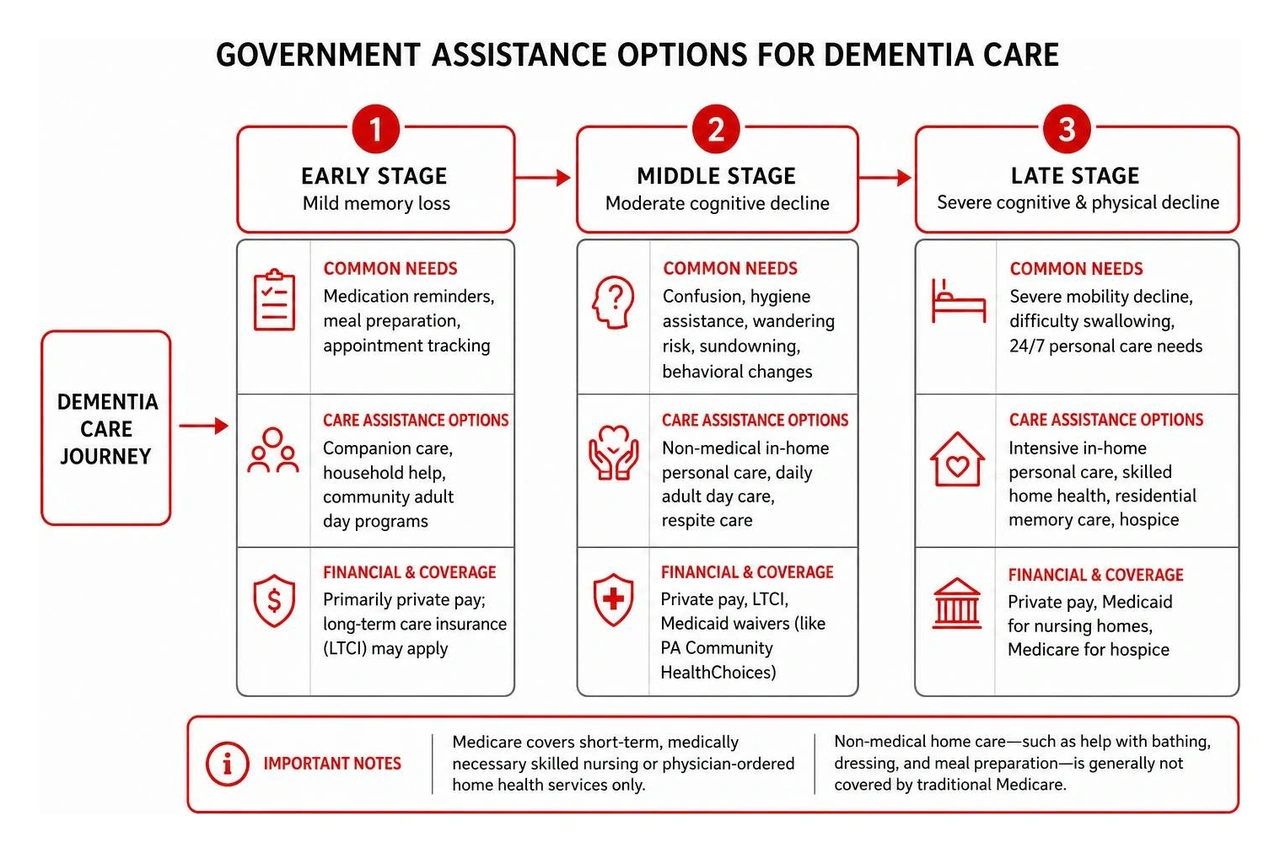
While private funds and long-term care insurance play major roles, government programs provide essential safety nets for families seeking financial help.
Many families assume Medicare will cover all long-term care needs, but Medicare coverage is limited to short-term, medically necessary skilled nursing or physician-ordered home health services. Non-medical home care—such as help with bathing, dressing, and meal preparation—is generally not paid for by traditional Medicare.
However, state Medicaid programs offer home and community-based services (HCBS) waivers that can assist qualifying low-income seniors. Programs such as participant-directed care (often referred to as "cash and counseling") allow eligible seniors to receive direct state funding to pay for care providers, sometimes even enabling family members to receive compensation for their caregiving time. Furthermore, the Social Security Administration's Compassionate Allowances program accelerates disability benefit processing for individuals diagnosed with early-onset Alzheimer's or specific younger-onset dementias.
For military veterans and their surviving spouses, the Veterans Administration (VA) offers valuable financial support, including the VA Aid and Attendance pension benefit. This tax-free benefit can directly offset the cost of in-home personal care aides and adult day services.
Additionally, families can consult local Area Agencies on Aging (AAA) or use the federal Eldercare Locator service (800-677-1116) to discover local grants, home-delivered meal services, and community respite funding.
Living with dementia presents unpredictable daily challenges. Utilizing practical strategies outlined in Caring for a Person with Alzheimer's Disease helps maintain a tranquil home environment and reduces stress for both you and your parent.
Creating a secure living space is essential for preventing accidental injuries and wandering. Discover actionable tips in our guide on Alzheimer's Care At Home to adapt your parent's home environment effectively:
Behavioral shifts such as agitation, sudden aggression, and sundowning (increased confusion in the late afternoon and evening) are common. Resources from Getting Help With Alzheimer’s Caregiving | National Institute on Aging emphasize that sudden changes in behavior often stem from underlying physical discomfort, such as pain or an undetected urinary tract infection.
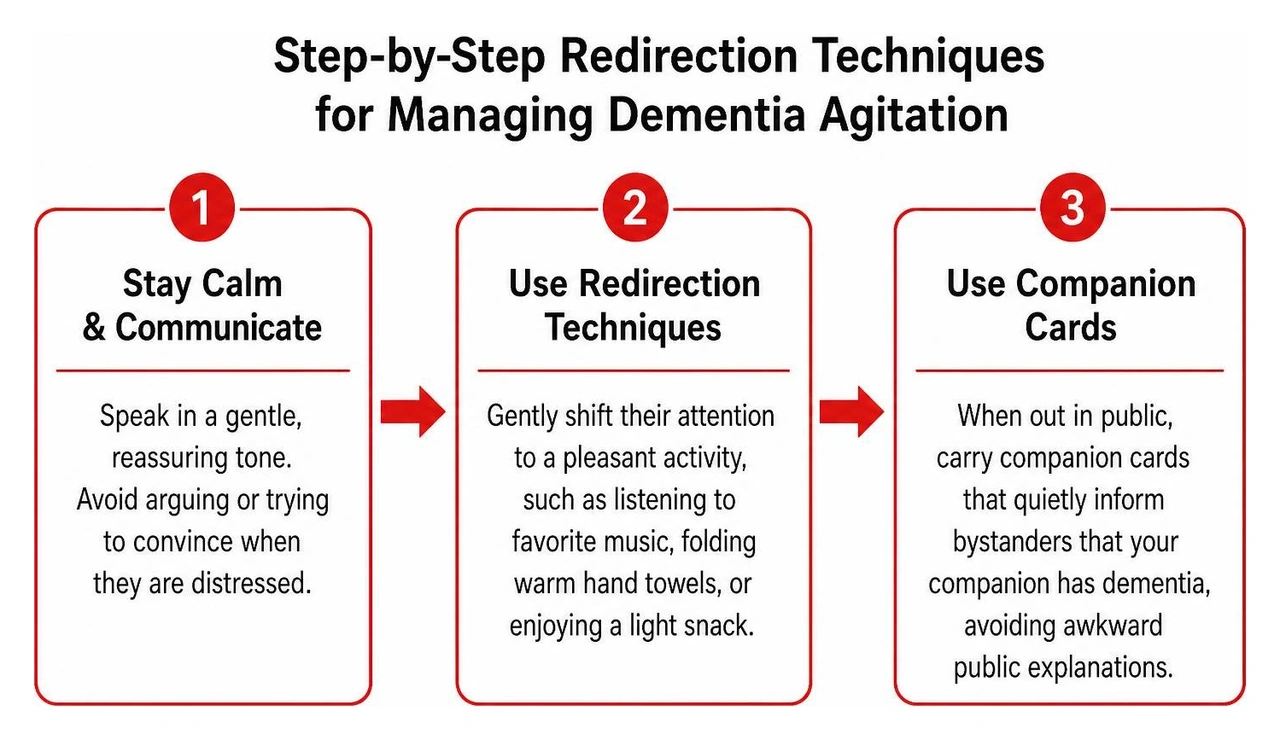
When agitation occurs:
Connecting with community organizations ensures you are never facing this journey alone. Exploring national and regional hubs like the Alzheimer's Association | Alzheimer's Disease & Dementia Help provides immediate access to education, crisis lines, and localized support groups.
In Pennsylvania, family caregivers have access to exceptional regional programs:
Working with Aging Life Care Professionals (geriatric care managers) can also help long-distance families coordinate local medical care, evaluate living arrangements, and manage complex family dynamics.
When selecting a professional home care agency, asking the right questions guarantees high-quality, safe care. For detailed advice, review our insights on How to Find Reliable Alzheimer's Care Near You and how to screen specialized Caregivers for Alzheimer's.
Ensure prospective care agencies provide:
Caring for a parent with memory loss is a marathon. Family caregivers face elevated risks for chronic anxiety, clinical depression, and physical exhaustion.

To maintain your health, taking regular breaks is essential. Utilizing Specialized Alzheimer's Care services for respite gives you dedicated hours to recharge while knowing your parent is safe.
Respite care options include:
Building a broad support network protects your mental health. Learn more about balanced caregiving in our article on Care for Alzheimer's and Dementia.
Do not hesitate to consult primary care physicians, geriatric psychiatrists, or licensed counselors when feeling overwhelmed. Utilizing online family coordination portals like Lotsa Helping Hands can also simplify delegating errands, meal prep, and transport duties to friends and extended family.
Medicare provides limited coverage for short-term, skilled care ordered by a physician—such as intermittent home health nursing or physical therapy. It does not cover ongoing, non-medical custodial care, such as assistance with daily bathing, dressing, or long-term companion supervision.
Home care provides non-medical personal assistance, companionship, meal preparation, and light housekeeping. Home health care provides short-term medical care—such as wound care, physical therapy, and medication administration—delivered by licensed healthcare nurses or therapists under a doctor's order.
You can contact your regional Area Agency on Aging, reach out to the Eldercare Locator at 800-677-1116, or call the Alzheimer's Association 24/7 Helpline at 800-272-3900 to find certified local care providers and financial assistance options in your community.
Providing alzheimer's care assistance for an aging parent requires patience, love, and professional support. You do not have to handle every caregiving duty alone. By tapping into community resources, financial aid programs, and professional home care services, you can ensure your parent lives with dignity while protecting your own personal well-being.
At Fayer Family Homecare, we are dedicated to supporting families throughout the Greater Pittsburgh Area. Our compassionate, experienced caregivers deliver specialized home care, warm companionship, personal assistance, and reliable supervision tailored to your parent's unique daily needs.
Contact our dedicated team today to discuss your family's care needs and Learn More About Companionship Services to give your parent the high-quality care they deserve.

June 1, 2026
From Family to Professional: Exploring Senior Caregiving SolutionsDiscover senior caregiving solutions: from family support to professional in-home care, burnout prevention, and safety tips.
Read Article
May 22, 2025
The Power of Companionship for Seniors: A Key Ingredient to Quality AgingDiscover how companionship in old age boosts health, happiness, and dignity for seniors in Greater Pittsburgh. Learn more today!
Read Article
February 13, 2026
Finding the Right Fit: Specialized Care for Alzheimer's & DementiaFind the best specialized Alzheimer's care for your loved one. Explore options, understand costs, and get caregiver support.
Read Article