
April 17, 2025
Understanding Home Companionship for Elderly Loved OnesDiscover the benefits of home companionship elderly services to enhance quality of life, reduce isolation, and support aging in place.
Read Article
.svg)

If your parent needs help staying safe and comfortable at home, start by choosing a licensed non medical home care agency Pittsburgh families can verify through the Pennsylvania Department of Health. Ask each agency about caregiver screening, training, supervision, care-plan updates, and whether it can provide the schedule your family needs.
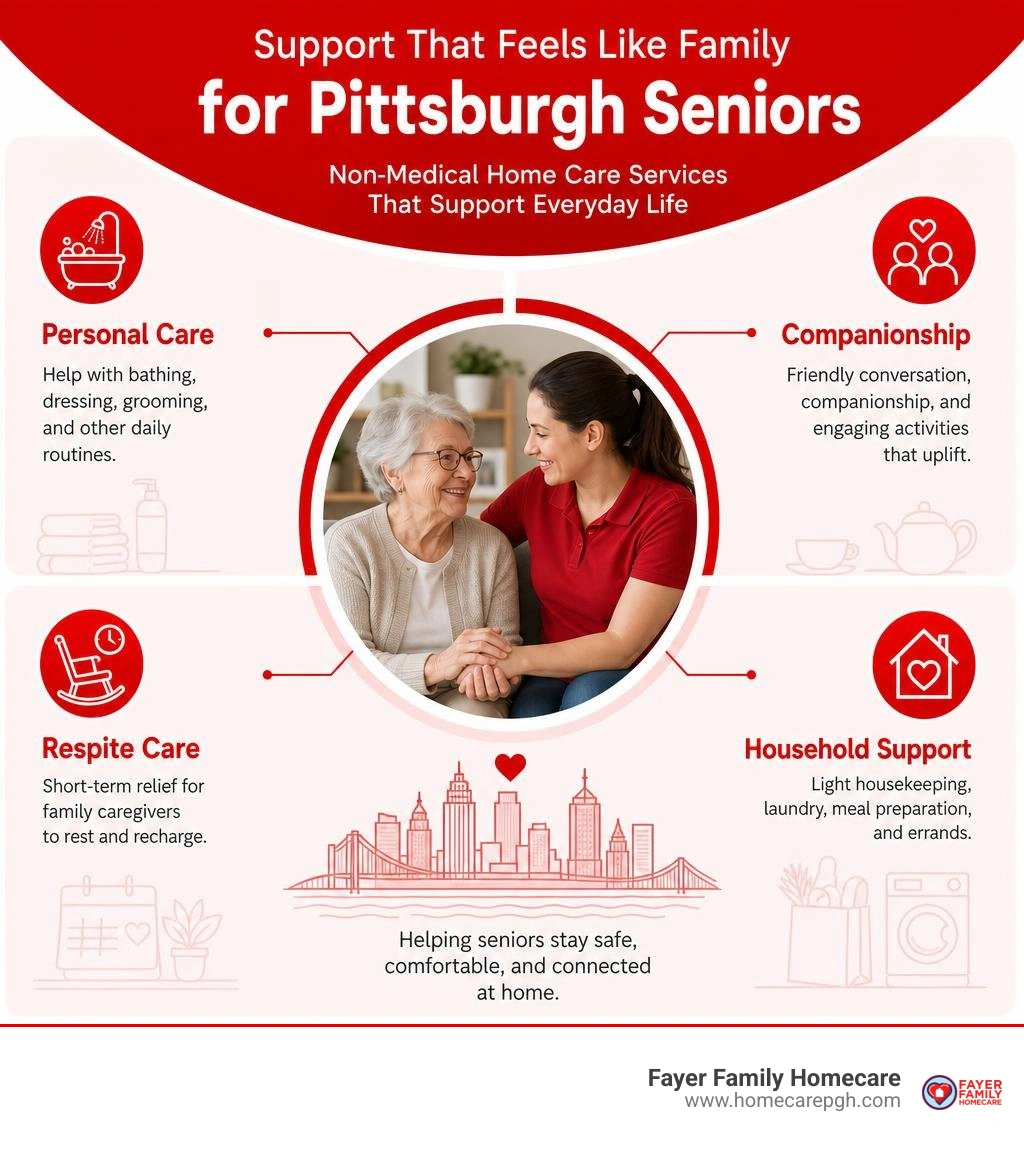
Non-medical home care supports everyday life rather than clinical treatment. A caregiver may help your loved one with bathing, dressing, meals, light housekeeping, errands, companionship, dementia-friendly routines, and medication reminders. This can give seniors more support at home while giving family members greater peace of mind.
With Pennsylvania home to an estimated 2.6 million adults age 65 and older, many Western Pennsylvania families are balancing work, caregiving, and concern for a parent's changing needs. The right agency should listen first, build a plan around your parent's routines, and adjust care as needs change.
Fayer Family Homecare Staff helps Pittsburgh-area families understand their in-home support options for aging loved ones.
Simple guide to non medical home care agency pittsburgh terms:
When you first begin exploring support for an aging parent, the terminology can feel overwhelming. Many adult children use the phrases interchangeably, but there is an essential legal and functional distinction between Non-Medical Home Health and clinical home health care.
Non-medical care focuses on Activities of Daily Living (ADLs) and instrumental daily routines that allow your loved one to live independently in familiar surroundings. In contrast, home health care requires a physician's prescription, is intermittent, and revolves around short-term clinical recovery following an illness, surgery, or acute medical event.
| Service Feature | Non-Medical Home Care | Home Health Care |
|---|---|---|
| Primary Focus | Daily living assistance, safety, and personal care | Skilled nursing, wound care, and clinical rehabilitation |
| Medical Order Needed? | No physician prescription required | Strict medical necessity criteria and doctor's orders required |
| Care Providers | Direct care workers, trained professional caregivers, companions | Registered nurses (RNs), physical therapists, licensed practical nurses |
| Duration & Schedule | Flexible: from a few hours a week to continuous 24/7 care | Intermittent: visits typically last 30 to 60 minutes per clinical protocol |
| Payment Options | Private pay, long-term care insurance, Community HealthChoices (Medicaid) | Medicare, private health insurance, traditional Medicaid |
Understanding what your family member requires is the first step in coordinating their care. Skilled medical providers focus on clinical interventions such as administering intravenous injections, providing physical therapy regimens, and performing complex vital signs monitoring.
Conversely, professional caregivers step in to provide non-clinical hands-on personal hygiene, meal planning, mobility assistance, and gentle medication reminders so your mother or father never misses a scheduled dose.
Recognizing that your parent needs outside help is rarely straightforward. Often, family caregivers take on more and more responsibilities until burnout sets in. It may be time to seek professional Assistance With Daily Living if you notice:
When partnering with a reputable agency serving Allegheny County, you are not simply hiring an individual; you are securing an organized team dedicated to your loved one’s comfort and dignity.

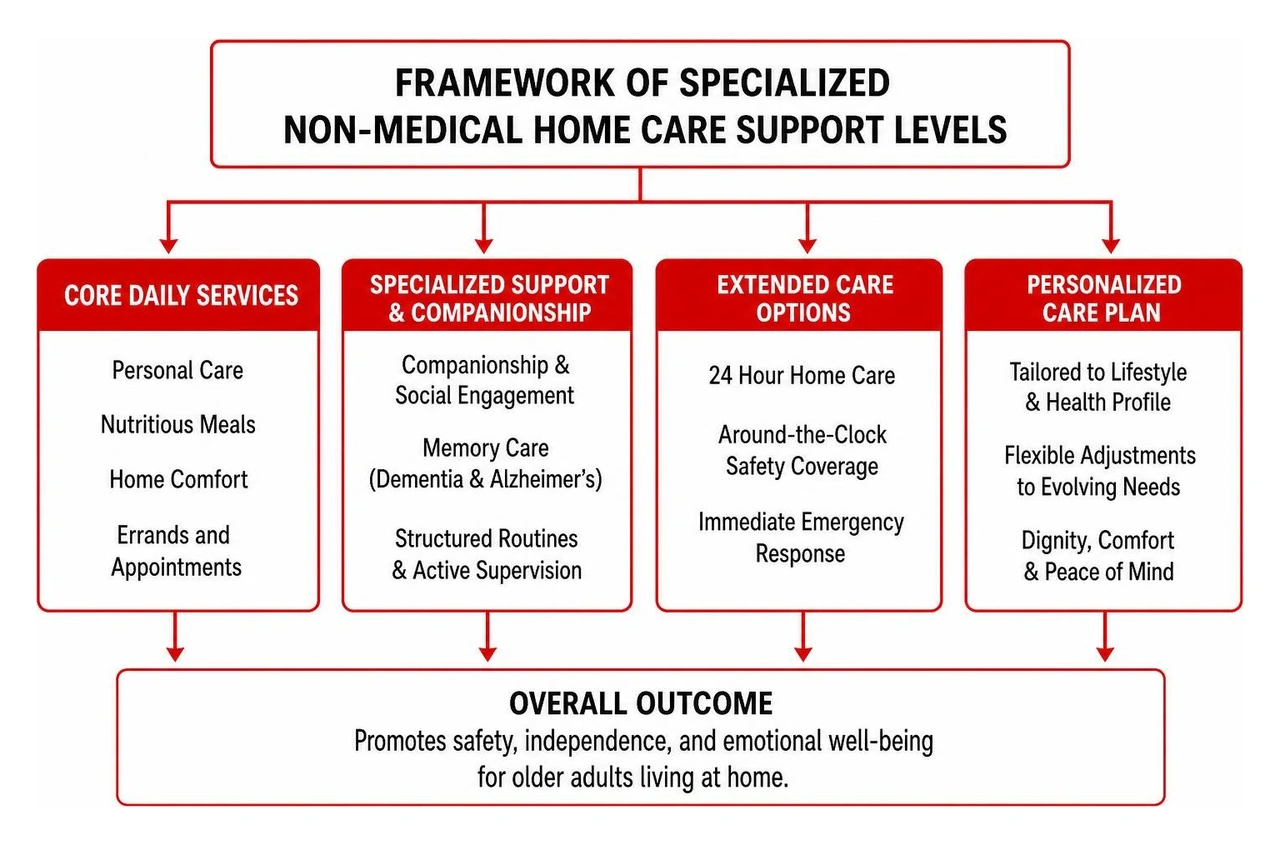
A high-quality provider creates a structured, personalized care plan tailored specifically to your parent's lifestyle and health profile. For families navigating these decisions, our Home Care Pittsburgh Complete Guide outlines what comprehensive local support looks like from the initial intake through daily care adjustments.
A trusted caregiver assists with the routine tasks that keep an older adult's household functioning smoothly:
Aging at home is about emotional wellness as much as physical assistance. Dedicated Companion Care Services Complete Guide highlights how social engagement, conversation, and recreational activities brighten an older adult’s week and reduce feelings of isolation.
For seniors diagnosed with memory conditions, specialized dementia and Alzheimer’s care offers reassurance through structured routines, redirection techniques, and active supervision. When families require around-the-clock safety coverage, agencies provide seamless 24 Hour Home Care Pittsburgh shifts to prevent wandering and ensure immediate emergency responses.
Pennsylvania enforces clear regulatory standards to safeguard older adults in their private homes. The Pennsylvania Department of Health oversees home care agencies and registries under 28 PA Code Chapter 611.
In Pennsylvania, state regulations mandate strict accountability. Agencies submit detailed operational policies, show proof of liability insurance, and manage direct care documentation through the state's online licensing portal. Furthermore, agencies must conduct comprehensive criminal background checks and health screenings before any caregiver enters a client’s residence.
Pennsylvania law protects seniors by requiring that direct care workers complete a minimum of 40 hours of training before providing unsupervised care. This rigorous curriculum covers:
Caregivers must also demonstrate competency evaluations and undergo regular supervision by administrative staff.
Unlike some neighboring states, Pennsylvania does not require a Certificate of Need (CON) for home care agencies. However, consumer protections remain strong. The Department of Health conducts unannounced surveys and pre-licensure reviews to ensure compliance with health and safety standards. Families evaluating In-Home Care in Pittsburgh PA have the right to inspect agency credentials, review service agreements, and request caregiver substitutions whenever necessary.
Selecting a home care agency is an intimate decision. You are welcoming a professional into your parent’s private sanctuary. Finding the right agency requires evaluating caregiver compatibility, staff responsiveness, and Flexible Home Care options that adapt as care needs change over time.
Use this checklist during your initial consultations with agency directors:
Caregiver wages in Pennsylvania typically range between $14 and $18 per hour, which directly influences overall hourly bill rates for home care agencies.
Families fund non-medical senior care through several primary avenues:
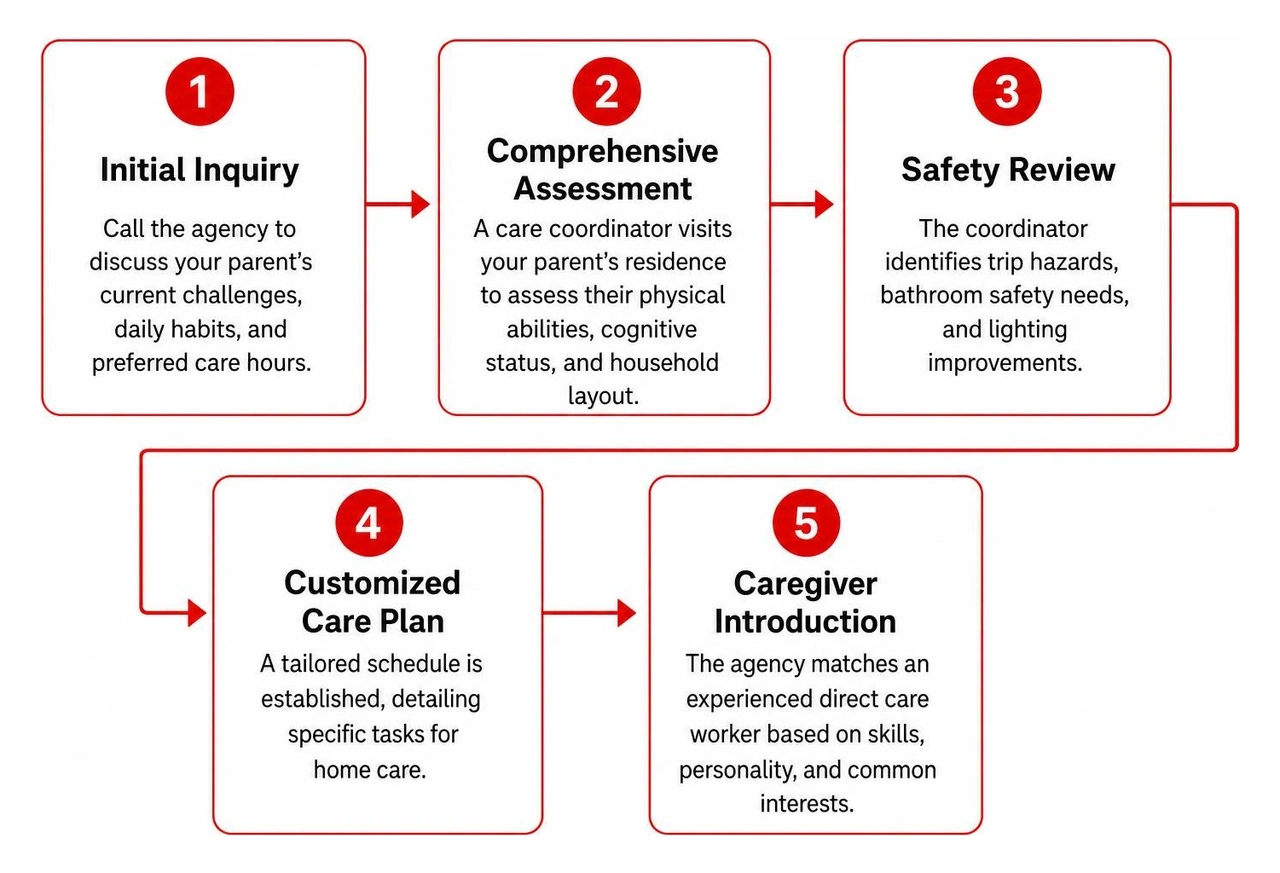
Beginning in-home care is a straightforward, supportive process designed to relieve family stress from day one.
Non-medical home care in Western Pennsylvania typically ranges from $28 to $38 per hour, depending on the level of care required, frequency of visits, and specialized needs such as advanced memory care. While traditional health insurance does not pay for custodial services, eligible seniors can utilize Community HealthChoices (CHC) Medicaid managed care or private long-term care insurance policies.
Under Pennsylvania regulations, a licensed home care agency directly employs its caregivers, handling all payroll taxes, workers' compensation, background vetting, and supervisory visits under 28 PA Code Chapter 611. An independent registry acts merely as an introductory service, leaving the family legally responsible for payroll taxes, liability coverage, and finding replacements if a worker fails to show up.
No, traditional Medicare does not pay for non-medical, custodial home care services such as bathing, meal preparation, or companionship. Medicare only covers short-term, intermittent skilled medical care prescribed by a physician. Families needing long-term personal assistance rely on private funds, long-term care insurance, or the Pennsylvania Community HealthChoices program.
Caring for an aging family member is an act of deep love, but you do not have to carry the responsibility entirely on your own. At Fayer Family Homecare, we provide compassionate, personalized support designed to keep your loved one safe, comfortable, and active in the home they cherish. With over 20 years of experience serving more than 140 patients across the Greater Pittsburgh Area, our experienced caregivers specialize in dementia care, Alzheimer's support, personal hygiene, and meaningful companionship.
Take the first step toward restoring balance for your family. Contact us today to schedule a consultation for professional senior support services and build a customized care plan tailored to your parent's needs.

April 17, 2025
Understanding Home Companionship for Elderly Loved OnesDiscover the benefits of home companionship elderly services to enhance quality of life, reduce isolation, and support aging in place.
Read Article
May 29, 2025
The Essential Guide to Home Care Services for SeniorsDiscover care in the home services for seniors—compare costs, types, and tips to choose the right home care for your loved one.
Read Article
July 27, 2026
A Loving Guide to Caring for Dementia Patients at HomeA Loving Guide to Caring for Dementia Patients at Home - Learn about caring for dementia patients
Read Article